Go To The Edges

Luke 4:21-30

Today I’m thinking about edges. There are all types of edges we could talk about–edges of a page, edges of anything flat, really. We could call the moment the sun goes down, the edge or border between day and night. The earth’s ‘edge’ is turning away from the sun (or toward it as sunrise comes). People used to believe the Earth was flat and that there was an edge one could fall off. When I taught Middle School science, I used to ask students to talk about whether there is an edge to the universe—whether there is something beyond what we can see or know. And… I know my porch is edged because I’ve stepped off it sideways. Edges can be uncomfortable, exciting, and painful.  

The passage from the gospel of Luke teaches us something about edges. It begins by telling us of a peaceful Sabbath morning in the synagogue in Nazareth, where Jesus was raised and grew up preaching. Jesus is there giving a sermon and has just unrolled a scroll with words written by Isaiah. He reads the words written by the prophet and points out that he, Jesus, is the fulfillment of Isaiah’s prophecy. Jesus is claiming here that God sent him.  

After this, the ‘people’, those who knew him as a child and watched him growing, seem to be satisfied that this young person, from their very midst, is making them proud. Jesus is a hometown hero, and they claim him as their own. We can almost hear the cheering from here, can’t we? 

Jesus doesn’t stop there though. That’s where the story stopped last Sunday, and often, that’s where my memory of the story stops (partly because I don’t like to think about the rest of the story; I’m uncomfortable with the ‘edge’). You might say that we left the story last week at the point of a cliff hanger. 

Here’s the edge. Can you feel it? Jesus reads the words of Isaish and says scripture has been fulfilled. Then Jesus goes further. . . he says a prophet is not welcome or accepted in his hometown. Before the people can even begin to ask him for favors, he names their expectations. . . and then he dismisses them by saying he won’t be meeting them. He won’t, he says, be working miracles in Nazareth. What?! And the cheers from the crowd die down. The tension here is like another character in the story. 

Stepping away from the story for a bit, I have a question for all of us. Have you ever felt like you couldn’t meet the expectations of others? I wonder whether that felt uncomfortable for you. What feelings arise when you remember that time? For me, it’s like a living nightmare. I like to anticipate expectations and exceed them. I really don’t like the feeling of letting people down. 

I can tell you that I am doing a lot of work in this area–the area of feeling like I need to meet the expectations of others.  

When the expectations are agreed upon by two sides, meeting them is a good thing idea. This kind of situation creates peace. . . a Shalom community where all are thriving (the true biblical shalom means an inward sense of completeness or wholeness. Although it can also describe the absence of war, a majority of biblical references refer to an inner completeness and tranquility). But when the expectations are one-sided and not agreed upon by both sides, meeting them is not healthy. This situation would create an unbalanced community where some are pushed down by others (or some are raised up by stepping on others). This is exploitation; the opposite of Shalom. 

Back to the scripture, Jesus goes on to tell the people that in Israel’s history there were miracles performed by the prophets Elijah and Elisha that did not meet the expectations of the Israelite people. Jesus reminds them that Elijah was sent by God to heal a foreign woman while widows in Israel went unhealed. And Naaman, a man from Syria was healed by Elisha while the people of Israel were not healed.  

This is another ‘edge’ or turning point in this story. After Jesus had established that he was sent by God, and that he is a prophet like Elisha and Elijah; and after he predicted that the people of his hometown might start asking him to perform miracles in Nazareth, he tells them that he would not be doing that. As we might expect, the people (who had just admired his work and his prophet-ness) were furious with Jesus.  

Here is Jesus who says he’s sent by God and can work miracles, but instead of helping those in Nazareth—people who seem to feel like they own him—he promises to help people on the edge of society. The foreigner, the outcast, the poor. . .  

The people at the synagogue in Nazareth are quick to turn toward violence. They immediately bring Jesus to the edge of town, to the edge of a cliff. The Israelite people see themselves as chosen. Special in the eyes of God. Even so, they are oppressed and marginalized by the Roman occupation. And now their hometown hero refuses to perform miracles for them. They want exclusive rights to God. They want Jesus to work for them. 

In the story arc of the Bible, the Israelite people forget over and over that God’s love is for EVERYONE (not specifically them). The Romans, the Syrians, the poor, the rich, the ruler, the slave. I wonder whether we do too.  

I know that when something especially hard happens to me, I question God’s love for me. I find myself thinking, “God, I’ve done all the things you ask of me. I’ve tried hard to live my life according to your will.” I know I’m forgetting that God doesn’t promise any of us easy lives. God does tell us there is an abundance of love for ALL and that will never change. 

Jesus reached outside the edges of the community that claimed him as their hero. They wanted to claim him and his love for themselves. Jesus showed his own community that God’s love is for EVERYONE. No one deserves God’s love more or less than anyone else.  

Jesus taught about Shalom. Shalom can only be felt in a community. If all in the community are not thriving, there can be no Shalom. If there is exploitation—there is no Shalom or thriving. If there is exploitation, it creates an edge. 

And there are no edges, no boundaries to God’s love. 

Citations:

Jolene Miller from Roanoke Mennonite Church in Illinois

Luke 4:21-30
Recognizing Light (John 1: 9-18;Ephesians 1: 3-14)

There are days I don’t even recognize myself; days that feel too hard, too mean, too painful; days I just do not want to enter. I react to others in ways that don’t feel kind. Sometimes I let my fear and grief turn into anger. Do you have days in your life like that too? I’m guessing so. I don’t think this is unique to me. 

During my years of teaching middle school, I knew that each day could be a day that at least one of my students didn’t want to come to school. . . or study writing or history. It was always important to me to connect with ALL students, wherever they were at in the moment. But honestly, some moments were incredibly difficult. One memory comes to mind in particular: I was working hard to convince one 7th grade student to begin writing (I don’t remember what about). The point is that I remember encouraging him to begin by writing something and he refused repeatedly. Instead, he insisted on doing nothing. We were both so frustrated. At the end of that class period, this student left in a hurry and as I tidied up the classroom, I found a note crumpled on the ground. 

Now, I’m always curious about written notes wherever I find them, so of course I smoothed it out and read the words. This note turned out to be from this unwilling writer to another student and it said something like: “Mrs. Forney is so mean. I hate her so much.” This was 15 years ago, and this memory is still so vivid—that’s how much I was impacted by those written words.  I felt so misunderstood in that moment (as I’m sure the unwilling student felt this too). I felt as if I couldn’t express my desire to help him and he was not listening to my way of helping. That’s it, I felt helpless, and it was so painful to me. I’m sad about the fact that I never understood or was understood by this student and maybe that’s why the memory is so vivid. 

Everyone has different ways of expressing difficult feelings. Thankfully we learn more helpful ways of expressing ourselves as we grow and interact with the world.  I recently read a story* about a medical doctor who supervised residents at a pediatric hospital. 

One resident was sent to her for individual meetings because he was angry and surly with his colleagues regularly the director of the hospital thought it might help him. For a month they met one-on-one and mostly the doctor just listened to the resident complain about how his colleagues were not helping patients as much as they should. He was angry and felt that most of those working around him were callous, stupid, or uncaring. The doctor meeting with him helped him see that there might be an underlying reason for his rage. He asked her, “Why are things like this? Why are children suffering?” and he cried. 

At their final meeting, the supervising doctor asked the resident if he would try some imagery. After first refusing, he ended up agreeing to it. The doctor asked him to allow an image to come that was related to the suffering and the meaning of his work as a pediatrician. He found an image immediately and described it:

The image was of a young man, wearing a long white robe and sandals, with a beard. He went on to say the figure looked weak and soft, and just stood there. “He’s just standing there looking at me,” the resident said, “with his arms out. . . this guy could just stand there with his arms out like this forever and ever.” Next, the resident saw a little bird land in the figure’s hand. Both the doctor and resident realized he was describing St. Francis of Assisi. 

It turns out this resident had great respect for the historical figure of Brother Francis. He looked up to him for his love, kindness, and care of animals. In other words, this resident aspired to be like Brother Francis. The supervising doctor helped this resident remember why he was drawn to pediatrics in the first place, and to move past his criticism of his colleagues. She helped him recognize his grief of seeing children suffer was coming out as anger toward those he worked with. This supervisor went on to see many young people of vision who suffer from a deep sense of difference. She said, “They may first need to abandon their resentment of the way things are in order to begin repairing the world.”

Here’s what I think. We are reminded through scripture today that none of us has ever seen God. God was revealed to us through Jesus and his life here. But sometimes we humans have a hard time recognizing God, revealed through Jesus, in modern day life.

John 1:9 says: “The Word was coming into the world—was in the world—and though the world was made through the Word, the world didn’t recognize it. Though the Word came to its own realm, the Word’s own people didn’t accept it.”

I think this can make it challenging to recognize God’s love in and through others, not to mention in and through ourselves. It might seem like I’ve strayed a little from our scriptures by telling you these two stories, but please stick with me. In Ephesians 1 we heard, “Before the world began, God chose us in Christ to be holy and blameless and to be full of love; God likewise predestined us through Christ Jesus to be adopted children—such was God’s pleasure and will—that everyone might praise the glory of God’s grace which was freely bestowed on us in God’s beloved, Jesus Christ.”

So, we are taught, through scripture, to see Jesus as the light radiating the love of God, and then to be like Jesus through our own lives, illuminating the world around us. 

Well, some days it’s easier to do this than others, isn’t it? Like I said at the beginning, some days I let anger/fear/grief get the better of me and it’s then that I can’t recognize myself, or Jesus’ light in me. Each day (each hour, each minute) I have another chance to start again on this idea of radiating God’s love to the world around me. We all do. And, we are human, so of course there will be some days that are harder than others. Since we are all human, interactions between us can add light or make it harder to see the light of God’s love.

What I hear God saying through these scriptures though, is to keep trying. To remember that each of us is a child of God. . . beloved. . . and can illuminate the world around us. Thomas Merton (the former bohemian New York literary figure who became a monk) wrote: 

It is a glorious destiny to be a member of the human race, though it is a race dedicated to many absurdities and one which makes many terrible mistakes; yet, with all that, God gloried in becoming a member of the human race. A member of the human race! To think that such a commonplace realization should suddenly seem like news that one holds the winning ticket in a cosmic sweepstake.

I have the immense joy of being human, a member of a race in which God became incarnate. As if the sorrows and stupidities of the human condition could overwhelm me, now I realize what we all are. And if only everybody could realize this! But it cannot be explained. There is no way of telling people that they are all walking around shining like the sun.

As our scripture from Ephesians tells us: “God has taken pleasure in revealing the mystery of the plan through Christ, to be carried out in the fullness of time; namely, to bring all things—in heaven and on earth—together in Christ.”

My question for each of us is this: how do we plan to join God’s plan of bringing all things (in heaven and on earth) together in Christ? I don’t have an answer formulated for myself, but I do know I can feel it when I’m on the right path. Those are the moments in my life when I can recognize ‘myself’ and feel peaceful within my own body. 

* From My Grandfather’s Blessings, by Rachel Naomi Remen

Cultivate Simplicity, No. 6

I have always walked through this world as if afraid to touch anything in this china shop of life–afraid that my sudden movements may knock somethings off of their shelves.

And then? Then something might break open and I’d have to pay for it. My pockets are empty so I tiptoe, hoping that by the time I manage to safely reach the exit, I’ll have found that which is meant for me.

I have learned though–there are more durable and resilient beauties here than I first thought, which sends a tiny crack of regret through my body.

“You mean,” I say to myself, “I could have moved less cautiously all along? I could have danced and shaken the floor with both joy and sorrow without consequence?”

I vow to myself, now that I’ve seen more than half of the entire ‘china cabinet’ of life, to “let everything happen to me, beauty and terror,” as Rilke wrote; to tell others what my mind thinks and my body feels.

Hopefully all the beauties lining my path as I continue will resonate and sing along with my joy and lament. When I finally reach the exit, the kindly china shop owner will say, with a twinkle in both eyes, “I hope you moved around enough to loosen the dust in this place. . . or even to knock some things off their shelves. That’s the only way things change around here.”

Cultivate Simplicity, No. 4

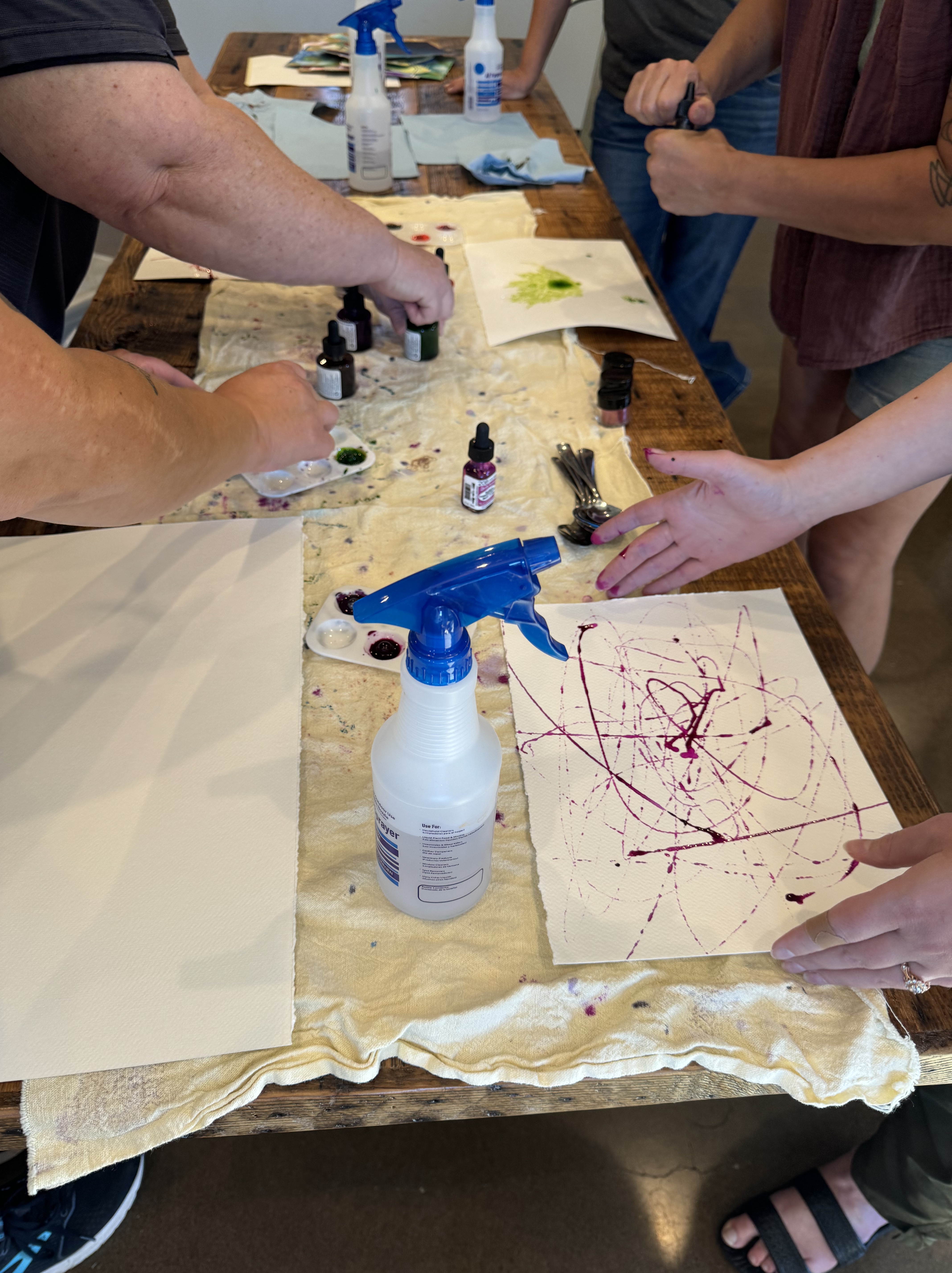
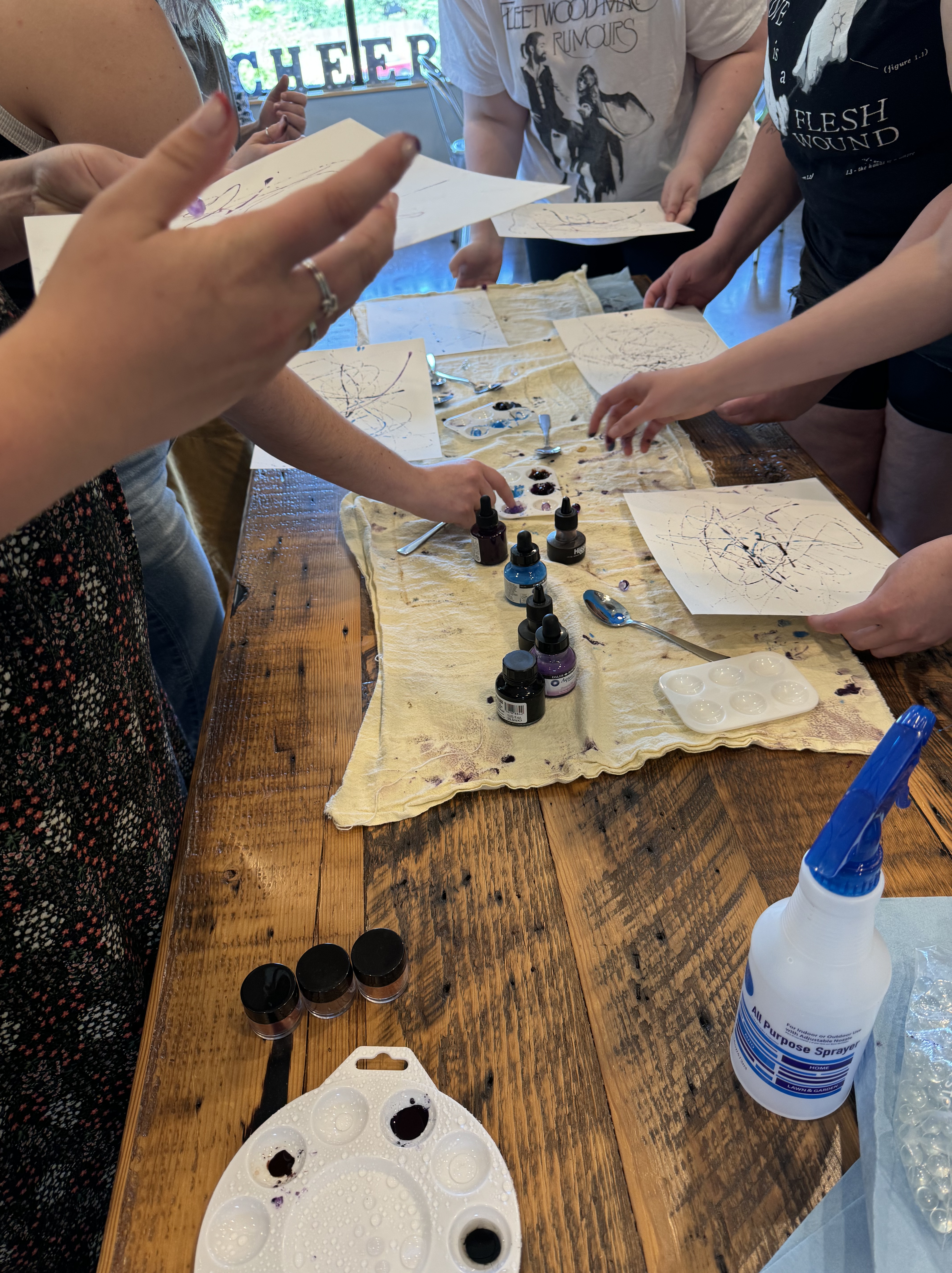
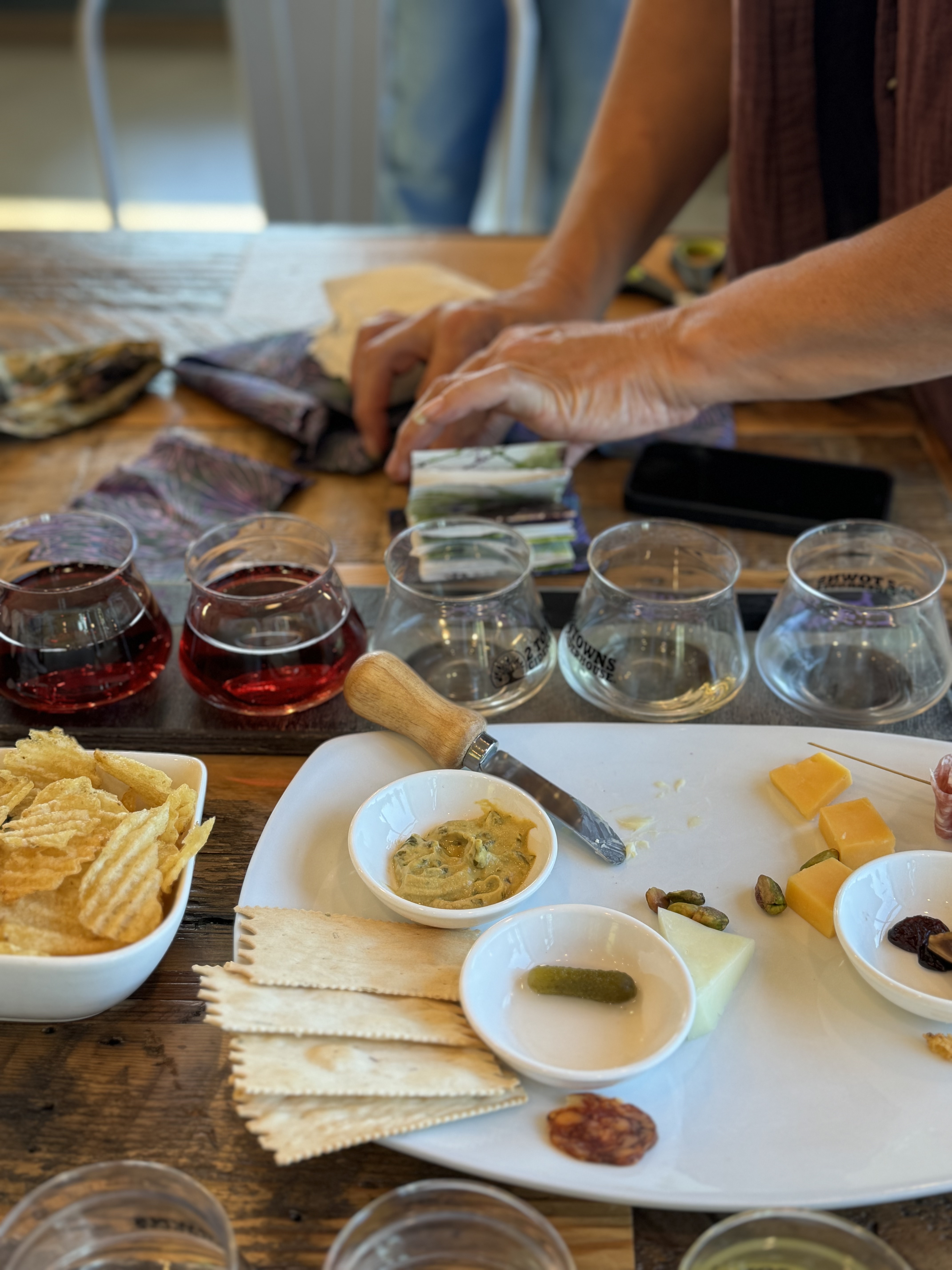
Do you know the feeling of letting go of all inhibitions? Like you trust the process of LIFE and you are happy to just wake up and go? That’s how our marbles felt at the art class I taught at 2Towns Ciderhouse in Corvallis (thank you Hannah and Matt @2Towns). We let those wee scamps run wild and our art showed this freedom.

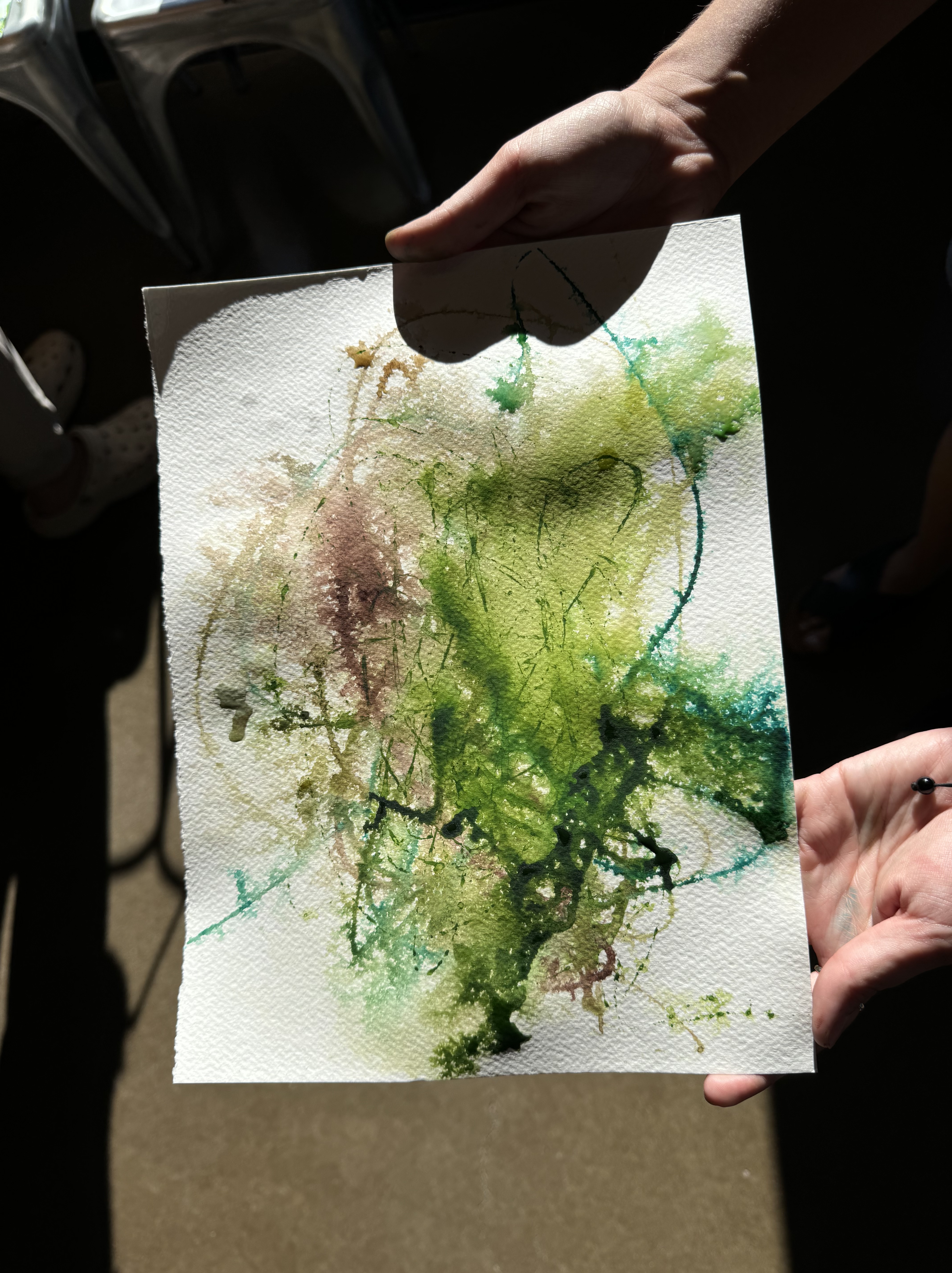
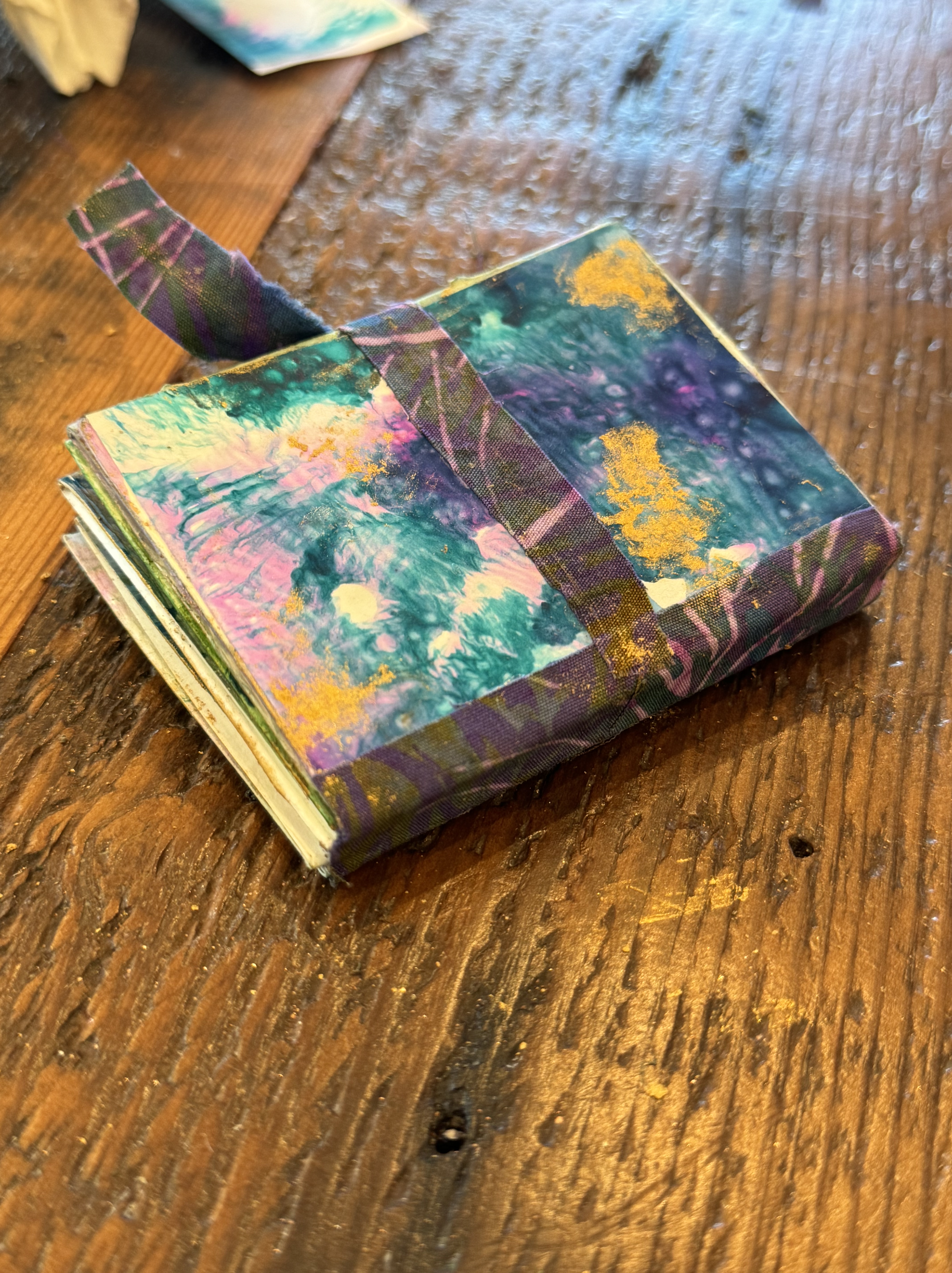
I taught the process of creating art on a large piece of watercolor paper using marbles rolled in intense watercolors, then set free by spraying the lines with water to let them ‘bloom’. When the art was dry, we each created a book by folding and making three cuts (then folding into the book form).

This process is probably my favorite activity of the entire summer. There’s something to it that feels wild and a little reckless; a little ‘outside of the box’. It’s exhilarating and definitely carefree–feelings I’d love to carry with me into the rest of my week/month/year.

Supplies Used:

Heavy watercolor paper (we used 9 x 16″ pieces, any size will do but it’s important to know the folded book will be roughly 1/4 the size of the original piece)

Glass marbles, Bone Folder, Scissors, Spray Bottle for water

Dr. PH Martin watercolors, calligraphy ink

PVA Glue, Cloth Tape, Packaging Tape, Fabric Strips

Iridescent Watercolor Powder, Craftsmart Premium Wax Finish Gold/Silver

Heat Gun to speed drying

Coming Opportunities:

Neurographic Art class at Albany Public Library on August 6 at 5:30pm.

Book a private art party!

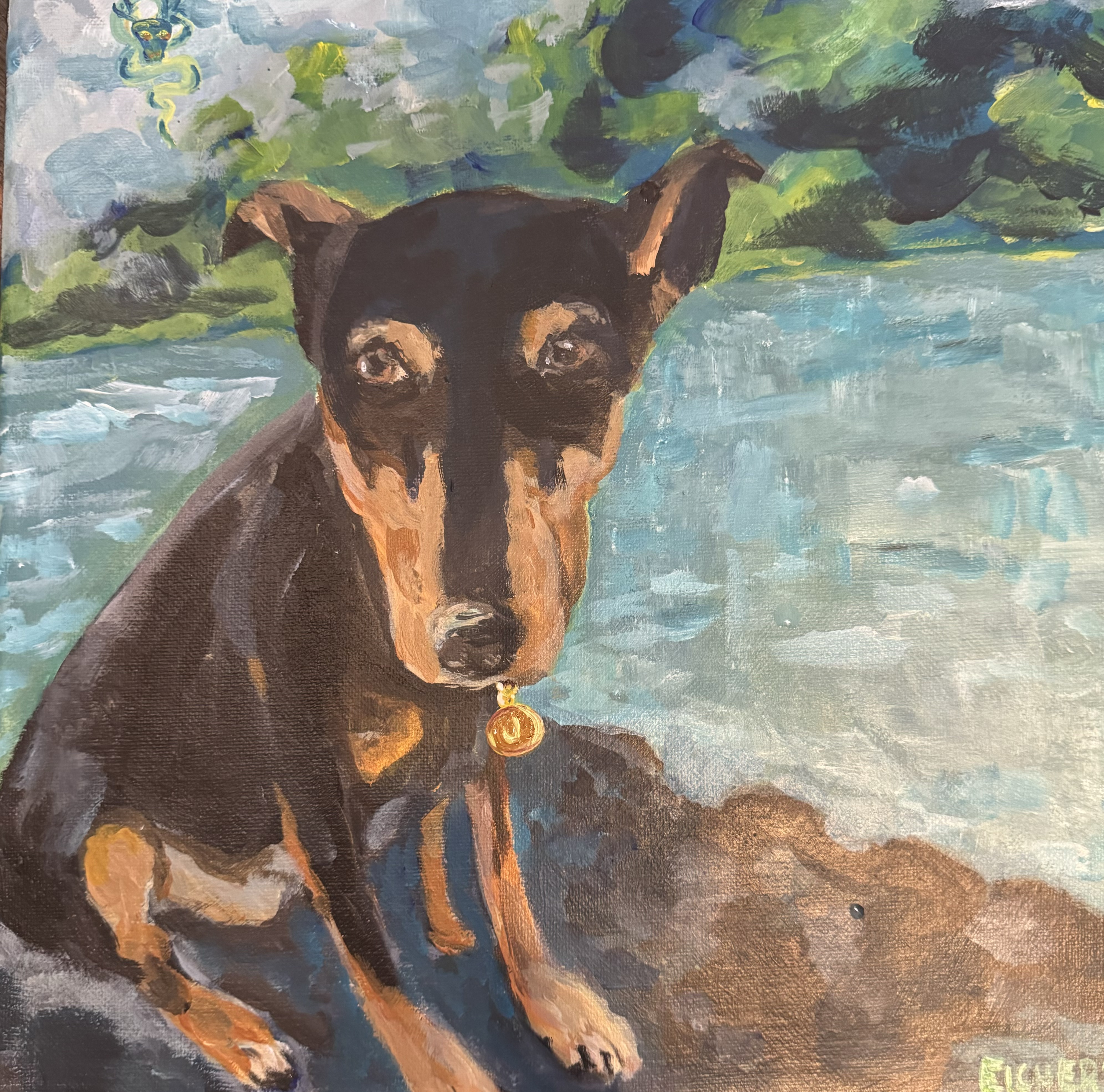
Commission a pet portrait!

Cultivate Simplicity, No. 3

Our book making class on Saturday was so much fun (I’m not the only one saying that either). Three times I invited the participants to check in with themselves to find out if that was true for them and each time the answer was emphatically, “Yes!”

First we let marbles, rolled in ink/watercolor, saunter around on watercolor paper, which was a moment for all of us to practice letting go of expectations.

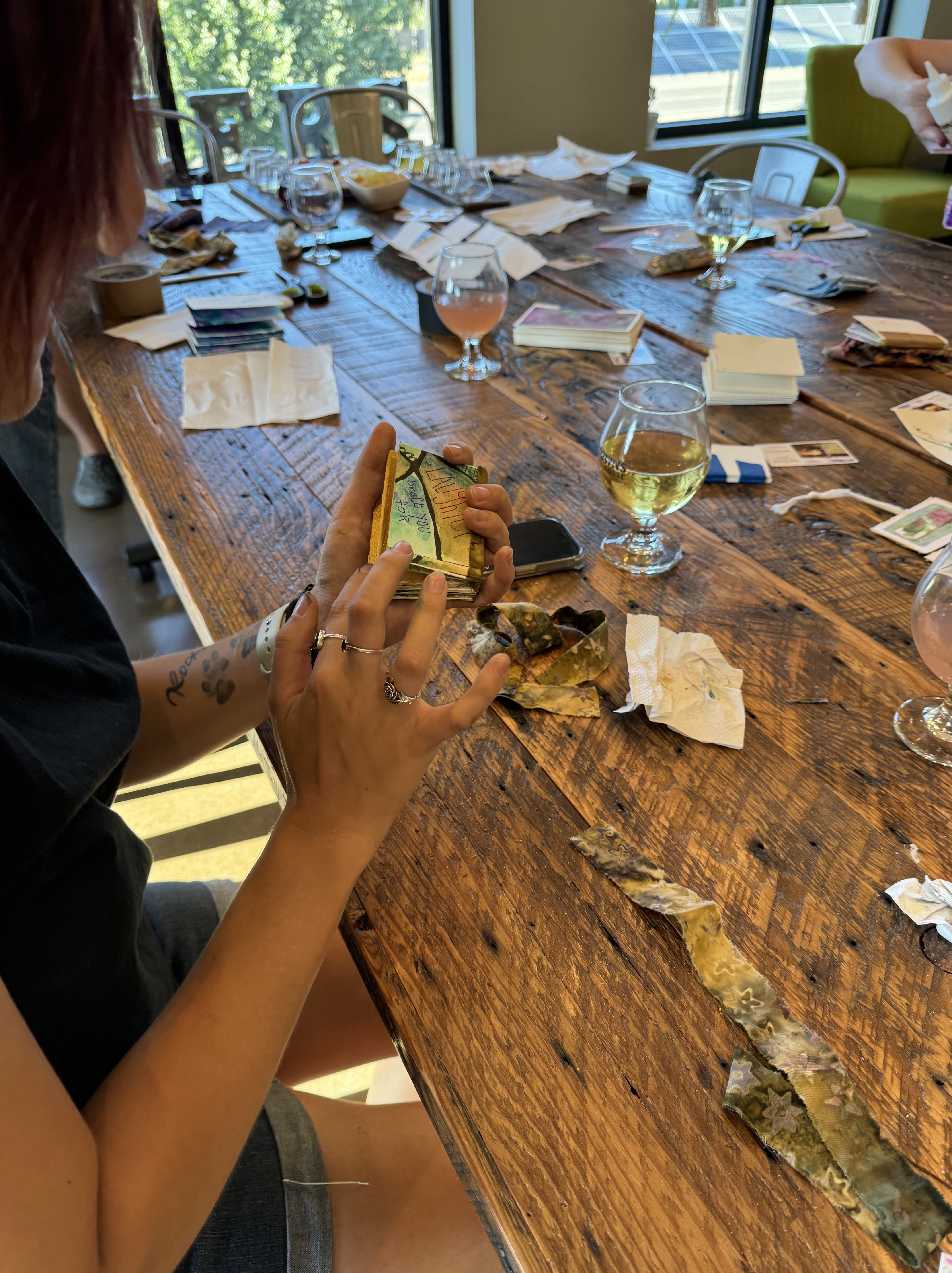
While those pieces of art dried, I taught how to fold a piece of watercolor paper into a palm-sized book and bind it with glue and cloth (or cloth binding tape, if preferred).

From here, artists continued to embellish their books with gold or silver wax paste, or moved back to their sauntering marble paper. With spray bottles filled with water, we attempted to ‘wake up’ the marble path of ink and watched as the color bloomed. At one point there was a little disagreement about the color brown. One artist said, “No, I don’t want to use brown–that’s an ugly color.” Later, another participant added brown to her page simply to give it some love. It ended up being just the right color!

There is still time to sign up for this class, which will be offered again on Wednesday, July 24 at 5:30! Tiny Art Books At 2Towns Cider House 33930 Southeast Eastgate Circle Corvallis, OR 97333

Cultivate Simplicity, No. 2

Last week I journeyed one more time (this summer) to Drift Creek Camp, in the Siuslaw National Forest near Lincoln City, Oregon. It is always a joy to be there; to be with my friends Brenda and Tony and the curated community created by all the camp staff. Being there, it’s easy to feel safe and loved because the whole place is infused with generations of care. . . for one another and for creation. Leaving is always very hard work.

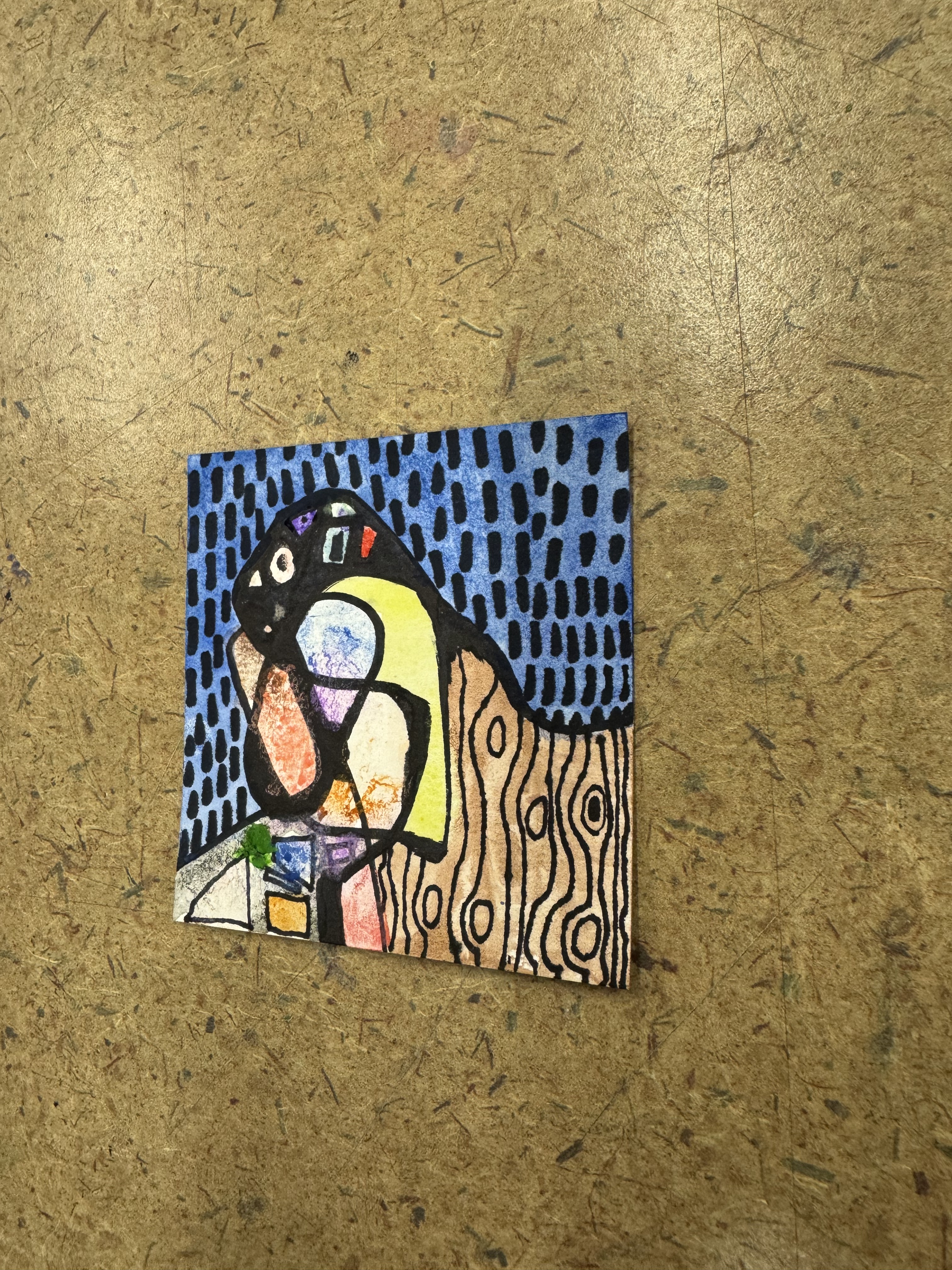
I found myself overwhelmed by the gifts of everyone there–music, leading, humor, warmth, cooking. Of course artistry too. The young camper who created the small, colorful painting above, right said (as he painted), “Oh, this color is the opposite of what I was looking for, but exactly what I needed.” As he painted he told us about his goats and how funny they are. He wasn’t aware of the masterpiece taking shape in front of him.

What’s Next:

Join me in a simple book-making class at 2Towns Cider House on July 20 at 2pm; July 24 at 5:30pm.

Learn about Neurographic Art with me at the Albany Public Library on August 6 at 5:30pm.

Book a private art party!

Commission a pet portrait!

Art at Drift Creek Camp

These pictures represent my work with 30+ 3rd/4th grade students who are enjoying summer camp at Drift Creek Camp, in the Siuslaw National Forest up the mountain from Lincoln City, Oregon.

Being at Drift Creek fills so many different parts of my very soul–I worked as a counselor there in the late 1980s (when I learned to play chords on a guitar); before that I worked as a kitchen helper (when I learned how to scrub pots); before that I was a camper (when I wasn’t too afraid to get my tetanus booster); before that I went with my home church group for many years (when I learned how to hike and love the ancient forest).

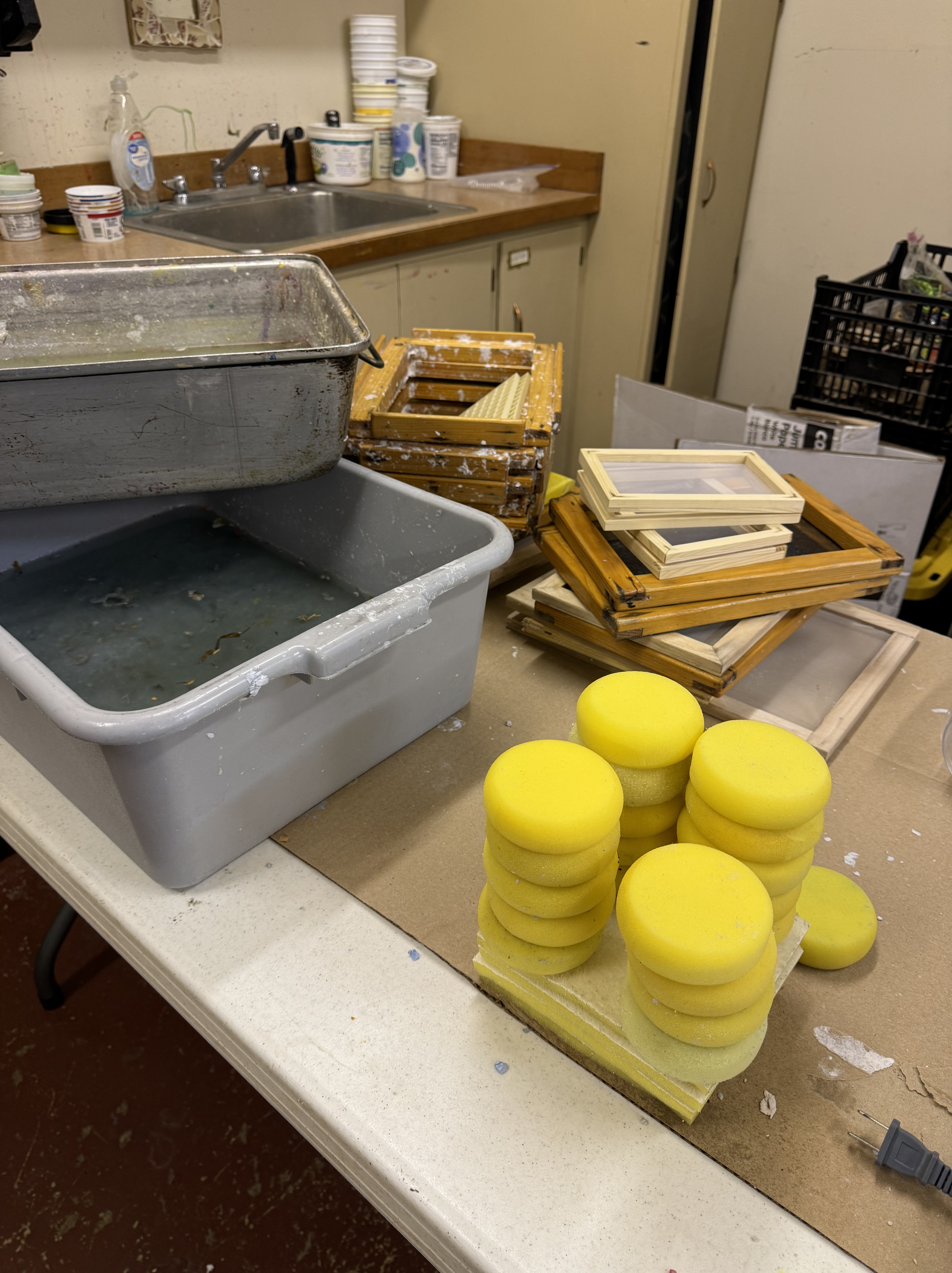
Being at Drift Creek with campers fills so many other parts of my soul–teaching paper-making, learning to know these young people and soaking up their energy; witnessing their kindness and authenticity; seeing the expressions of creativity; and learning that some of their parents were campers in my cabin when I was a counselor there.

What. A. Gift.

There is still more. My friends Brenda and Tony Kauffman are the camp directors. Being able to spend time with them in this amazing natural place will be a memory I’ll carry with me forever. Maybe next week I’ll take Tony up on his challenge to join in the Polar Bear Swim at 7:00 am.

New Direction Home

For more than ten years I’ve been looking for ‘home’. I tried so hard to make downtown Corvallis my home, but living across from an iconic and noisy bar, it turns out, is A LOT. Too much. My dog Pearl and I love our neighbors and have both made so many friends downtown, but something needed to change. We both feel much happier and settled when we are near moving water, some trees and away from pavement/traffic. We have finally found a place to be near water, trees and even closer to the park we walk every day with friends. We are both sleeping at night now (as it happens, sleep is one of the keys to a happy life).

Also for ten years I’ve been working on my art practice and profession. Formerly a middle school teacher in public schools, I’ve danced around teaching both young and old during this ten year span, interspersed with some other jobs that included animals. I’ve been working in places that nurtured different parts of my soul.

For some reason this move to a quieter place, paired with some artistic practices, connections with people and just the right timing, I now have found my footing; I’ve discovered the path to pursue: Teaching art to all ages. Using the practices that have kept me going for the past 10 years to teach others how to keep going. Kyle Morton wrote in one of my favorite songs, Time, Time: “Time, time, inexorable time/you were drawing a circle/I was drawing a line.” I’ve been made aware recently of how much circling back I have done in my life. The more I circle back, the more sure-footed I become. My hope is to continue this new direction toward the home within me, and while I’m here, help others do the same.

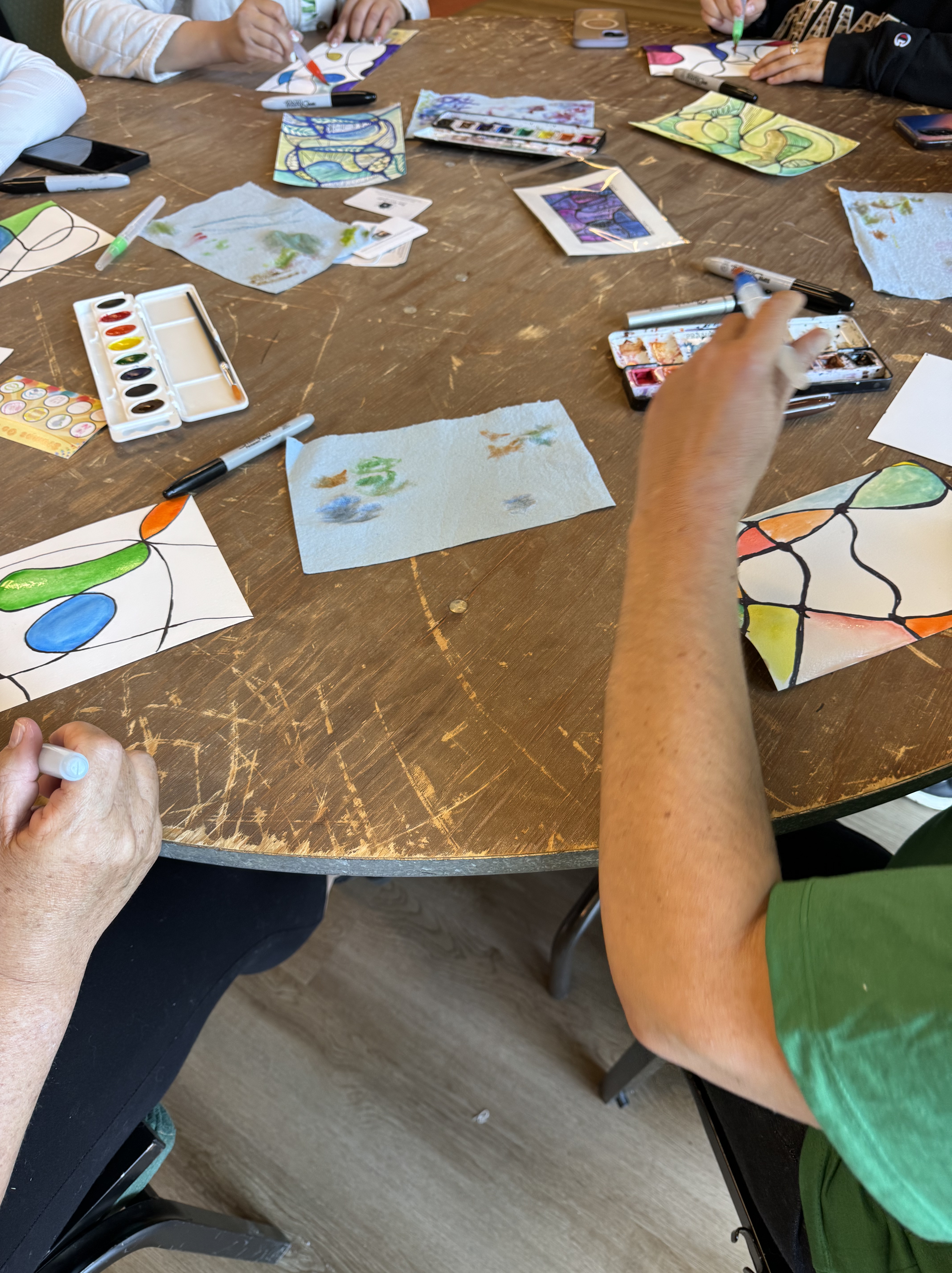
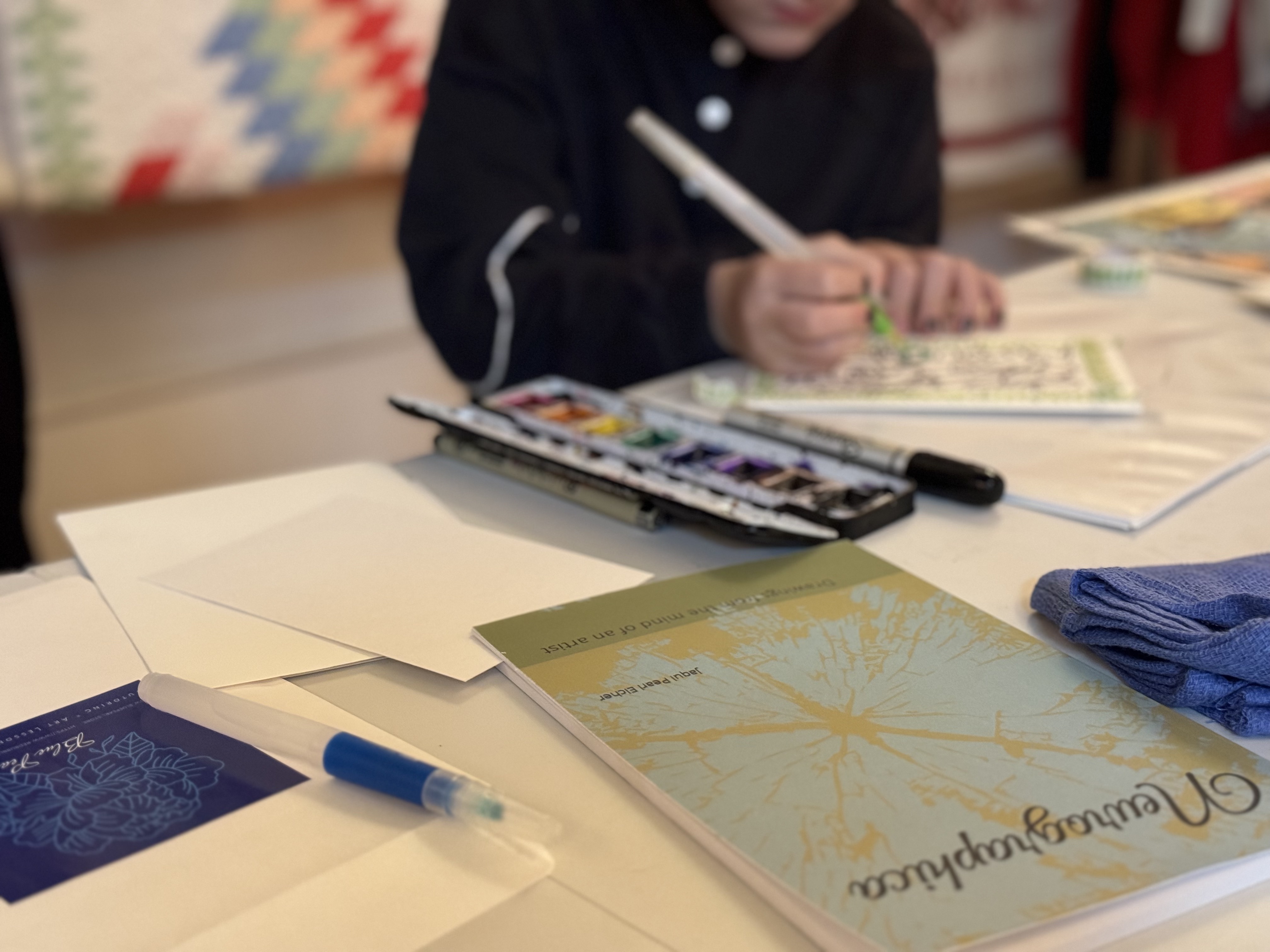
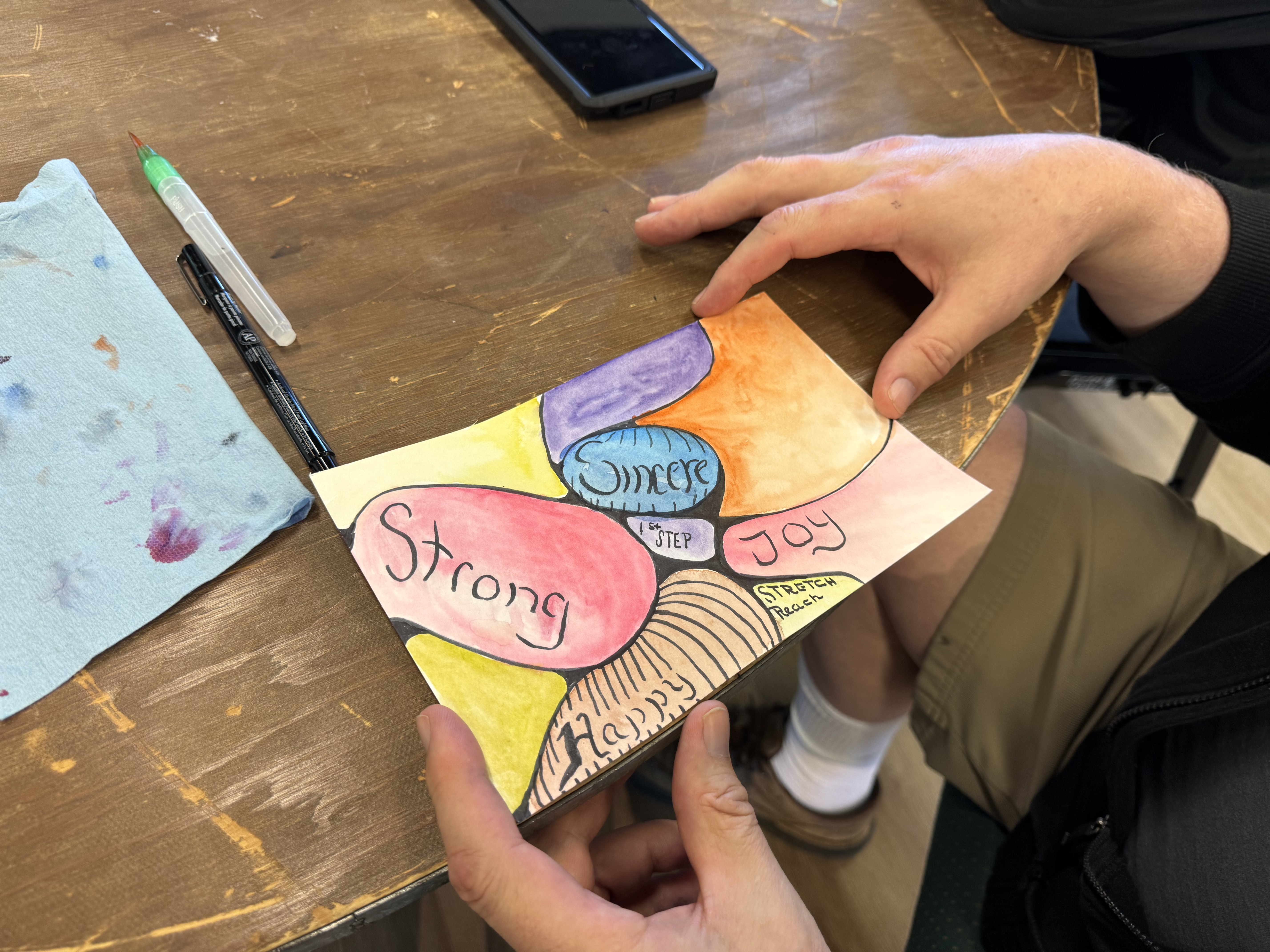
Here are some pictures from recent classes and a list of upcoming classes. I’ve met some amazing folks and I even ran into some people I’m fond of from the past.

Upcoming Classes:

June 17/18; June 24/25 — Art at Drift Creek Camp Summer Camp

June 28/30 — Pine Needle Basketry at Black Sheep Gathering in Albany

July 1/2; July 8/9 — Art at Drift Creek Camp Summer Camp

July 6 — Neurographic Art at Albany Mennonite Church for youth

July 20, 2pm — Book making at 2 Towns Ciderhouse (spaces available)

July 24th, 5:30 — Book making at 2 Town Ciderhouse (spaces available)

If you would like more information, please send me a message. Also, please inquire about private classes for your own group of friends. I’ll travel to you, if you like.

With Love,

Jaqui Eicher (and Pearl)

jaqui.eicher@gmail.com

Upcoming Art Classes

I would be tickled to see you at any of these classes! Please join me for art, fun, conversation, and shared space. No experience necessary.

May 22 AND May 29, 5:30-6:30 PM, 2 Towns Ciderhouse, 33930 SE Eastgate Cir, Corvallis, OR 97333

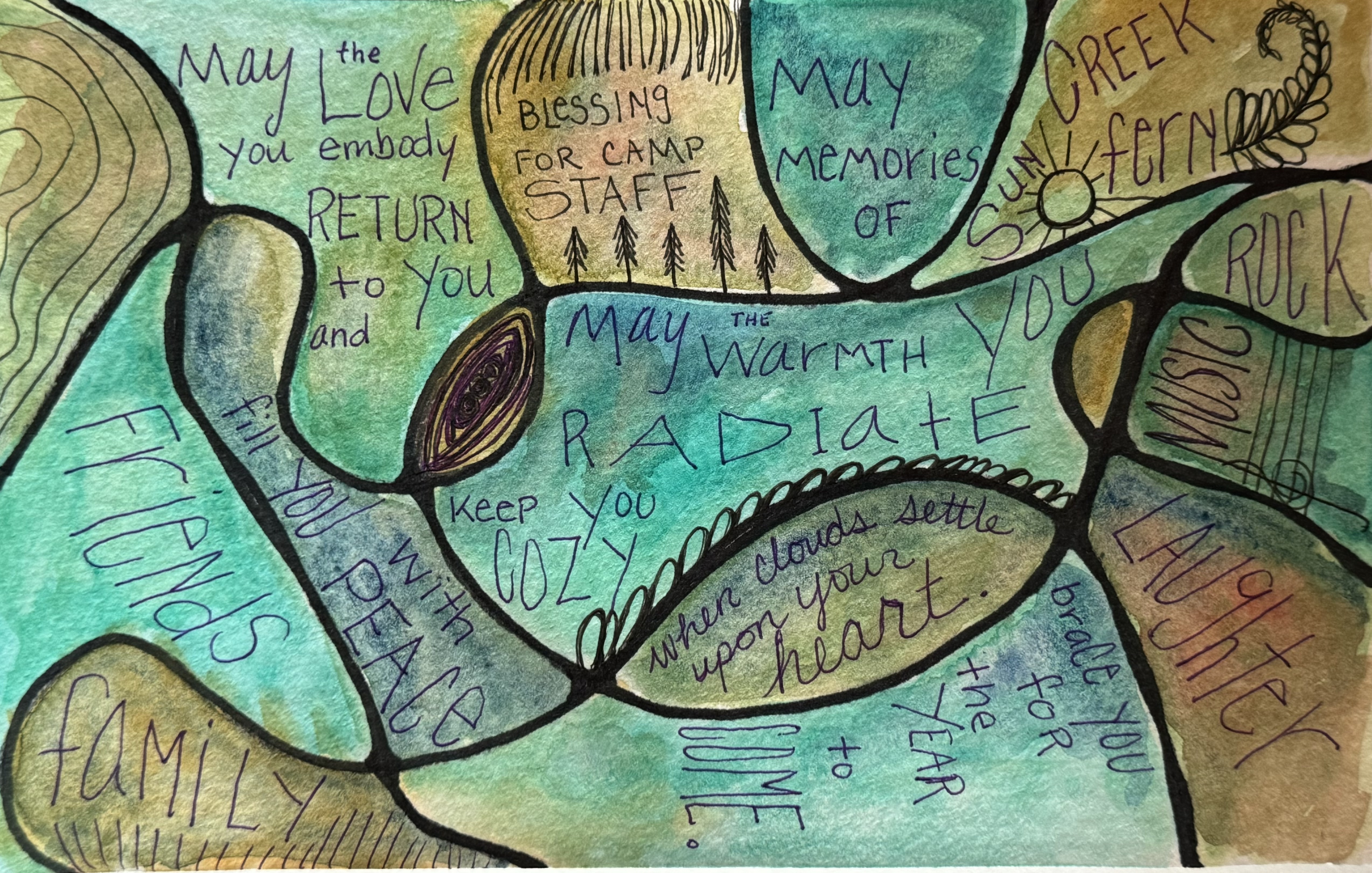
Neurographic Art: Part meditation, part processing, part prayer, part art, part poetry, this process is deeply soulful and empowering. You will amaze yourself with your finished piece!

May 23, 6-8 PM, CreativiTEE, 110 Commercial St NE Downtown Salem

Papermaking: Jaqui will lead you through the steps she has used in her own practice. This process of creating something new out of tired, old documents is deeply soulful and empowering. Jaqui has used her documents from 10 years ago, as well as her childhood poetry. Your paper will not be completely dry when you leave, but you’ll be given the tools to complete the work.