
Subscribe to continue reading
Subscribe to get access to the rest of this post and other subscriber-only content.
Subscribe to get access to the rest of this post and other subscriber-only content.
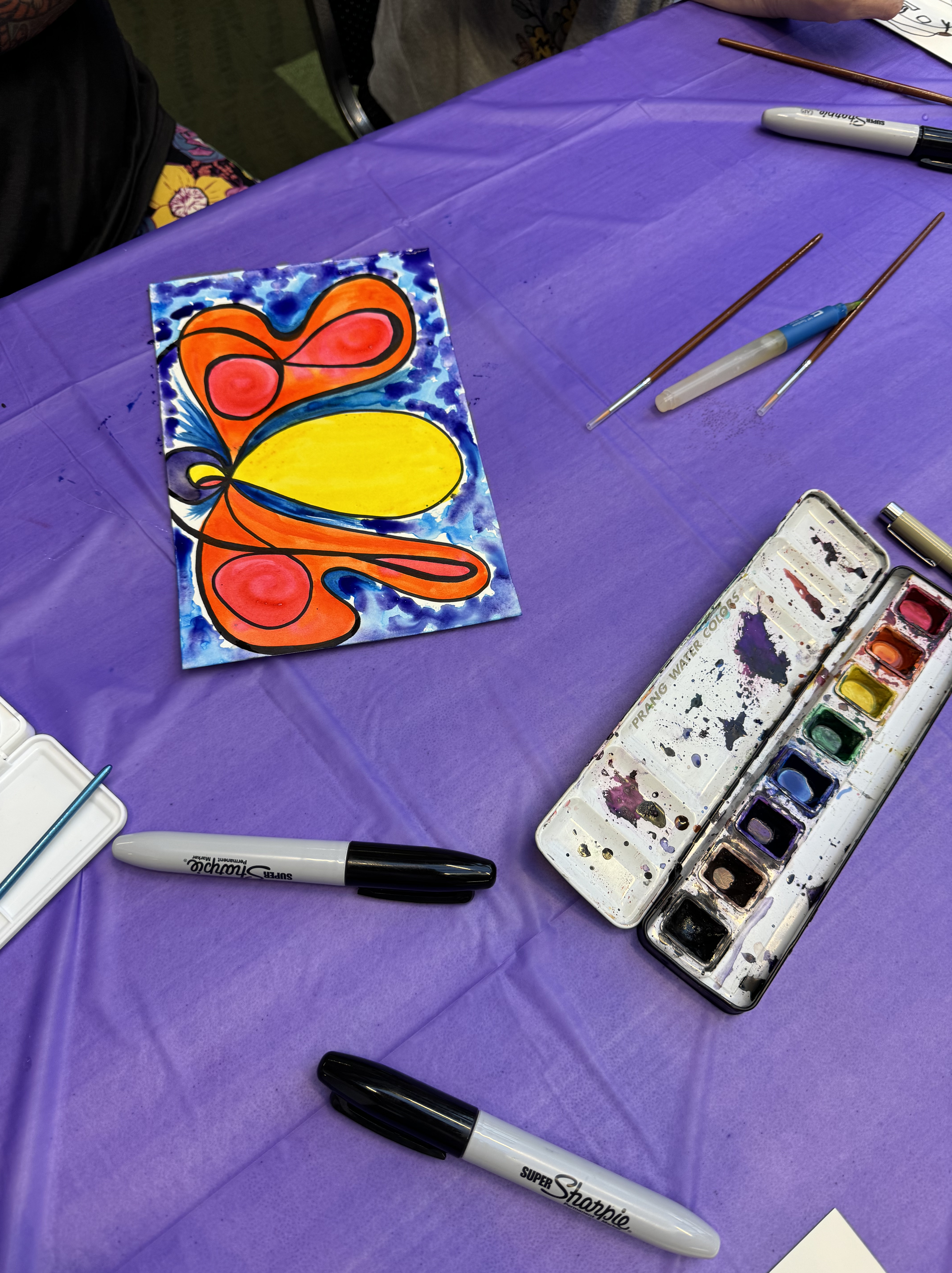
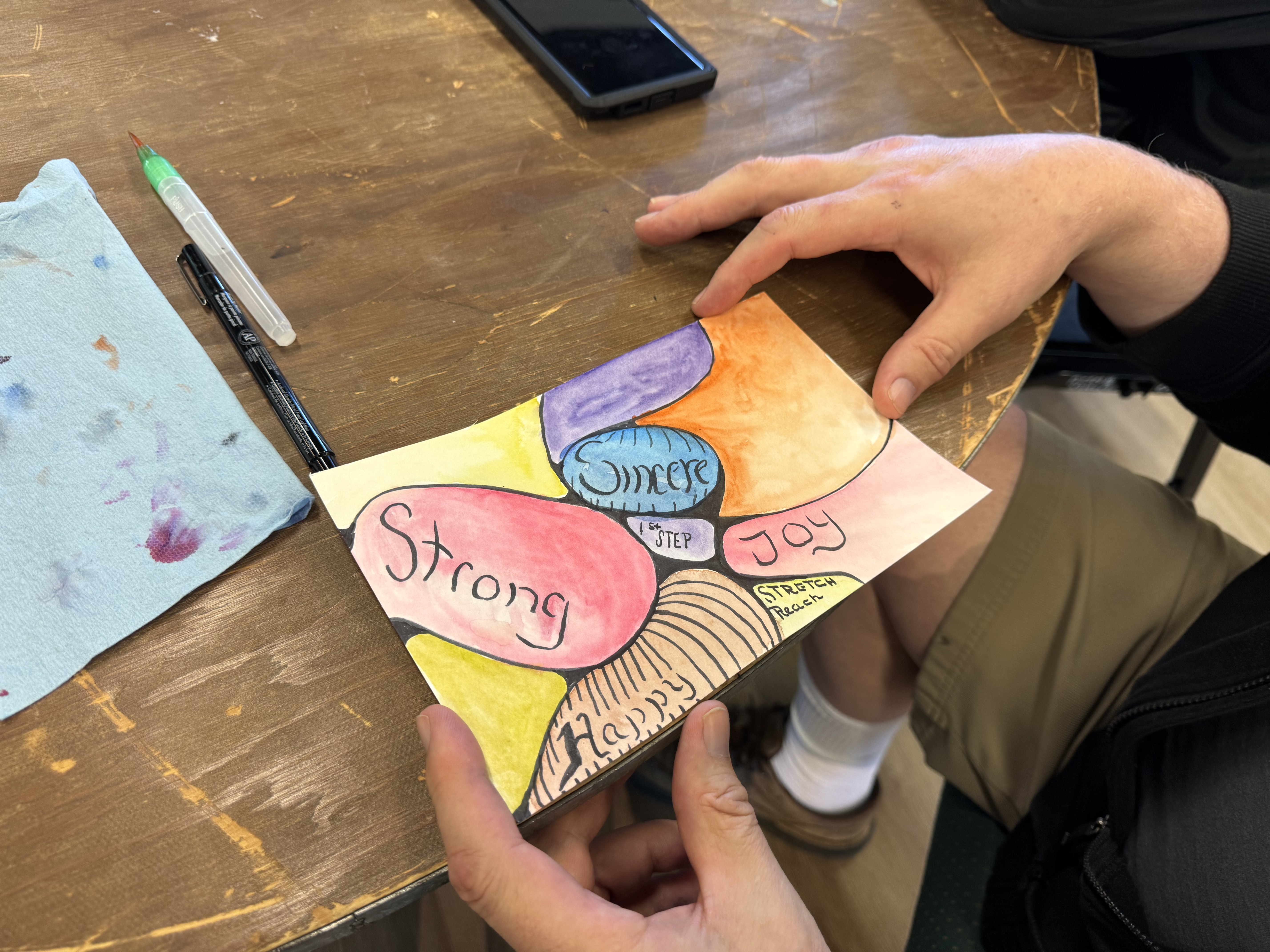
Last week I enjoyed teaching Neurographic art at the Albany Public Library, where the summer theme is, “Catch the Reading Bug”.
Our art reflected some conversations about favorite bugs, what can be technically called a ‘bug’, and the most dangerous bugs we’d ever encountered fist hand.
The 12 participants and two library employees enjoyed the peaceful class in the Garden Room. We had access to books about insects for design inspiration. Each person left with some original art, knowledge about how to maintain a Neurographic habit and some new art friends.
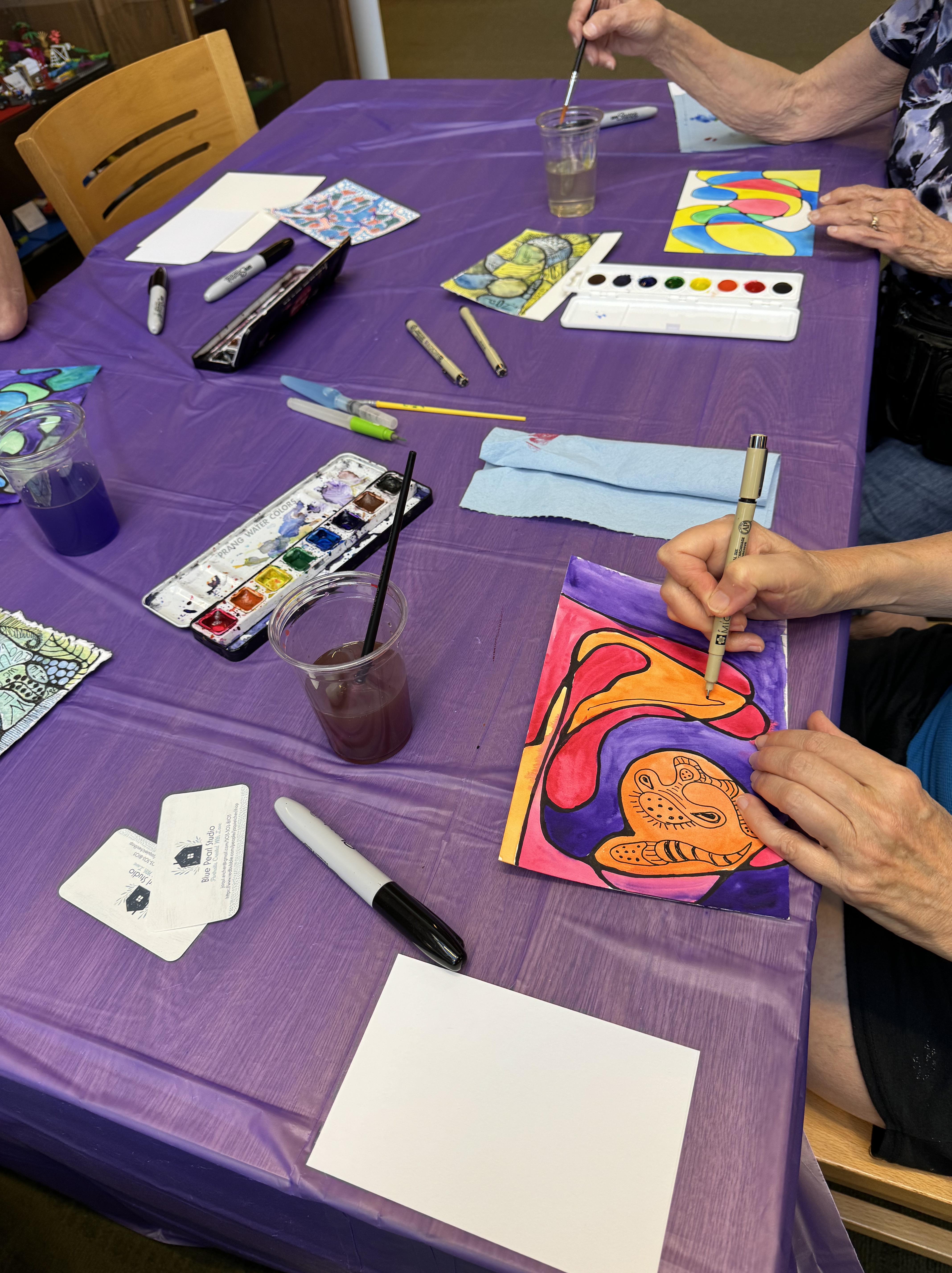
Two mothers of young children took some art time for themselves while their families spent time in the library. Some retired folks participated for the sheer joy of learning something new. It was a lovely mix of generations and experience.
What I love about teaching these art classes is seeing everyone’s approach to abstract art. Participants demonstrate over and over that this form of art will not get old–everyone who tries a hand at it will make something only they can make because it’s directly connected to what’s inside them.
And each time I teach this class, I’m reminded that the process is the most important part (not the product). If I let it, this could help me stay grounded in the present in all areas of my life.
Tiny Art Books At 2Towns Cider House 33930 Southeast Eastgate Circle Corvallis, OR 97333
Saturday July 20, 2pm and/or Wednesday July 24th, 5:30pm
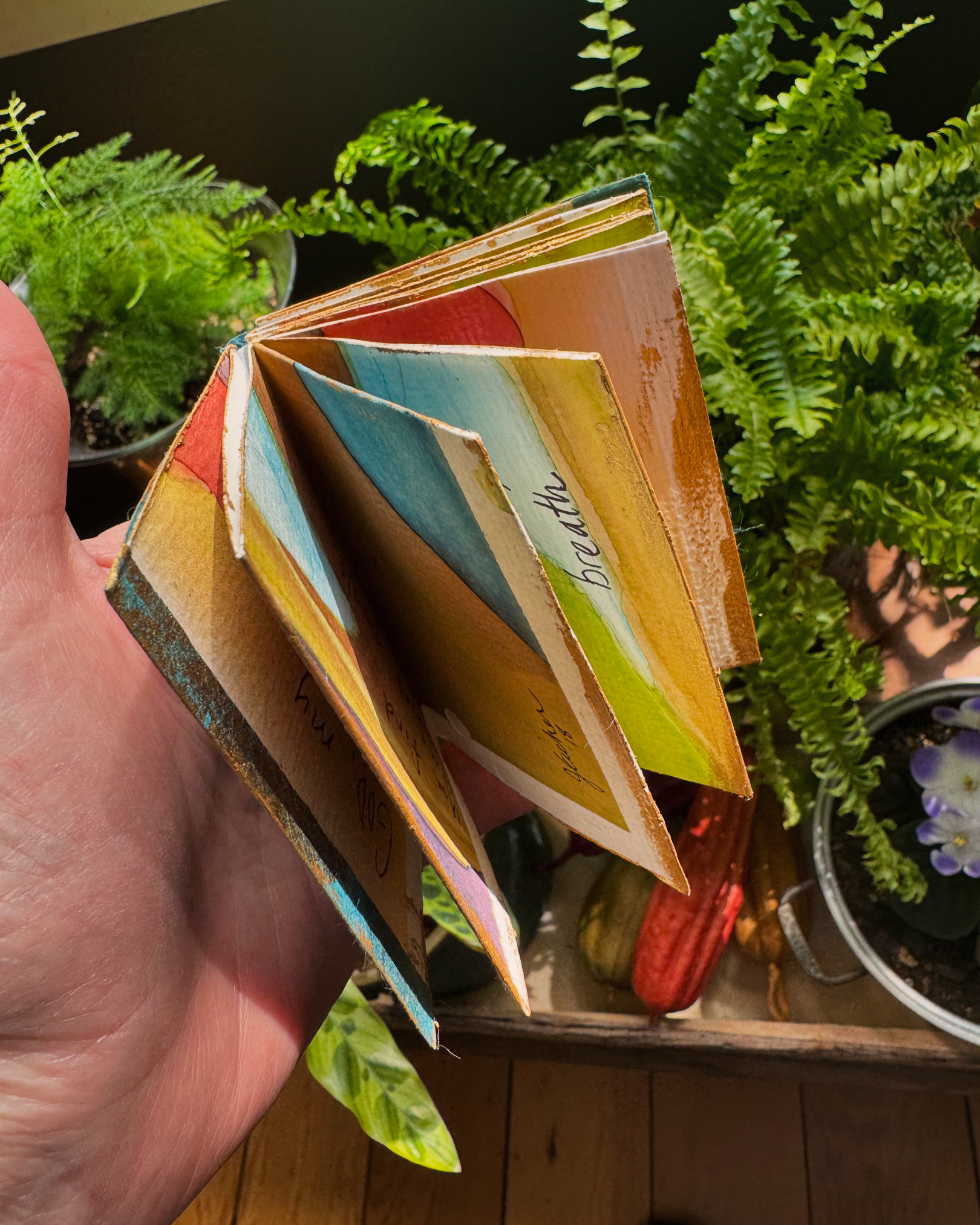
What to Expect: You will have all the freedom and guidance you prefer as you create your one-of-a-kind masterpiece! Jaqui will lead you through the steps she has used in her practice. This process of creating your own book is thoughtful and empowering. Once you learn the basic process, you can take the idea to any level you want (big/small, plain/fancy) and use any supplies you choose.
Take Aways: You will leave with a unique book all your own and resources (including news about future classes). Hopefully you will find inspiration to continue your own art practice and gather inspiration from your peers.
* If have an aesthetic in mind and you would like to bring your own supplies — we will be using multi-media art paper, scissors, stick glue, PVA glue, handmade paper, bone folder, and cloth book tape.

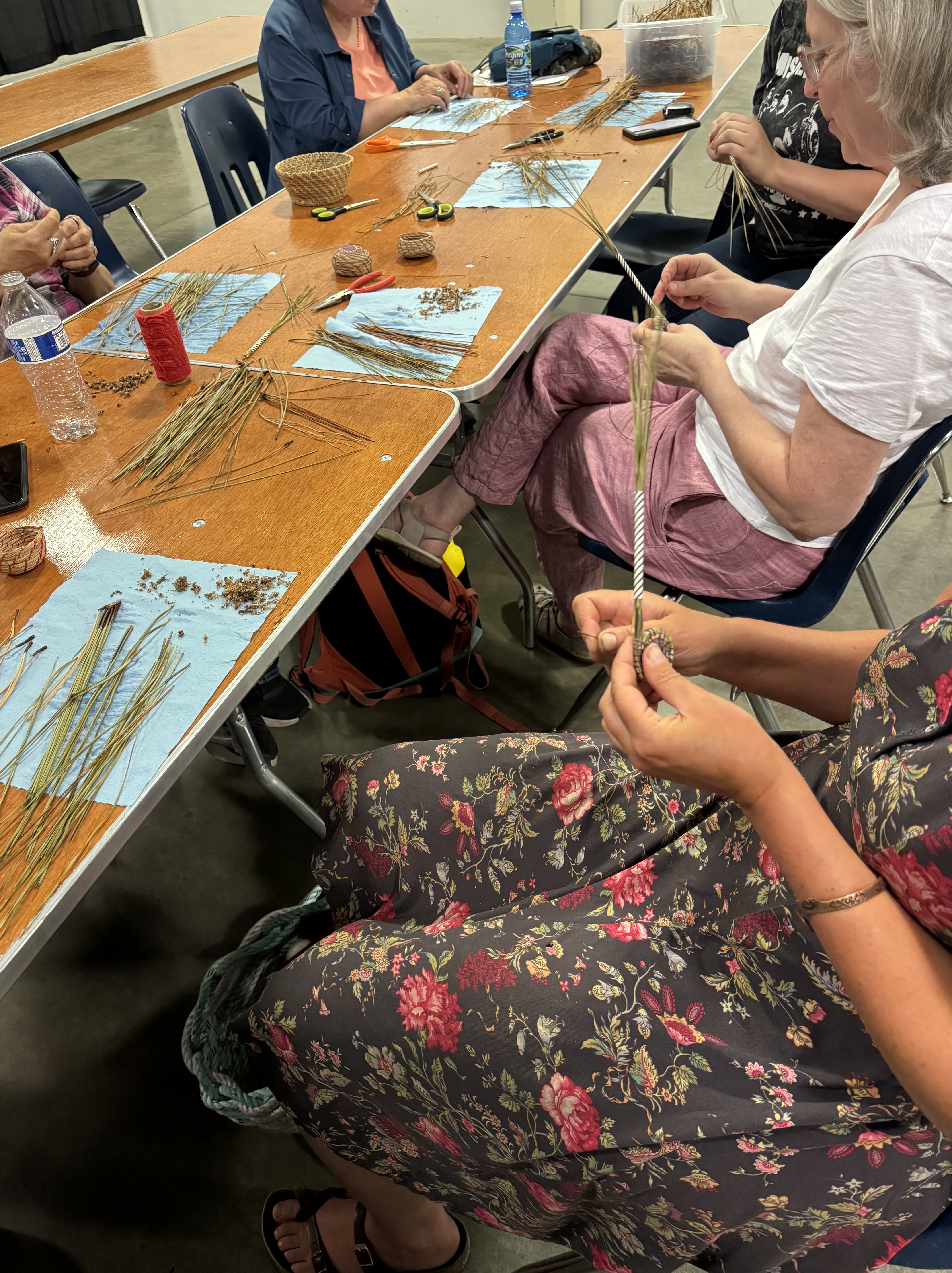
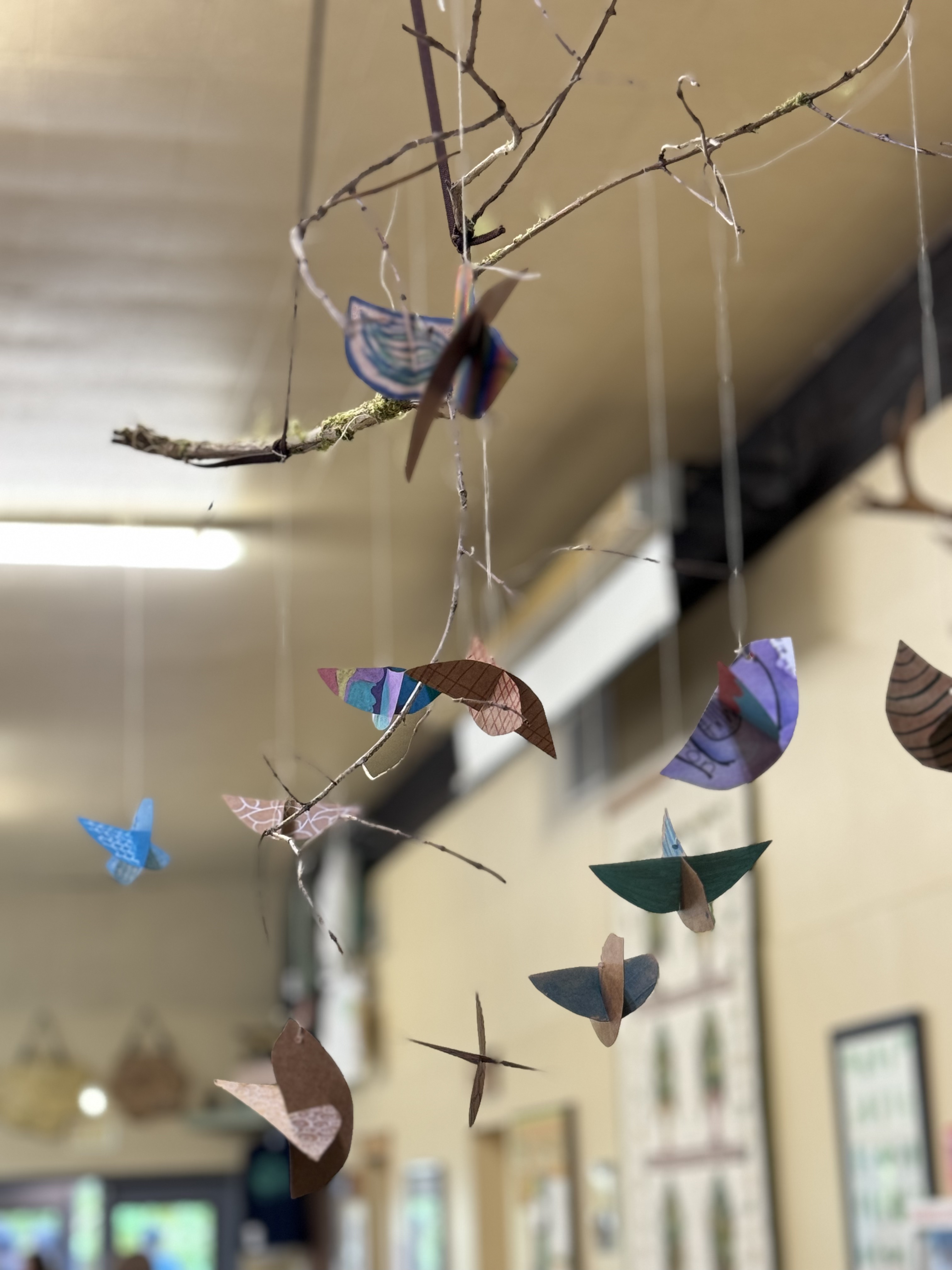
More art in more places. More art at Drift Creek Camp, in the Siuslaw National Forest; more art using gifts from the forest collected on walks with my sweet dog, just minutes from my home. Last week high school age humans created Neurographic art and recycled cardboard bird mobiles and adult humans learned to make pine needle baskets that fit neatly in the palm of their hand. We all paid attention to things that matter, like kindness and empathy and words.
Creating a pine needle basket is an intuitive process. Your hands feel when the bundle of hydrated needles want to start the upward shape of the side of the basket. There is no such thing as a machine-made basket; human hands make them. I noticed, while teaching adults the first simple stitch in basketry, that the word oblique (when offered by a student) to describe what I was demonstrating, felt wildly out of place–but it wasn’t wrong. At the end of the class, we talked about that word and how we all react to words and how we use them differently.
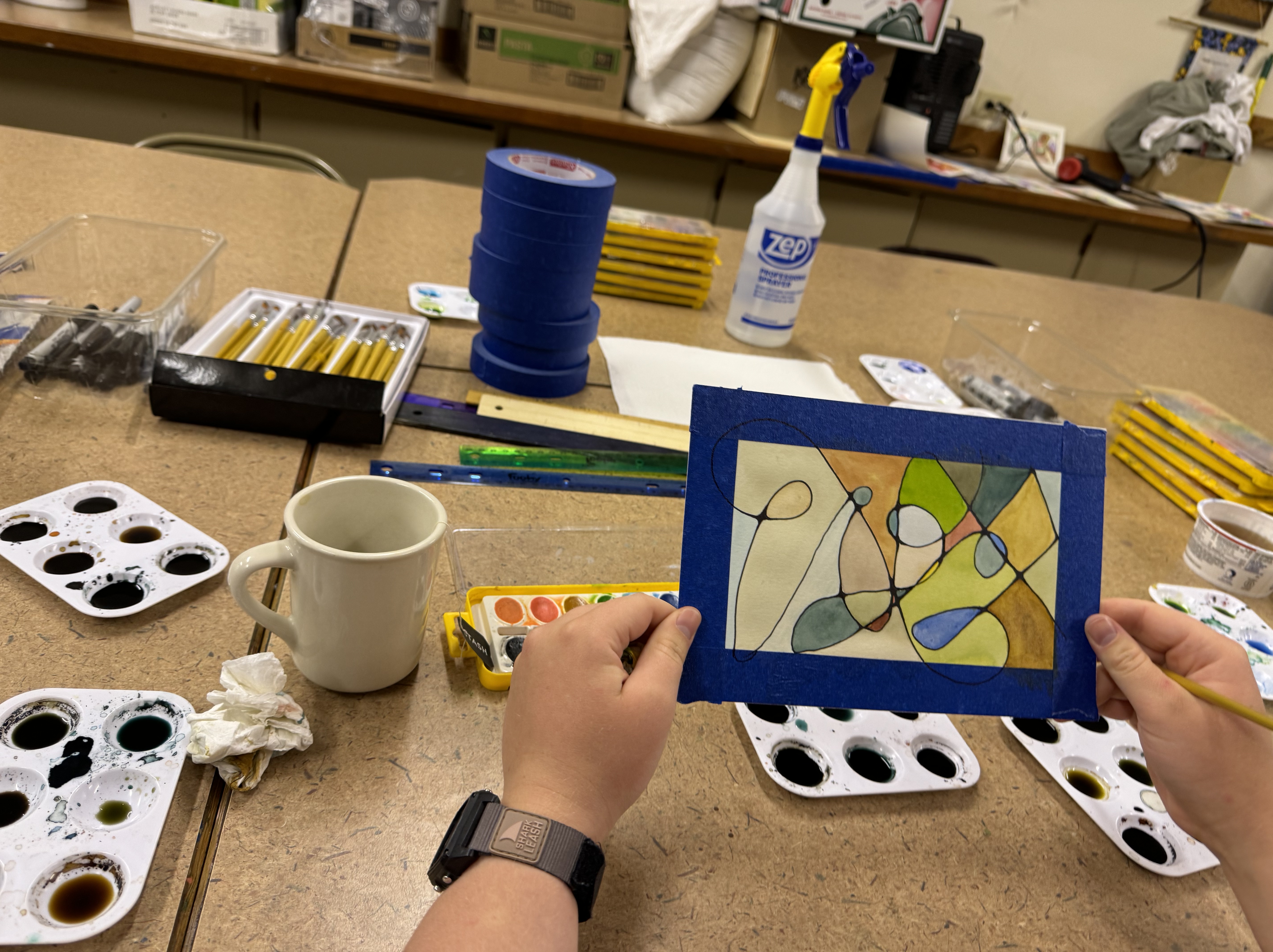
The high school age humans listened as I described the multitude of choices they could make as we progressed through the steps in creating Neurographic art, recognizing that in a world where it feels like they have control of so little, this could feel like a gift. My dear friend Brenda pointed out that using watercolor can also feel like letting go of control (also a gift).
I love this work, and I get tired. After this weekend of another pine needle basket making class at Black Sheep Gathering in Albany, I’m taking a little break from teaching art. I’ll be painting pet portraits instead* while I process all the learning I’ve done this week while I taught.
* I just realized I’m painting a cat named Tommy and a dog named Jerry. That’s fun.
For more than ten years I’ve been looking for ‘home’. I tried so hard to make downtown Corvallis my home, but living across from an iconic and noisy bar, it turns out, is A LOT. Too much. My dog Pearl and I love our neighbors and have both made so many friends downtown, but something needed to change. We both feel much happier and settled when we are near moving water, some trees and away from pavement/traffic. We have finally found a place to be near water, trees and even closer to the park we walk every day with friends. We are both sleeping at night now (as it happens, sleep is one of the keys to a happy life).
Also for ten years I’ve been working on my art practice and profession. Formerly a middle school teacher in public schools, I’ve danced around teaching both young and old during this ten year span, interspersed with some other jobs that included animals. I’ve been working in places that nurtured different parts of my soul.
For some reason this move to a quieter place, paired with some artistic practices, connections with people and just the right timing, I now have found my footing; I’ve discovered the path to pursue: Teaching art to all ages. Using the practices that have kept me going for the past 10 years to teach others how to keep going. Kyle Morton wrote in one of my favorite songs, Time, Time: “Time, time, inexorable time/you were drawing a circle/I was drawing a line.” I’ve been made aware recently of how much circling back I have done in my life. The more I circle back, the more sure-footed I become. My hope is to continue this new direction toward the home within me, and while I’m here, help others do the same.
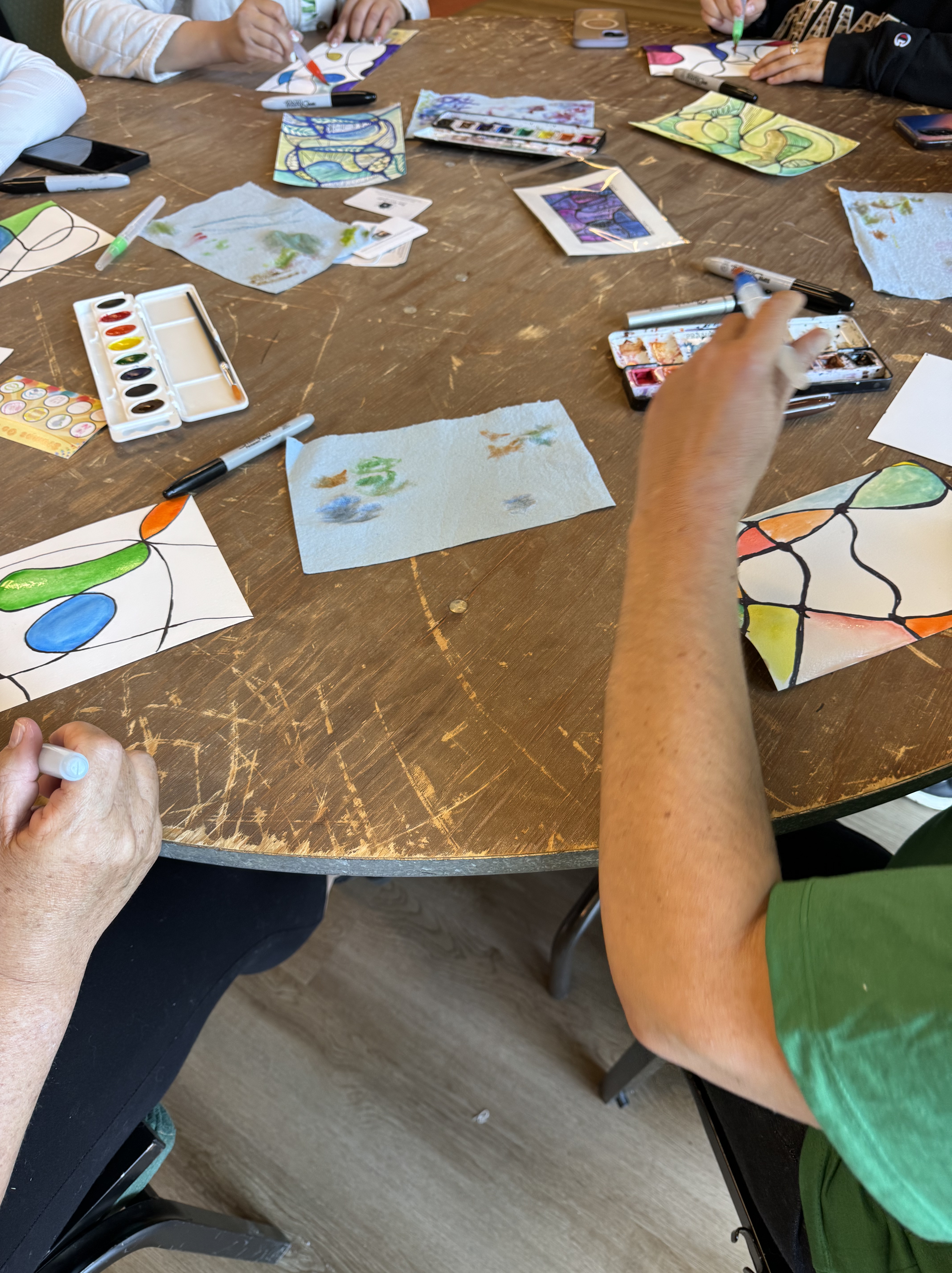
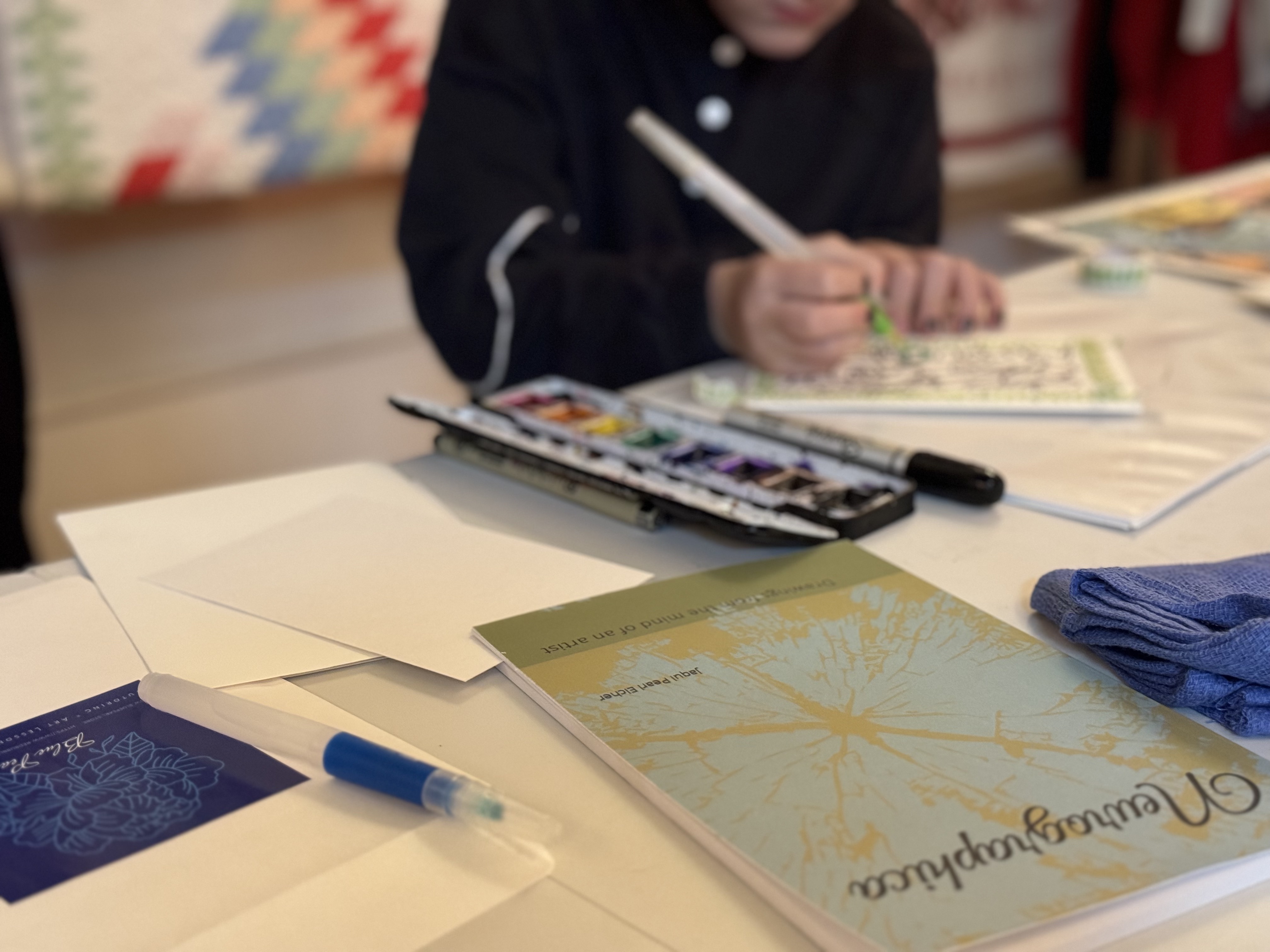
Here are some pictures from recent classes and a list of upcoming classes. I’ve met some amazing folks and I even ran into some people I’m fond of from the past.
Upcoming Classes:
June 17/18; June 24/25 — Art at Drift Creek Camp Summer Camp
June 28/30 — Pine Needle Basketry at Black Sheep Gathering in Albany
July 1/2; July 8/9 — Art at Drift Creek Camp Summer Camp
July 6 — Neurographic Art at Albany Mennonite Church for youth
July 20, 2pm — Book making at 2 Towns Ciderhouse (spaces available)
July 24th, 5:30 — Book making at 2 Town Ciderhouse (spaces available)
If you would like more information, please send me a message. Also, please inquire about private classes for your own group of friends. I’ll travel to you, if you like.
With Love,
Jaqui Eicher (and Pearl)
jaqui.eicher@gmail.com
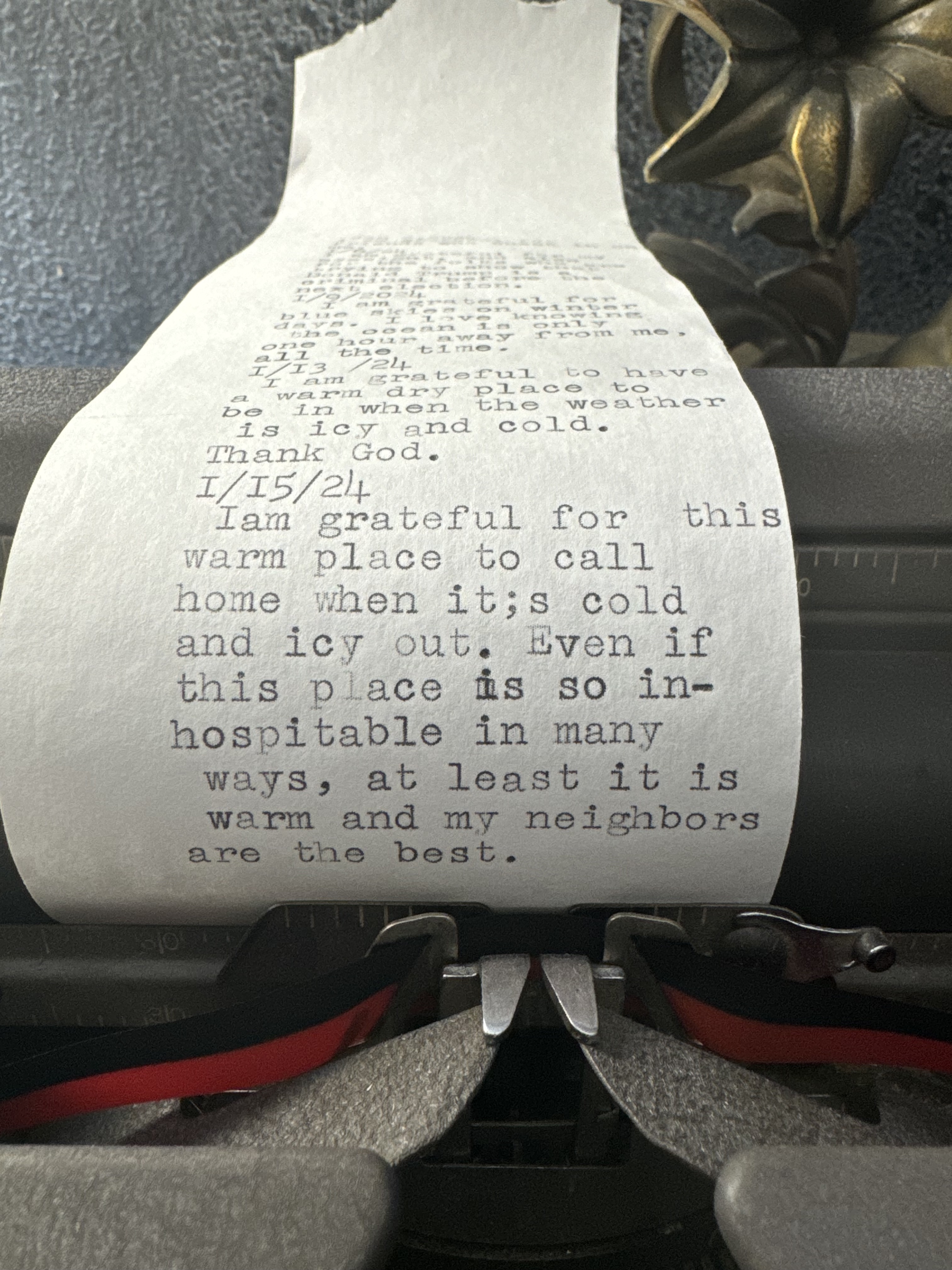
November 4, 2023: I am grateful beyond measure for Drift Creek Camp and beloved friends to share it with.
November 9, 2023: I am grateful for sun breaks on rainy days in November.
November 16, 2023: I am grateful for cortisone shots in the heel. That’s right–you heard me. Anything to help plantar fasciitis.
November 17, 2023: I am grateful for friends who can help me move large items when I really need help. #dumbdelivery.
November 24, 2023: I am grateful for friends who accept me as I am.
November 29, 2023: I am grateful for sunlight.
Written by: Wayne Chambers
“These history talk about Dever School District were given at the 100th year celebration on November 5, 1954 at Dever School. The 8 Edward A. Chambers children including your great-great grandfather Elmer and my father Elbert attended Dever School. My sister Marilyn, brother David and I went 8 years to grade school at Dever.
“The Dever community has changed over the years, resulting in too few students for a grade school. The school building was sold in 1983. I hope this history is of interest to you.”
‘The Beginning of School District No. 20, Linn County
My talk given tonight concerns the years 1854 to 1880, the beginning of School District 20, Linn County. Our toastmistress, Mrs. Harnisch, has already mentioned that Syracuse Precinct had earlier schools, one of which was attended by Allie, McClain, and aunt of Mrs. Elizabeth Truax in 1848. It was located on Fenn Butte, afterwards called Zimmerman’s Hill, where Mr. and Mrs. Parker now live. Mrs. Truax has established this as correct, as there is a spring above the house from which Johnny Fenn, the teacher, carried a bucket of water for his school in the Fenn house. There was also a brickyard close by — a pile of brick is still there. In 1865 the minutes mention this brickyard location. This was the first school in Linn County.
There was a District 22 organized by law in November 1854, from which date we celebrate this Centennial. That schoolhouse was situated on the Charlie Cox farm, once part of the donation land claim of an old pioneer, John Weis, who lived where Mr. and Mrs. Drager now live. This school house was a log house with homemade seats and desks. Quills were used as pens and their ink was homemade. The equipment was a stove with pipe, a bucket, wash pan, dipper and dictionary.
The first directors elected were James F. Jones, John T. Crooks and John B. Miller; the clerk was Benjamin F. Redman who was the first teacher. He was also a justice of the peace. Redman lived in a house east of Ardle Edwards’ old house and was clerk and teacher until 1861.
Much honor is due these early pioneers for their perseverance and ability. We are justly proud of them. The first funds received were $52 in April, 1855. Mr. Redman taught in 1855 three months for $33.33 and received part pay of 58. At that time 3 months a year was the time taught.
When this district was organized, the pioneers built their own school house by subscription, 17.5 square feet, located very nearly in the center of that district. The pioneers built this log school house in one month’s time.
In 1858 the voters made a union of District 20 with District 22 and thereafter the entire district was called District 20. By this, we see there was a District number 20 already existing. The Weis school house was then sold to Mr. Weis for the sum of $100, with the teacher taking $65 of his money in trade. Perhaps Mr. Weis ad a store at his place. The remainder of the $100 was paid by James F. Jones. District 22 is now near Scio.
From 1858 to 1869 there was a school house on the Allphin claim near the Allphin cemetery which was on the hill behind Mr. Mervin Case’s house. This was a small school house, too small for the number of pupils attending. At different times it was voted upon to divide the district but the motions were lost as were also motions to raise school money by taxation. This old Allphin school house was sold later to Wm. Allphin for $16 when the new Allphin school house was built.
In 1859 the voters began to talk of a new school house and selected a place as near the center of the district as the nature of the ground would permit but it was not until 1868 that the district accepted a site which Wm. Allphin came forward and proposed to give: a site of 2 acres near Fenn’s Butte on the south side of Allphin’s land claim, near the old brickyard. Dayton Simison was appointed to circulate a subscription list to procure money to build the school house, which he did, and raised $558. In 1869 the new school house was built. It was 36 feet long, 24 feet wide and 12 feet to the eaves. This was the second school house to be called the Allphin School House. In 1879 it was voted to move this Allphin School House and the move was made in 1885 to the S.T. Jones Place where Mr. and Mrs. Craft live, which is now the E.A. Chambers’ farm. It was then known as the Syracuse School House, and referred to as the Jones School House. This building burned in the summer of 1911.
To go back to the pioneers of these years to whom we owe so much, we will mention some of the directors of District 20. They were Samuel T. Jones, John McCoy, Absolam Addington, J.J. Davis, John Meeker, Hiram Farlow, James Butcher, Thomas Allphin, John Weis, Elias Johnson, Christopher Farlow, Henry Johnson, John Wilson (for whom Wilson Lake is named), Wm. Hale and David Lewis. Many of these names we recognized by having heard them mentioned by our parents; also some descendants are living in the districts of Dever and Conner. I will mention these descendants now: Mrs. Myrtle Jones Graham and Charles Jones, descendants of S. T. Jones; Mrs. Zelma Davis Harnisch and Mrs. Davis Harnisch, descendants of J.J. Davix; Stacey Meeker Neeley, descendant of John Meeker; Elizabeth Cardwell Truax and Gerald Truax, descendants of E.C. McClain; Rebecca Crooks Hoefer, descendant of John T. Crooks; Dale Wills Harnisch, descendant of Dayton Simison.
The clerks who served between 1854 to 1880 are also recognized as outstanding men. Their minutes in the record book clearly show their ability. These clerks we honor this night of November 5, 1954 are: Benjamin F. Redman, who served 7 years; E.C. McClain, 1 year; J.J. Davis, 2 years; Horace Farwell, 4 years; Dayton Simison, 7 years. Samuel Crooks, 4 years (elected in 1876).
Now to honor our teachers. I will mention just a few of the most important: Benjamin F. Redman, the first teacher who taught 4 years; Lydia Miller, 1/2 year; W.L. Coon of Peoria, 3 months; L. Flynn, later an Albany banker, 3 months; J.D. Pruitt of French Prairie near Salem, 3 months; John S. Fenn, 3 months in 1869, 1872, 1873 and 2 terms in 1874; Peter A. Moses, 3 months in 1879; and T. Handord, 3 months in 1880.
I know this District 200 was a typical frontier district, having their trials, such as lack of money, no roads, great distances to travel, which was done by horseback, and no conveniences. But they had their joys too. They had singing lessons, political rallies and church services.
We do not know many exciting events of this period but we are told of two murders, two suicides and a big flood — the water being higher that at any time since, measuring 36 feet in Albany in 1861. I thank you for your kind attention. (Rebecca Crooks Hoefer)
Written by Violet Case:
“I, Violet Garland Case, was married June 30, 1932 and came to this community as a young bride after graduating from Albany High School which is now occupied by the First Baptist Church of Albany.
“My new husband’s mother died all of a sudden and he had been running the home place prior to this, but now he had no cook and we decided to get married. Now that put an end to my further education. But I did avail myself to some extension type courses, and some classes put on at the Conner School.
“While I was going to high school I had worked part time at Woolworth’s and then after being married, at Montgomery Ward and Company. I enjoyed meeting the public.
“In 1932, they were depression days. I very well remember working for 10 hours a day at 15 cents an hour, training hops for Henry Hoefer Farms and then doing all the work at home in the house. At that time men’s work shirts were 49 cents and peanut butter was sold for 5 or 10 cents a pound and you brought your own container for it. If we wanted ice cream we’d take an empty bucket and get ice cream. We didn’t have fancy containers like today. And if folks got a large peppermint stick from grandparents it was a big treat.
“We grew more diversified crops as years went by. But I always drove a tractor and pulled a combine. We canned pumpkins for Del Monte Canning Company. We also milked a few head of cows each morning and it was my job to wash the cream separator each morning until we started selling whole milk to the Albany Creamery in Albany. Then milk trucks picked up cans daily. I still have some of those milk cans we used.
“I always planted a large garden and canned and pickled all kinds of things. Later we got electricity in this neighborhood and we thought it was the greatest thing. We got milking machines and all kinds of appliances. We could afford them better then as the economy had improved and cannery crops brought more revenue. Back then we’d gotten inside plumbing and what a blessing that was! No more outhouses in the dark.
“We also got to raising baby chicks and had our own fryers to eat. Then we kept the hens and kept a large chicken house and sold eggs from the hens. We got to buying breeding hen turkeys . Our feed supplier would find the turkeys and we would buy them and put them in roosts. We’d string lights which caused them to start laying eggs quicker and we had nests all around in the fields and in the old barn.
“It was real fun picking up turkey eggs. It seems like we got $1 each. We then cleaned them and shipped them away to other states. We did this for several years until the market closed.
“One year high water cam and we had to go out in boats and put turkeys in boats and haul them into the barn to save them. And so thank the Lord they didn’t panic. We hauled them into a dry place. Neighbors were good to help. Walt Harnisch was the good neighbor to help. But in those days people helped one another a lot.
“In 1939 we had a baby boy and named him William L. Case. When he got old enough he started to our country one-room school, Conner School. We always had good teachers because our school was very selective in getting qualified teachers. Mervin Case, Walt Harnisch and others made up the school board. Our son Bill started attending school in Jefferson when he was in 8th grade. Our district consolidated. He had good teachers and the competition in a larger school was good. Bill enjoyed sports and the expanded program of the larger school. We parents got involved in school activities.
“Our grandchildren got a good education background in Jefferson and all 5 of them went to college. The only one that went to a junior college was our oldest grand daughter and she graduated in a medical field to become an employee of Salem Hospital. My family are all pleased with Jefferson and are very involved in many activities.
“For years back I’ve helped with after school time for Bible classes across the street from the school. We used to have Sunday School and church at the Conner School, then later the community acquired an old vacant store building at Dever Station. Then we had church and Sunday School there and used the facility as a community hall for years.
“After a few years the church members decided they needed a church and our men went over to Camp Adair, which was closed down and bought an old theater building (they may have bought more). Men helped tear down the building and it was brought here and first they built a parsonage, then the church out of the used lumber. The folk had a mind to work and there was a peaceful happy atmosphere over all the accomplishments. Women fixed food and pulled nails.
“It’s such a blessing to me today to see the families who had a part in this time. All and all I give thanks for the blessings of living in this farm community, and being married to my dear husband for 68 years before he went home to be with the Lord.”
Written for: Danielle Johnson
“There used to be several small community schools in the Jefferson area that were attended by neighborhood children. Most were one or two room school houses with a bell tower. These were gradually closed down in the 1940s and ’50s, but were attended by several of your relatives.
“Not, however, by your great grandfather, Varion Goin, who attended school in Jefferson. He rode his pony to elementary school, stabling it nearby during the day. By the time he was in high school, cars were being seen in the area. Varion’s father Alfred, bought one of the first cars in the neighborhood, but he didn’t like to drive it. So by the time Varion was 15 years old, he was driving the car to school.
“Varion had some health problems that caused him to not attend for a couple of years during high school. He returned and graduated in 1925, I think, where he liked to say he was second in his class. There were only two of them, which was a small graduating class, even for the time.
“Varion’s first three children: Veva, Bonnie, and Vernon, went to elementary at the Looney Butte School which was converted to a house. You probably know which building it is.
“Your grandfather Ace attended a small school south of Salem. If I remember right, it was part of the Salem District, but he lived on the boundary and was able to choose. He went to high school in Jefferson. You’d better ask him to correct my mistakes.
“Jim McManus was raised in Talbot. Local children went to their first three grades (no kindergarten in those days) at Talbot School, a one room school located where the Talbot Fire Station is now. After three years they transferred to a Sydney school for grades 4 through 6. It was located where the Kuzma family now lives. After 6th grade, they rode the bus to Jefferson for the rest of their schooling. By 7th grade, of course, girls and boys were pretty interested in each other (ok, mostly the girls were interested), so the ‘new’ students from Talbot were highly anticipated. They would be known to Jefferson kids and known of by others. There was much checking out of the opposite sex, and of the competition.
“My siblings went to Jefferson Grade School, which is where I expected to go. But it turned out my class was too large for one room, too small for two, so they bused 13 of us to the Conner School every day. Conner took local Dever-Conner students in grades 1-3 but the year I was there, there were only one third grader and three or four second graders. Most of my Jefferson classmates spent a year at the Conner School in first, second or third grade. The school was closed after my third grade.”
Written by: Weltha Jo Goin Johnson
“My Dad’s family, the Goins, came to Oregon in the late 1850s by covered wagon. They first settled east of Jefferson near Green’s Bridge. In about 1898 my grand dad, Alfred Goin, bought the property north of Jefferson that my husband and I live on now. My dad was born on the farm in 1903 and died there in 1993. My children, Kari and Blair, and their families, including Danielle, live on this same property. That’s five generations to have lived on this property. The farm used to go from Danielle’s house all the way to the Jefferson Middle School, but most was sold.
“My dad went to school at Jefferson. So did I, my children and now my grand daughters. My dad walked 3 miles to school and home. Sometimes he rode a horse or drove a buggy on the dirt or mud road, but it was too much trouble to take the horse to livery stable downtown Jefferson in the morning and pick it up after school, plus the horse was ‘barn sour’ and really didn’t want to be taken to school. So my dad just walked or jogged. Our neighbor says he was the original ‘jogger’ way back in 1916.
 Jaqui Eicher