Recognizing Light (John 1: 9-18;Ephesians 1: 3-14)

There are days I don’t even recognize myself; days that feel too hard, too mean, too painful; days I just do not want to enter. I react to others in ways that don’t feel kind. Sometimes I let my fear and grief turn into anger. Do you have days in your life like that too? I’m guessing so. I don’t think this is unique to me. 

During my years of teaching middle school, I knew that each day could be a day that at least one of my students didn’t want to come to school. . . or study writing or history. It was always important to me to connect with ALL students, wherever they were at in the moment. But honestly, some moments were incredibly difficult. One memory comes to mind in particular: I was working hard to convince one 7th grade student to begin writing (I don’t remember what about). The point is that I remember encouraging him to begin by writing something and he refused repeatedly. Instead, he insisted on doing nothing. We were both so frustrated. At the end of that class period, this student left in a hurry and as I tidied up the classroom, I found a note crumpled on the ground. 

Now, I’m always curious about written notes wherever I find them, so of course I smoothed it out and read the words. This note turned out to be from this unwilling writer to another student and it said something like: “Mrs. Forney is so mean. I hate her so much.” This was 15 years ago, and this memory is still so vivid—that’s how much I was impacted by those written words.  I felt so misunderstood in that moment (as I’m sure the unwilling student felt this too). I felt as if I couldn’t express my desire to help him and he was not listening to my way of helping. That’s it, I felt helpless, and it was so painful to me. I’m sad about the fact that I never understood or was understood by this student and maybe that’s why the memory is so vivid. 

Everyone has different ways of expressing difficult feelings. Thankfully we learn more helpful ways of expressing ourselves as we grow and interact with the world.  I recently read a story* about a medical doctor who supervised residents at a pediatric hospital. 

One resident was sent to her for individual meetings because he was angry and surly with his colleagues regularly the director of the hospital thought it might help him. For a month they met one-on-one and mostly the doctor just listened to the resident complain about how his colleagues were not helping patients as much as they should. He was angry and felt that most of those working around him were callous, stupid, or uncaring. The doctor meeting with him helped him see that there might be an underlying reason for his rage. He asked her, “Why are things like this? Why are children suffering?” and he cried. 

At their final meeting, the supervising doctor asked the resident if he would try some imagery. After first refusing, he ended up agreeing to it. The doctor asked him to allow an image to come that was related to the suffering and the meaning of his work as a pediatrician. He found an image immediately and described it:

The image was of a young man, wearing a long white robe and sandals, with a beard. He went on to say the figure looked weak and soft, and just stood there. “He’s just standing there looking at me,” the resident said, “with his arms out. . . this guy could just stand there with his arms out like this forever and ever.” Next, the resident saw a little bird land in the figure’s hand. Both the doctor and resident realized he was describing St. Francis of Assisi. 

It turns out this resident had great respect for the historical figure of Brother Francis. He looked up to him for his love, kindness, and care of animals. In other words, this resident aspired to be like Brother Francis. The supervising doctor helped this resident remember why he was drawn to pediatrics in the first place, and to move past his criticism of his colleagues. She helped him recognize his grief of seeing children suffer was coming out as anger toward those he worked with. This supervisor went on to see many young people of vision who suffer from a deep sense of difference. She said, “They may first need to abandon their resentment of the way things are in order to begin repairing the world.”

Here’s what I think. We are reminded through scripture today that none of us has ever seen God. God was revealed to us through Jesus and his life here. But sometimes we humans have a hard time recognizing God, revealed through Jesus, in modern day life.

John 1:9 says: “The Word was coming into the world—was in the world—and though the world was made through the Word, the world didn’t recognize it. Though the Word came to its own realm, the Word’s own people didn’t accept it.”

I think this can make it challenging to recognize God’s love in and through others, not to mention in and through ourselves. It might seem like I’ve strayed a little from our scriptures by telling you these two stories, but please stick with me. In Ephesians 1 we heard, “Before the world began, God chose us in Christ to be holy and blameless and to be full of love; God likewise predestined us through Christ Jesus to be adopted children—such was God’s pleasure and will—that everyone might praise the glory of God’s grace which was freely bestowed on us in God’s beloved, Jesus Christ.”

So, we are taught, through scripture, to see Jesus as the light radiating the love of God, and then to be like Jesus through our own lives, illuminating the world around us. 

Well, some days it’s easier to do this than others, isn’t it? Like I said at the beginning, some days I let anger/fear/grief get the better of me and it’s then that I can’t recognize myself, or Jesus’ light in me. Each day (each hour, each minute) I have another chance to start again on this idea of radiating God’s love to the world around me. We all do. And, we are human, so of course there will be some days that are harder than others. Since we are all human, interactions between us can add light or make it harder to see the light of God’s love.

What I hear God saying through these scriptures though, is to keep trying. To remember that each of us is a child of God. . . beloved. . . and can illuminate the world around us. Thomas Merton (the former bohemian New York literary figure who became a monk) wrote: 

It is a glorious destiny to be a member of the human race, though it is a race dedicated to many absurdities and one which makes many terrible mistakes; yet, with all that, God gloried in becoming a member of the human race. A member of the human race! To think that such a commonplace realization should suddenly seem like news that one holds the winning ticket in a cosmic sweepstake.

I have the immense joy of being human, a member of a race in which God became incarnate. As if the sorrows and stupidities of the human condition could overwhelm me, now I realize what we all are. And if only everybody could realize this! But it cannot be explained. There is no way of telling people that they are all walking around shining like the sun.

As our scripture from Ephesians tells us: “God has taken pleasure in revealing the mystery of the plan through Christ, to be carried out in the fullness of time; namely, to bring all things—in heaven and on earth—together in Christ.”

My question for each of us is this: how do we plan to join God’s plan of bringing all things (in heaven and on earth) together in Christ? I don’t have an answer formulated for myself, but I do know I can feel it when I’m on the right path. Those are the moments in my life when I can recognize ‘myself’ and feel peaceful within my own body. 

* From My Grandfather’s Blessings, by Rachel Naomi Remen
Hope

Ordinary Courage 

What are the grounding practices we can lean on when life brings us challenges? Another way to ask this question is this: how do we find courage to keep going in the face of trials or challenges? The spiritual practice of prayer is one of our best tools for finding hope amidst the hardships in our lives. Recently, a friend of mine who is not a church goer, asked me: “Do you have a regular devotion or prayer time? In the morning or evening?” My answer was: “I pray by doing different things, like walking in the forest, driving, being with my dog in the quiet of my home.” To me, it seems like I’m always praying. 

Prayer likely looks different to all of us. For me, singing and poetry, walking and working with my hands are all forms of prayer; how I find hope and the courage to keep going. Sometimes, all I have the strength for is lighting a candle. In my most stressful moments, I find that I need to rearrange my space and move furniture, which often gives me a chance to see something new or see something old with new eyes. This has been true for me for a long time. Some of my most prayerful moments have been when I’m outdoors, among trees, or when I’m moving my body or working with my hands. 

I’m curious about some ways you find to pray. Do you prefer the peace and quiet of your own space, or do you like to go outside? Think about some ways you pray and feel free to call them out. Part of being courageous is being open to prayer and possibility (with God’s support).  

In my life, I’ve walked a lot of ground. I’ve even run and hiked many local hills and mountains, which was at that time a way of praying. I’ve since had to learn other ways to pray because my body doesn’t allow me to run. When I lived in the hills just north of Jefferson nearby, it was my habit to run about 7-10 miles from my house out into the country roads. One road was quite a rollercoaster ride when we drove on it. But when I ran on it, it was a new kind of challenge. Running downhill wasn’t much trouble and I felt good, like I was flying. Once the incline changed though, I found myself more winded. . . taking deep, slow breaths and slowing my pace a little bit.  

This is what life is like too. We all have those times when things are going along fine. There are no surprises, and we coast along without much effort. But then those challenging times come along and suddenly we need more strength to keep going. In the scripture today, we heard that Daniel was a friend of King Darius even though they prayed differently. The others in power around King Darius noticed this and plotted to have Daniel killed, out of jealousy. From Daniel’s perspective, nothing had changed, he kept praying to God. But the ‘hill’ he was traveling on suddenly got steeper for him because by praying to God, he was surely headed to a horrible death.  

TNH wrote: “When we climb the hill together, we don’t need to make an effort; we enjoy every step. Walking like that, if we are free of the past, free of the future, we can touch the kingdom of God with every step.” 

Praying and sharing God’s love with each other helps us walk like that, I think; sharing the effort of walking uphill together makes it possible for us to reach the top. By praying, we can ask God to share in our effort and I truly believe that God answers our prayers by sending/guiding others to act as the feet and hands of God. God sends others to walk with us during those uphill stretches of life.  

Daniel prayed, Darius fasted (a spiritual practice), and Jesus persisted in teaching about love and sharing with each other. All three hoped for something. Daniel hoped for the freedom to pray to God; Darius hoped his friend Daniel’s life would be spared; Jesus hoped his own life could be spared and that his teaching might continue. These hopes took all three of them on uphill journeys. All of them sought the help of spiritual practices to aid in their uphill journeys. 

Daniel, Darius and Jesus must have had a lion’s share of courage to face what they did, respectively.  

I did a word study in preparation for this message. I was reminded that the root word of Courage is ‘cor’ in Latin. In the Middle Ages the word Courage was used to describe “the heart as a source of feelings, spirit, confidence.” It originally meant “to speak one’s mind by telling all one’s heart.” 

Courage is not the absence of fear, but the willingness to follow God’s calling and purpose, relying on God’s strength and guidance. 

In her book, Gifts of Imperfection, Brene Brown talks a lot about courage.  

“Over time the definition of courage has changed and today, courage is more synonymous with being heroic. Heroics is important and we need heroes, but I think we’ve lost touch with the idea that speaking honestly and openly about who we are, about what we’re feeling, and about our experiences (good and bad) is the definition of courage.  

“Heroics is often about putting our life on the line. Ordinary courage is about putting our vulnerability on the line. In today’s world that is pretty extraordinary.” 

Can you imagine the courage of these three people? Daniel persisted in his spiritual practice of praying three times daily even after the decree was put in place making it ‘illegal’; Darius, after realizing the trickery involved, joined Daniel in his own spiritual practice of fasting, hoping to save Daniel from death by lion. And Jesus—Jesus responds to his inquisition by Pilate by reacting calmly and with a sense of peace, using Pilate’s own words against him. When asked if he was indeed the King of the Jews, Jesus says, “You say I am.” Pilate can’t fault him for those words. But the people accuse Jesus of instigating an uprising. We know Jesus prayed to God in the garden, asking for his life to be saved. 

As we all know, sometimes what we ask for in prayer doesn’t come to us the way we think it ought to or how we hoped it would. Romans 8:24-25 says: For in this hope we were saved. Now hope that is seen is not hope. For who hopes for what he sees? But if we hope for what we do not see, we wait for it with patience. And Hebrews 11:1 says: Now faith is the assurance of things hoped for, the conviction of things not seen. 

This is what I think: it takes courage to have hope—the kind of hope Daniel, Darius and Jesus had. In our lives it’s easy to lose the thread of hope; to lose patience with having hope because hope is for that which we cannot see. It really seems impossible.  

Today I brought a visual way for us to pray, and to envision hope in our own lives. I live near some really big redwood trees and when I take my dog Pearl out for walks, their beautifully curved branches litter the ground. For me, they are irresistible and I usually come home with a small handful for projects of some kind. Often I release them back into the wild when time passes and I still haven’t done anything with them. But last week I was praying and thinking of you all. And I had a great idea! 

My idea is for each of you to choose a piece of cloth/string and as you tie it to this beautiful, curved branch, pray for hope in your life. If you’d like, take a second one and pray for hope in the lives of others. Since this is the first Sunday of Advent, Hope is our special focus. Next week, there will be a different focus–love. The next time I speak in two weeks, our focus will be joy and I plan to bring something for us to add in this display to represent joy. The fourth week of Advent will be peace.  

Let’s be like Daniel, Darius and Jesus in our HOPE this week. Let’s pray even if it feels like we can hear the hungry lions. Let’s pray even if we feel as if the hill is too steep. If we pray together, the lions’ mouths will be shut fast and step-by-step the top of the hill will be achievable. It’s only alone that those seem impossible. With God—it is possible. 

Cultivate Simplicity, No. 6

I have always walked through this world as if afraid to touch anything in this china shop of life–afraid that my sudden movements may knock somethings off of their shelves.

And then? Then something might break open and I’d have to pay for it. My pockets are empty so I tiptoe, hoping that by the time I manage to safely reach the exit, I’ll have found that which is meant for me.

I have learned though–there are more durable and resilient beauties here than I first thought, which sends a tiny crack of regret through my body.

“You mean,” I say to myself, “I could have moved less cautiously all along? I could have danced and shaken the floor with both joy and sorrow without consequence?”

I vow to myself, now that I’ve seen more than half of the entire ‘china cabinet’ of life, to “let everything happen to me, beauty and terror,” as Rilke wrote; to tell others what my mind thinks and my body feels.

Hopefully all the beauties lining my path as I continue will resonate and sing along with my joy and lament. When I finally reach the exit, the kindly china shop owner will say, with a twinkle in both eyes, “I hope you moved around enough to loosen the dust in this place. . . or even to knock some things off their shelves. That’s the only way things change around here.”

Cultivate Simplicity, No. 5

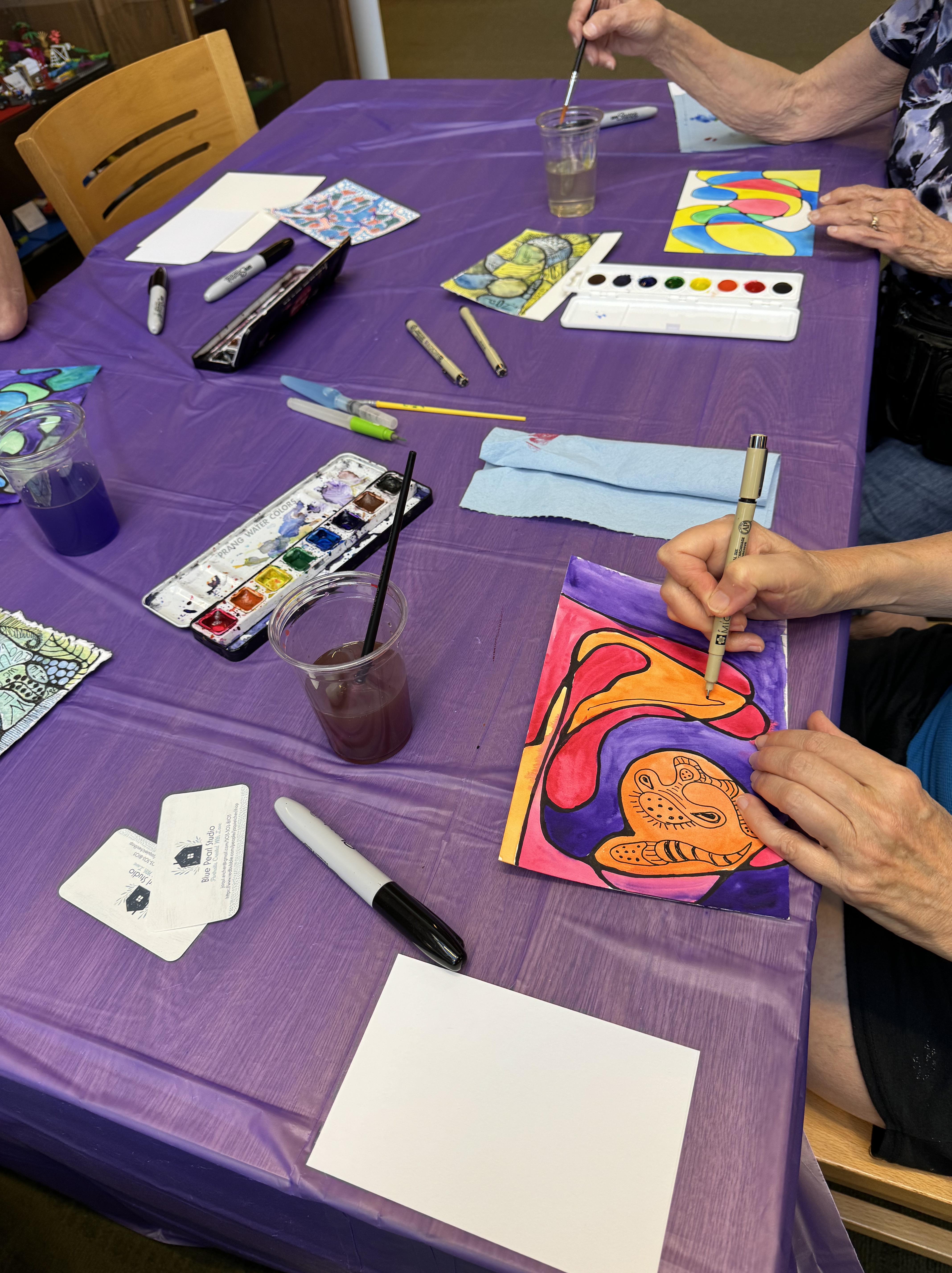
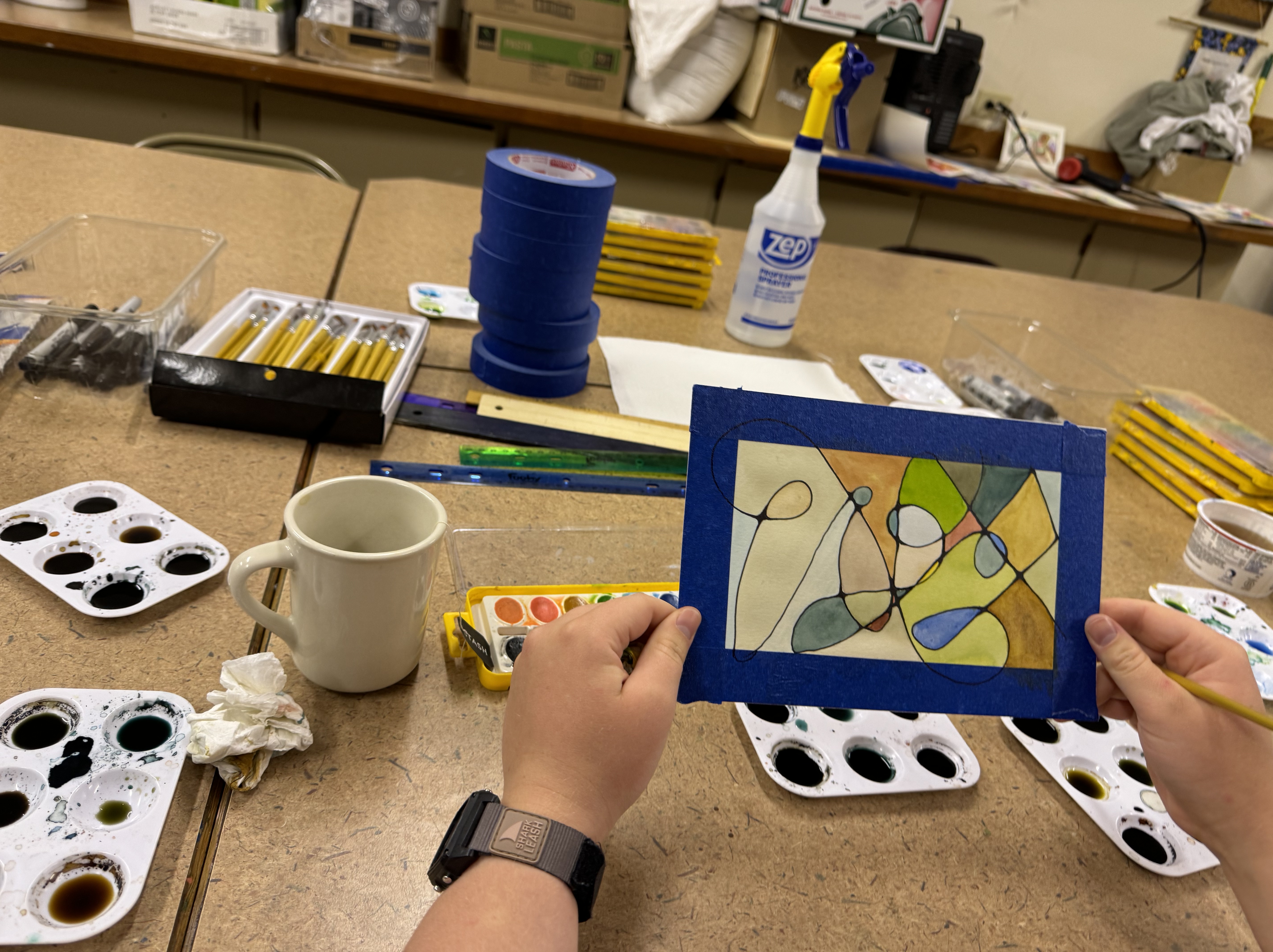
Last week I enjoyed teaching Neurographic art at the Albany Public Library, where the summer theme is, “Catch the Reading Bug”.

Our art reflected some conversations about favorite bugs, what can be technically called a ‘bug’, and the most dangerous bugs we’d ever encountered fist hand.

The 12 participants and two library employees enjoyed the peaceful class in the Garden Room. We had access to books about insects for design inspiration. Each person left with some original art, knowledge about how to maintain a Neurographic habit and some new art friends.

Two mothers of young children took some art time for themselves while their families spent time in the library. Some retired folks participated for the sheer joy of learning something new. It was a lovely mix of generations and experience.

What I love about teaching these art classes is seeing everyone’s approach to abstract art. Participants demonstrate over and over that this form of art will not get old–everyone who tries a hand at it will make something only they can make because it’s directly connected to what’s inside them.

And each time I teach this class, I’m reminded that the process is the most important part (not the product). If I let it, this could help me stay grounded in the present in all areas of my life.

Things That Need Water

Faucet, pump, irrigation line

Twin fawns, born late July

Wood floor boards after foot traffic

Dahlias in full bloom

Sweet Pea seedlings in Grandma’s enamelware pot

Native seeds littering forest floors

Travel-weary salmon

The child, returning home from school

My dog, who drinks most before going outside

Visiting Monarch butterflies

Dry ground

“Hope is not the conviction that something will turn out well but the certainty that something is worth doing no matter how it turns out.” Vaclav Havel,

Things That Need Water

Are also things that could use a prayer,

That is to say–most everything needs water.

Prayer is like water.

The dry ground in late summer

The person exhausted by a life of never enough

The child striving to look like others; to ‘fit’

The one who feels so lonely.

All these need water, which is prayer.

Like water, prayer changes things,

Provides hope,

Which is not to say with certainty

That things will turn out well,

But that certainly a thing is

worth striving toward no matter how it turns out.

Upcoming Art Classes With Jaqui Eicher

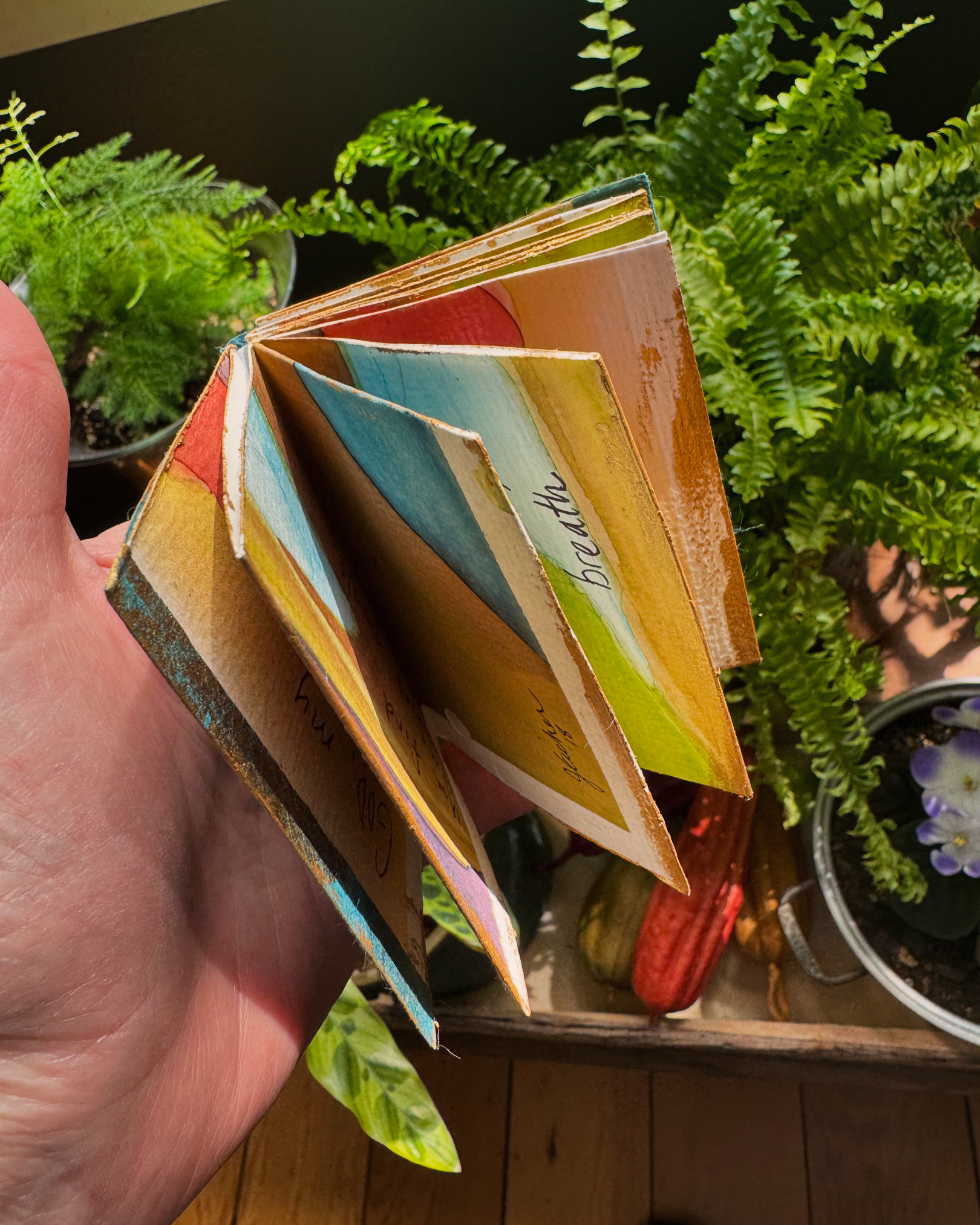
Tiny Art Books At 2Towns Cider House 33930 Southeast Eastgate Circle Corvallis, OR 97333

Saturday July 20, 2pm and/or Wednesday July 24th, 5:30pm

What to Expect: You will have all the freedom and guidance you prefer as you create your one-of-a-kind masterpiece! Jaqui will lead you through the steps she has used in her practice. This process of creating your own book is thoughtful and empowering. Once you learn the basic process, you can take the idea to any level you want (big/small, plain/fancy) and use any supplies you choose.

Take Aways: You will leave with a unique book all your own and resources (including news about future classes). Hopefully you will find inspiration to continue your own art practice and gather inspiration from your peers.

* If have an aesthetic in mind and you would like to bring your own supplies — we will be using multi-media art paper, scissors, stick glue, PVA glue, handmade paper, bone folder, and cloth book tape.

Cultivate Simplicity, No. 1

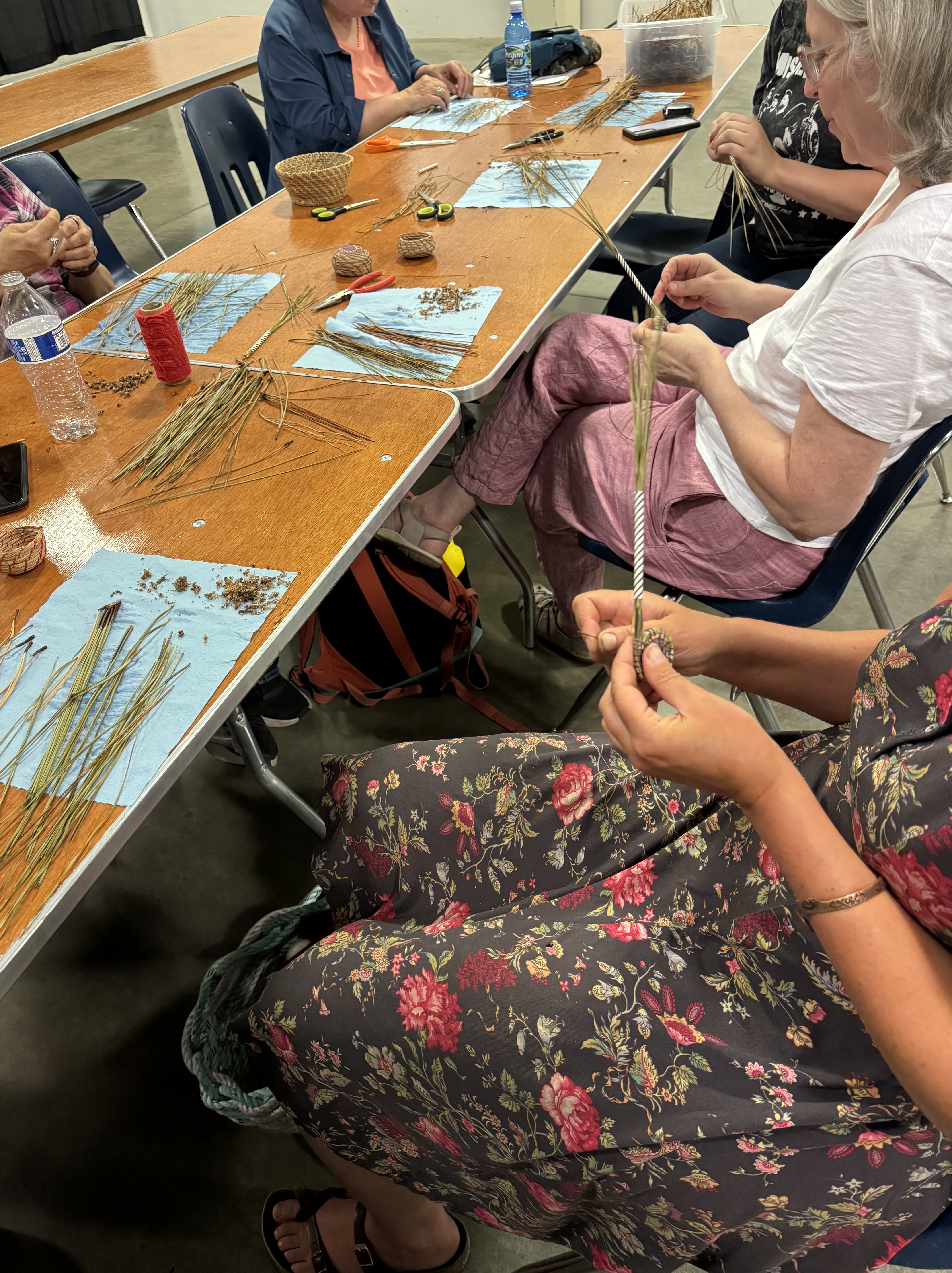
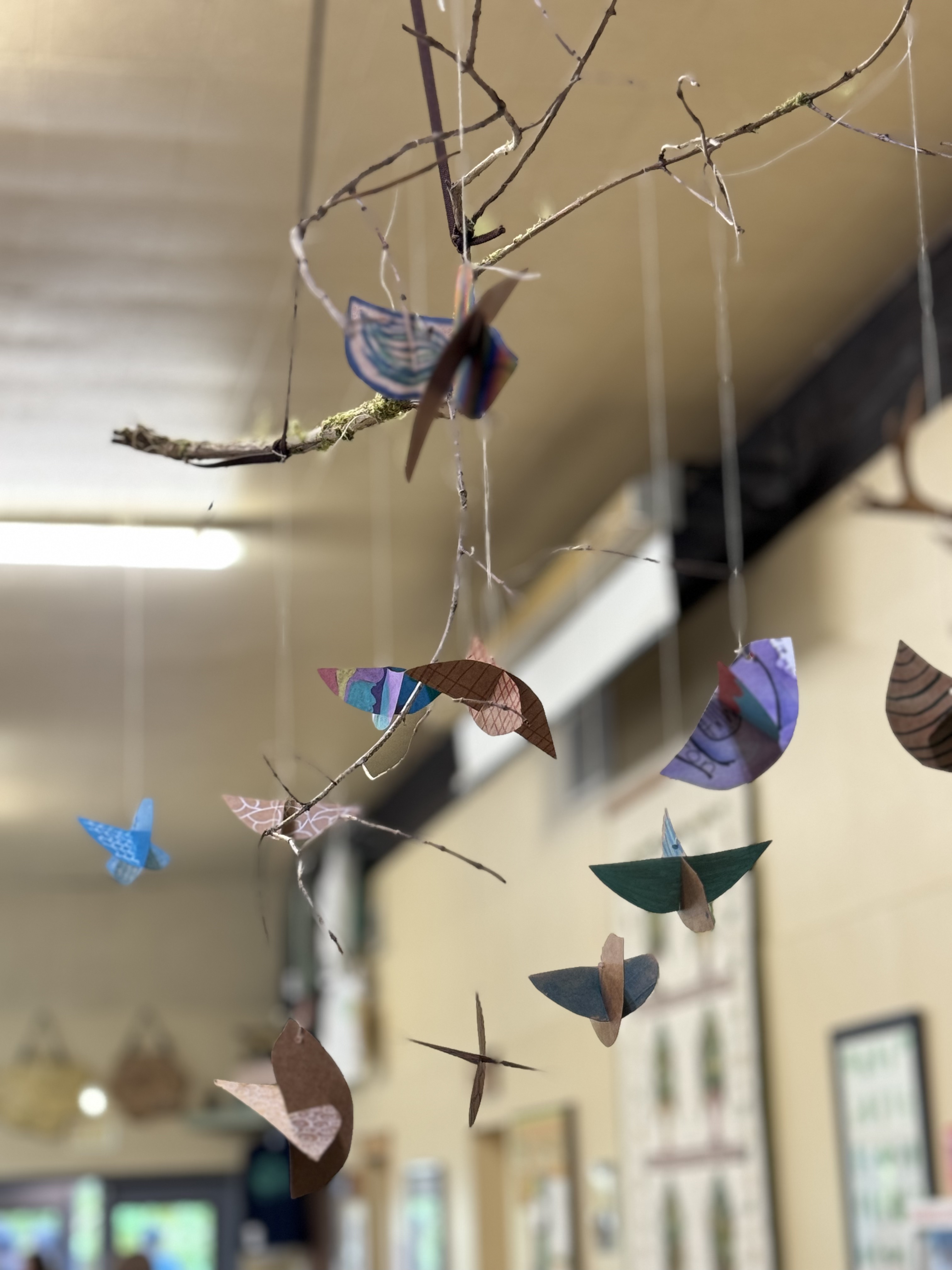
More art in more places. More art at Drift Creek Camp, in the Siuslaw National Forest; more art using gifts from the forest collected on walks with my sweet dog, just minutes from my home. Last week high school age humans created Neurographic art and recycled cardboard bird mobiles and adult humans learned to make pine needle baskets that fit neatly in the palm of their hand. We all paid attention to things that matter, like kindness and empathy and words.

Creating a pine needle basket is an intuitive process. Your hands feel when the bundle of hydrated needles want to start the upward shape of the side of the basket. There is no such thing as a machine-made basket; human hands make them. I noticed, while teaching adults the first simple stitch in basketry, that the word oblique (when offered by a student) to describe what I was demonstrating, felt wildly out of place–but it wasn’t wrong. At the end of the class, we talked about that word and how we all react to words and how we use them differently.

The high school age humans listened as I described the multitude of choices they could make as we progressed through the steps in creating Neurographic art, recognizing that in a world where it feels like they have control of so little, this could feel like a gift. My dear friend Brenda pointed out that using watercolor can also feel like letting go of control (also a gift).

I love this work, and I get tired. After this weekend of another pine needle basket making class at Black Sheep Gathering in Albany, I’m taking a little break from teaching art. I’ll be painting pet portraits instead* while I process all the learning I’ve done this week while I taught.

* I just realized I’m painting a cat named Tommy and a dog named Jerry. That’s fun.

Upcoming Art Classes

I would be tickled to see you at any of these classes! Please join me for art, fun, conversation, and shared space. No experience necessary.

May 22 AND May 29, 5:30-6:30 PM, 2 Towns Ciderhouse, 33930 SE Eastgate Cir, Corvallis, OR 97333

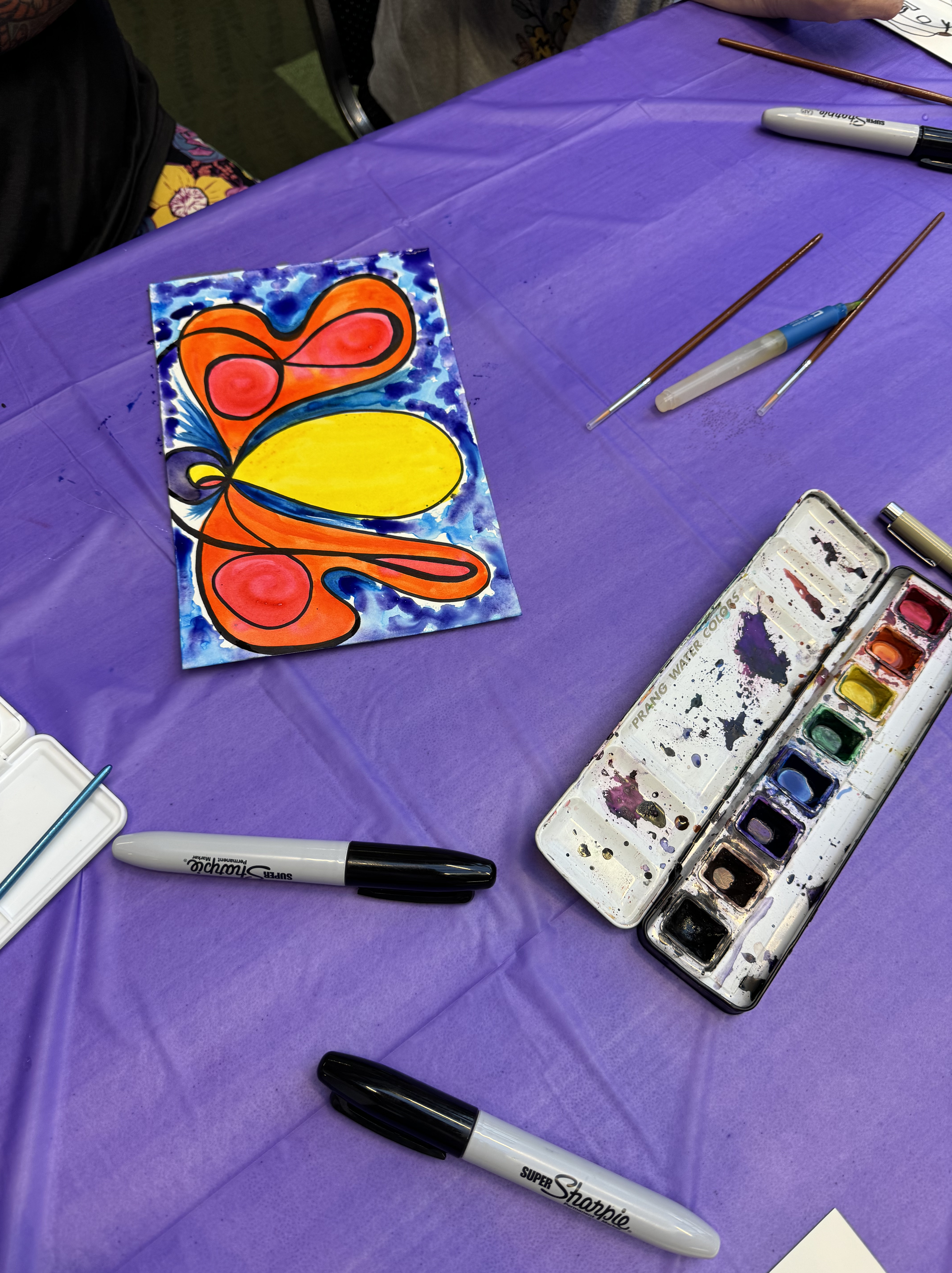
Neurographic Art: Part meditation, part processing, part prayer, part art, part poetry, this process is deeply soulful and empowering. You will amaze yourself with your finished piece!

May 23, 6-8 PM, CreativiTEE, 110 Commercial St NE Downtown Salem

Papermaking: Jaqui will lead you through the steps she has used in her own practice. This process of creating something new out of tired, old documents is deeply soulful and empowering. Jaqui has used her documents from 10 years ago, as well as her childhood poetry. Your paper will not be completely dry when you leave, but you’ll be given the tools to complete the work.

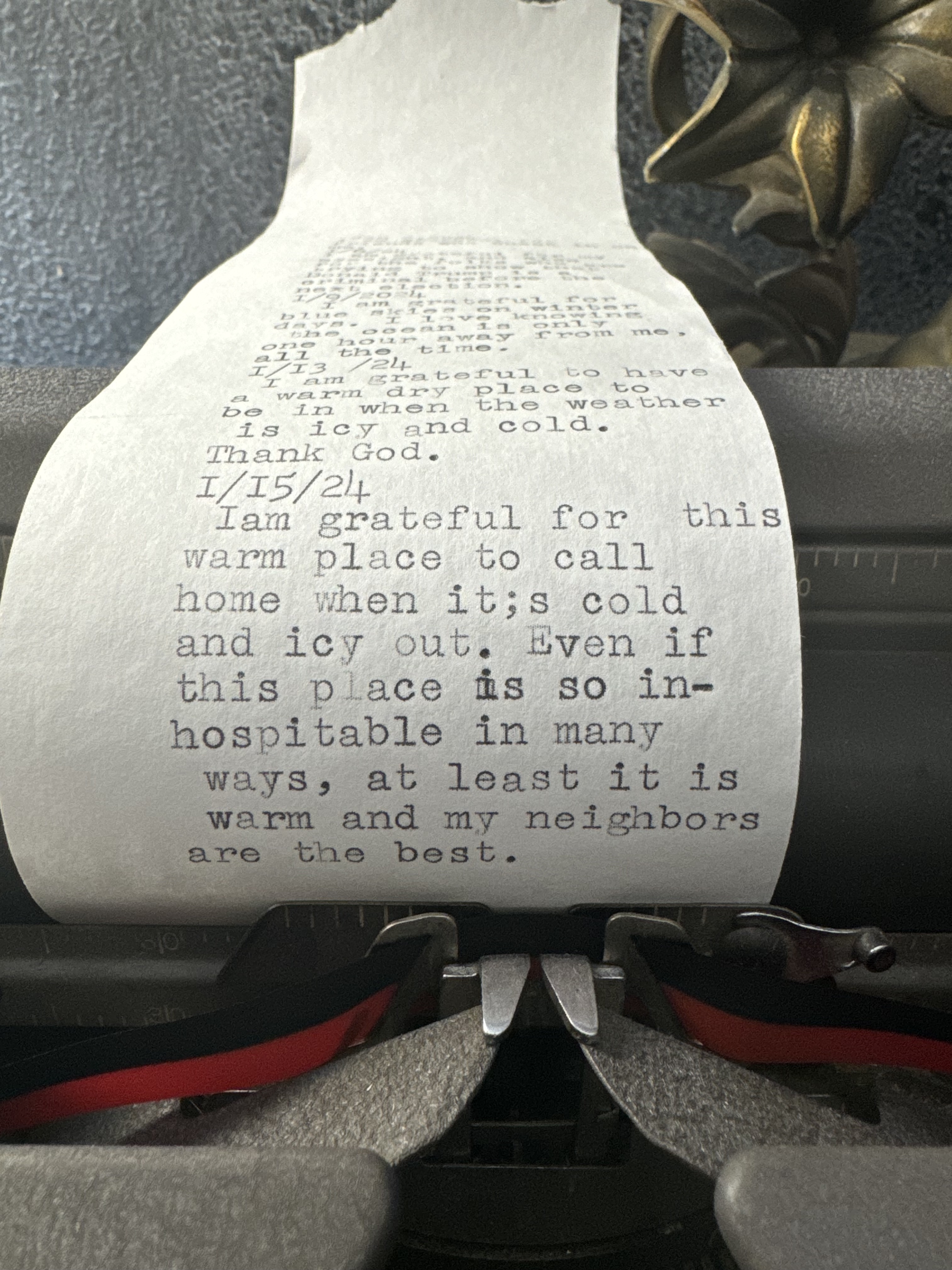
My Type of Gratitude List, No. 10

November 4, 2023: I am grateful beyond measure for Drift Creek Camp and beloved friends to share it with.

November 9, 2023: I am grateful for sun breaks on rainy days in November.

November 16, 2023: I am grateful for cortisone shots in the heel. That’s right–you heard me. Anything to help plantar fasciitis.

November 17, 2023: I am grateful for friends who can help me move large items when I really need help. #dumbdelivery.

November 24, 2023: I am grateful for friends who accept me as I am.

November 29, 2023: I am grateful for sunlight.

My Type of Gratitude List, No. 8

September 2: I am grateful for melons and the ones who grow them.

September 4: I am so grateful for walks along the river with friends, both human and canine.

September 5: I am grateful for my landlord, David Livingston.

September 8: I am grateful for friends who walk with me when I really need their help. Friends who are also doing the work of speaking truth and who communicate well.

September 9: I am grateful I was not hit by the motorcycle that did not stop as I was crossing the street in the crosswalk.

September 11: I am grateful for these plums from a friend of a friend’s garden and also for this Oregon geode, cut and polished by a friend who is moving away.

I am grateful I know what to do when I see a dog in a dark vehicle on a hot summer day, with very little ventilation.

September 12: I am grateful to have found this professional french fry cutter second hand. Now I can make my own sweet potato fries in the oven.

September 18: I am grateful for this down comforter, King Size, for my Queen size bed.

September 19: I am grateful that when I took Pearl’s medicine accidentally this morning , I did not suffer ill effects (or start barking).

September 21: I am grateful to collaborate with Janet on her mural design at church. The opportunity to be a part of her art like this is a gift.

September 22: I am grateful for friends with gardens. I’m also grateful for handmade wooden drums and googly eyes.

September 26: I am grateful that I have been given the opportunity to work with and spend time with kids. They are the best version of humans.

September 29: I am grateful to live in a relatively quiet town, with relatively short rush hour spurts.

September 30: I am grateful for this brilliant Fall day.