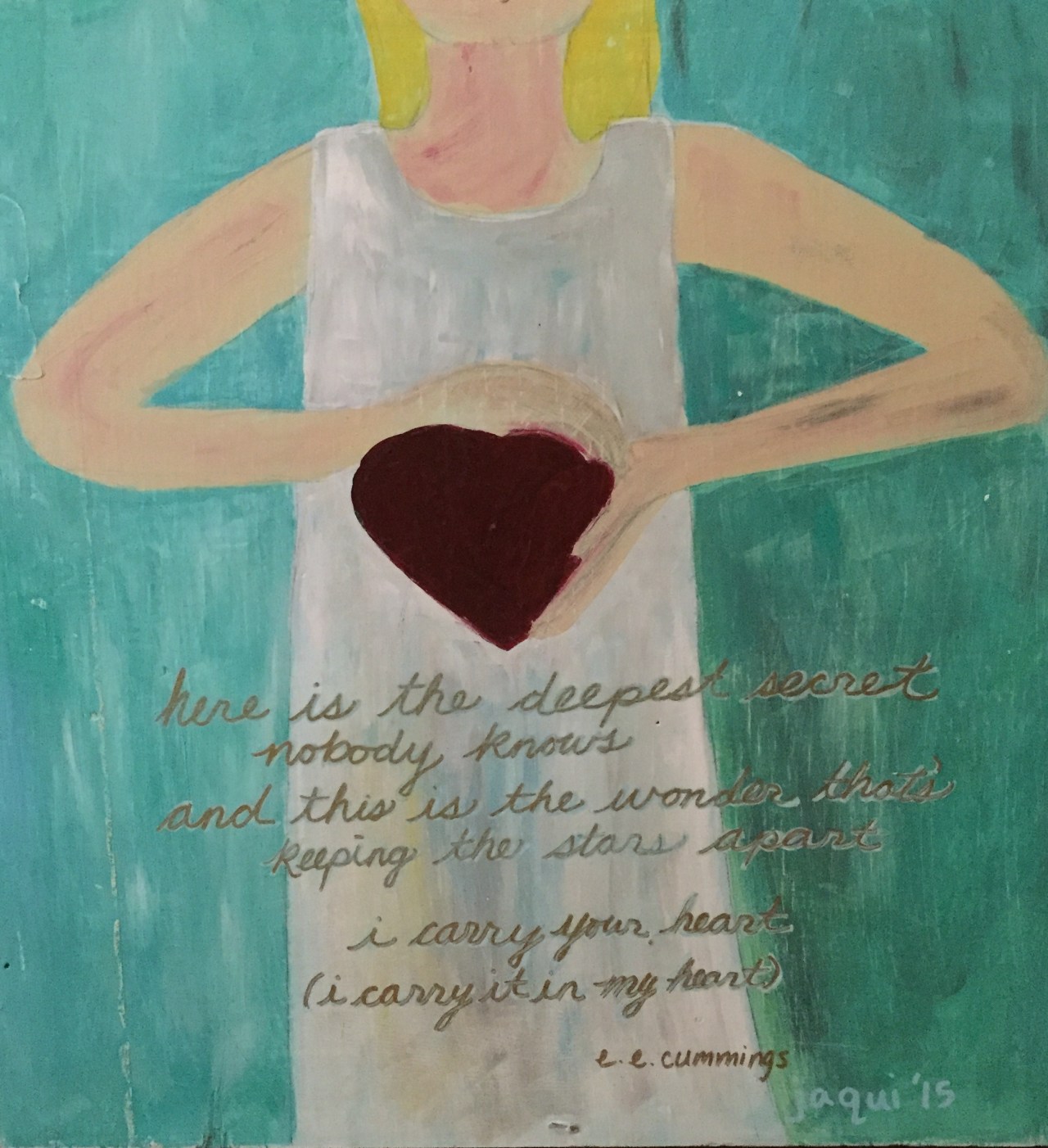
Trampling

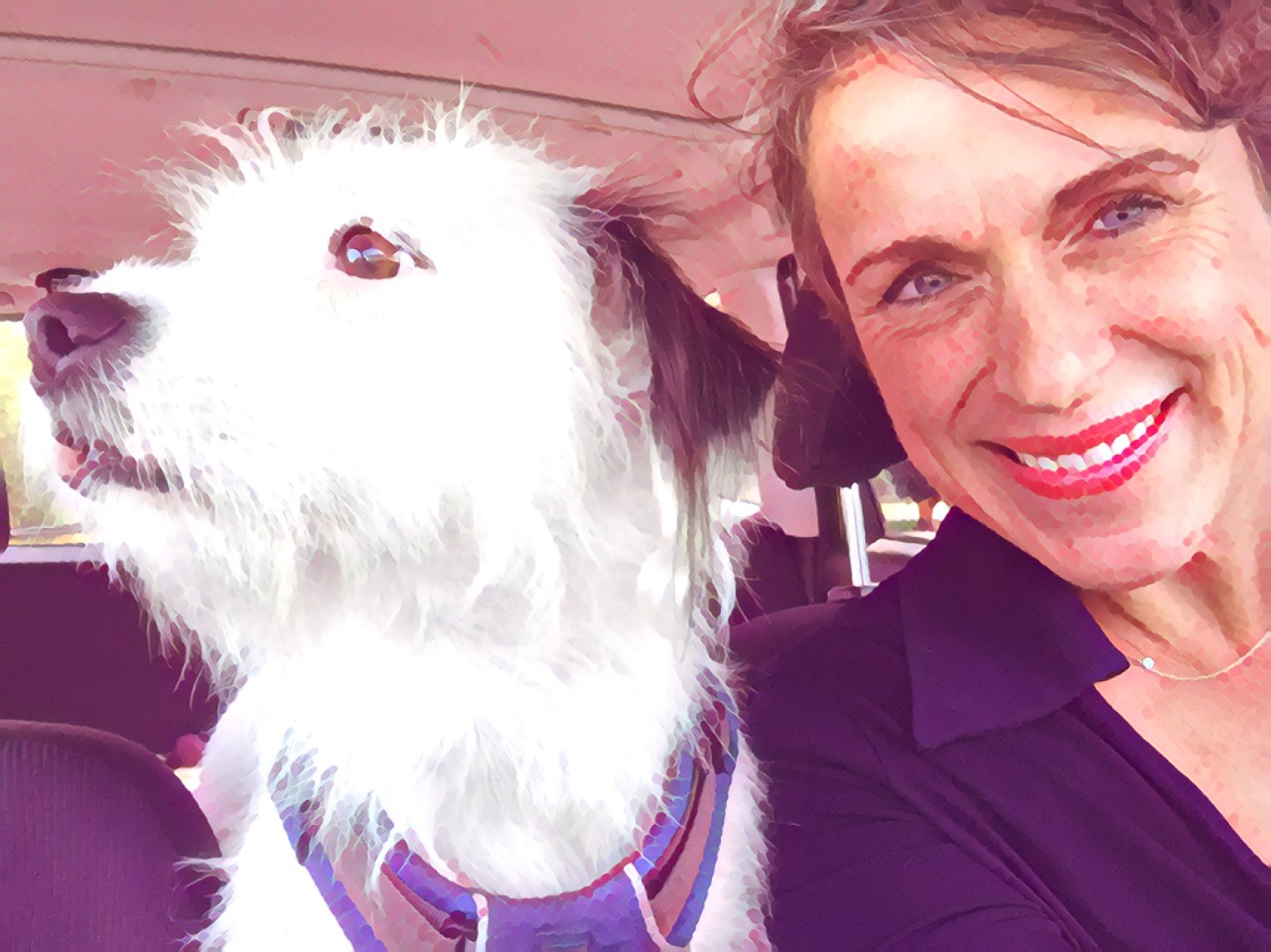
My philosophical quandaries often come from interactions I have (or observe others having) while at the city dog park. This week has left me a feeling unsettled due to two interactions between myself and one man. To begin, I’ll say that the dog park is like my backyard; I live in an apartment and my dog Pearl and I go the three blocks just about every day so that she can say hi to her friends, especially Bob, who gives her treats. Bob is one of Pearl’s first human friends–it only took her about a year to accept him as a friend. For the year prior to this acceptance, Pearl was skeptical and kept her distance because she’s afraid of men.

This week was a rainy one and few people showed up with their dogs at the usual time. While watching Pearl investigate the empty park, I watched as a car parked, a man walked toward the dog park entrance without a dog. I stood near the gate because I know Pearl well. She is not a fan of 1. men, 2. people who come into the park without a dog, and 3. any sort of barrier. On cue, Pearl began barking at the man, who now stood inside the area between the outer and inner gates; the place where, if he’d had a dog, he would be taking off its collar before entering the main park.

The man glared at me. I assured him that Pearl is friendly, she just really hates that barrier and that once he was through the gate, she would be able to relax. What I got back was unexpectedly angry. “It looks like an untrained dog to me.” The man continued to stare at me until I said, “You could use the other entrance.” To which he replied, “Why should I? I have as much of a right to be here as anyone.” Then he walked through the gate and Pearl jumped to his hip. “Get your damned dog off of me.” I corralled Pearl and said, “Dogs pick up on your aggression.” The last thing I heard him say as he touched his thumb and forefinger together, “Dogs brains are this tiny. They don’t know anything.” Steaming, but not wanting to engage any more, I encouraged Pearl to walk to the other end of the dog park with me. As the man returned to his car and entered the street traffic, he slowly passed by while raising a finger in my direction.

Next, on another day, while at a nearby coffee shop with a friend, I watched this very man, with his Service Dog (a Rottweiler) say goodbye to the barista and my thought was, “Oh, he has a service dog, I can see that this dog may be of some help to him.”

Today, while Pearl and I were at the dog park alone two things happened at once: this man parked, got out of his car, and walked his dog to the fence while a regular dog park visitor made his way to the gate with his two large Huskies. Pearl barked at the man and his unfamiliar Rottweiler and I calmed her down and held her as the men took turns entering the park. The man with the Rottweiler said to me, “If you push down on her rump, she won’t do that anymore.” Thanking him for his advice, I walked with Pearl to the other end of the park. Pearl investigated the park with the Huskies while their owner and I chatted. The man with the Rottweiler stood against the fence for about 5 minutes. Then he came towards me and from a distance of about 20 feet said, “I remember you from the other day when your dog jumped on me.” I acknowledged him with eye contact, nodded and thought, ‘okay Jaqui, get ready to be kind and friendly because I think this man is about to acknowledge his responsibility in our first interaction days before.’

Instead, the man stared with flashing eyes, and pointed at me saying, “That day my friend was in the hospital and nearly died.” There was a pause because I didn’t reply, I just watched him. He angrily put the leash on his dog and exited the park. Not wanting to see another raised finger from him, I stood with a tree between the parking area and myself. I comforted Pearl until I was sure the man had driven away.

What I haven’t described (because I’m attempting objectivity) is how angry this man was–it came out of his pores; it was visible. I also haven’t described my physical reaction to our exchange, which was a minor panic attack (throat constricting, heart racing). I knew Pearl would pick up on my demeanor, if not also this man’s angry stance (hence the keeping her close by and comforting her).

So what I’ve been sorting out since this exchange are these questions: Why do people have to share their anger, and why at a dog park? Why do people who think dogs have tiny brains and don’t read human emotion and behavior have dogs? Why do people come in to a dog park and not expect to potentially be jumped upon by dogs? Why was this man so clearly still angry at me for the first interaction? And why does having a friend in the hospital explain poor behavior and anger toward strangers?

Follow up questions I have asked are: Why did I react so strongly? Why did I panic? What am I afraid of? Why did I let a stranger’s anger affect me? Why am I still thinking about all of this? Why do I feel such anger toward this stranger whose friend was recently in the hospital?

What I think is: I have a distaste for conflict, I am fearful that someone like this will entice Pearl to nip them and then turn me in for having a dog that bit a human, I don’t think it’s fair for such anger to be out running rampant and I think people use excuses to explain their anger toward perfect strangers. I’m also feeling upset that I am allowing someone else’s anger to color my entire week.

The truth is also this: I’m weary of attempting to understand everyone else’s reasons for their anger toward me; trying to see things from the other’s point of view; understanding where they are ‘coming from’. I’m feeling weary in this area because I sometimes feel as if others are not making the same attempt to understand or listen to me and my views. It really does come down to not feeling heard, but instead being trampled.

HERITAGE JOURNALS: STORIES COLLECTED BY 6TH GRADE STUDENTS OF JAQUI EICHER, 2002

Written by Violet Case:

“I, Violet Garland Case, was married June 30, 1932 and came to this community as a young bride after graduating from Albany High School which is now occupied by the First Baptist Church of Albany.

“My new husband’s mother died all of a sudden and he had been running the home place prior to this, but now he had no cook and we decided to get married. Now that put an end to my further education. But I did avail myself to some extension type courses, and some classes put on at the Conner School.

“While I was going to high school I had worked part time at Woolworth’s and then after being married, at Montgomery Ward and Company. I enjoyed meeting the public.

“In 1932, they were depression days. I very well remember working for 10 hours a day at 15 cents an hour, training hops for Henry Hoefer Farms and then doing all the work at home in the house. At that time men’s work shirts were 49 cents and peanut butter was sold for 5 or 10 cents a pound and you brought your own container for it. If we wanted ice cream we’d take an empty bucket and get ice cream. We didn’t have fancy containers like today. And if folks got a large peppermint stick from grandparents it was a big treat.

“We grew more diversified crops as years went by. But I always drove a tractor and pulled a combine. We canned pumpkins for Del Monte Canning Company. We also milked a few head of cows each morning and it was my job to wash the cream separator each morning until we started selling whole milk to the Albany Creamery in Albany. Then milk trucks picked up cans daily. I still have some of those milk cans we used.

“I always planted a large garden and canned and pickled all kinds of things. Later we got electricity in this neighborhood and we thought it was the greatest thing. We got milking machines and all kinds of appliances. We could afford them better then as the economy had improved and cannery crops brought more revenue. Back then we’d gotten inside plumbing and what a blessing that was! No more outhouses in the dark.

“We also got to raising baby chicks and had our own fryers to eat. Then we kept the hens and kept a large chicken house and sold eggs from the hens. We got to buying breeding hen turkeys . Our feed supplier would find the turkeys and we would buy them and put them in roosts. We’d string lights which caused them to start laying eggs quicker and we had nests all around in the fields and in the old barn.

“It was real fun picking up turkey eggs. It seems like we got $1 each. We then cleaned them and shipped them away to other states. We did this for several years until the market closed.

“One year high water cam and we had to go out in boats and put turkeys in boats and haul them into the barn to save them. And so thank the Lord they didn’t panic. We hauled them into a dry place. Neighbors were good to help. Walt Harnisch was the good neighbor to help. But in those days people helped one another a lot.

“In 1939 we had a baby boy and named him William L. Case. When he got old enough he started to our country one-room school, Conner School. We always had good teachers because our school was very selective in getting qualified teachers. Mervin Case, Walt Harnisch and others made up the school board. Our son Bill started attending school in Jefferson when he was in 8th grade. Our district consolidated. He had good teachers and the competition in a larger school was good. Bill enjoyed sports and the expanded program of the larger school. We parents got involved in school activities.

“Our grandchildren got a good education background in Jefferson and all 5 of them went to college. The only one that went to a junior college was our oldest grand daughter and she graduated in a medical field to become an employee of Salem Hospital. My family are all pleased with Jefferson and are very involved in many activities.

“For years back I’ve helped with after school time for Bible classes across the street from the school. We used to have Sunday School and church at the Conner School, then later the community acquired an old vacant store building at Dever Station. Then we had church and Sunday School there and used the facility as a community hall for years.

“After a few years the church members decided they needed a church and our men went over to Camp Adair, which was closed down and bought an old theater building (they may have bought more). Men helped tear down the building and it was brought here and first they built a parsonage, then the church out of the used lumber. The folk had a mind to work and there was a peaceful happy atmosphere over all the accomplishments. Women fixed food and pulled nails.

“It’s such a blessing to me today to see the families who had a part in this time. All and all I give thanks for the blessings of living in this farm community, and being married to my dear husband for 68 years before he went home to be with the Lord.”

HERITAGE JOURNALS: STORIES COLLECTED BY 6TH GRADE STUDENTS OF JAQUI EICHER, 2002

Written by Nadine (Croft) Larabee

“My name is Nadine (Croft) Larabee and our family moved to Oregon in March, 1947, first living in the Grizzel place. My aunt and uncle (the Cole family) lived in Charles’ big house and we in the little green one. With 7 kids, it was just a little crowded!

“My older brother Marion and I registered for school with the District Clerk Ruby Pesheck at her house. Little did I know that a few years later I would be part of that family. Marion drove our big Studebaker President to Jefferson each day, along with Betty and Bonnie Brannen who had just moved here from Iowa. They lived in the Dever area but were assigned to Jefferson High School, same as we were.

“My younger two brothers and sister attended Conner School; Don graduating from 8th grade in June 1947. Summer time meant lots of work, but we were glad for the opportunity–hoeing mint for Noah shelby, working 10 hours a day. At 50 cents an hour, that was $5 a day. Big money to us. We soon got a raise to 75 cents an hour and felt quite rich (after a week)! Bean picking at Charlie Grizzel’s occupied the latter part of summer. Our move to the ‘Davis Cabins’ that fall changed our school to Albany High, the younger ones still at Conner. A big flood came late fall, with neighbors riding around in boats. I remember wading out to the outhouse at various times (no inside plumbing). Our next move was to the Harnisch house around the corner–a little more room, but with 7 kids, still crowded. We experienced the blessings of electricity here for the first time, and indoor plumbing a little later. Our fun times included summer softball games, riding on Harnisch’s flatbet truck down to the floating bridge for a swim after a long day of work, neighborhood kids just getting together (we walked everywhere). When we were lucky, we got in a car and went to Albany for a milkshake at Linn Creamery, sometimes (when we had the money) to In and Out or Cleo’s for a hamburger.

“Winters of 1947, ’48 and ’49 were the coldest I can remember, maybe into 1950 also. But there again we had our fun times: skating on frozen ponds, where surface water had collected from earlier heavy rains, then frozen solid. We managed to ‘skate’ without skates and it was fun. During snow times, my brothers Marion and Dan, along with Dave Harnisch rigged up snow skis from barrel stoves (how, I don’t know). We used the hill behind the Case’s for a good downhill run. Youth group times at the church were fun with Wyman and Mildred Bohl, our first full time pastors at Dever Conner Community Church. One sunday night we wanted to get out early from our meeting to go see the fireworks in Albany. It was kind of difficult to persuade Wyman to close early, but finally he did let us go.

“Before the freeway was built, we could walk across what is now Dever Conner Road, over to Bender’s. Sometimes clear into Jefferson, as the Greyhound bus stopped at the Jefferson Terminal Cabins on its way into Albany. We could also catch it at the intersection of 99E and the Bluff Road for a day of shopping and fun in Albany.

“We sometimes went swimming in the Santiam by the Bluff — Pat Bender, F. Kuvaas, Conners, Wanda Cole and I, along with others. We almost drowned one time when 3 of us girls all got into one innertube and it tipped us over. Later a man did drown in that same place, so that put a stop to our visits.

“Early in 1951 our family moved to the Elbert Chambers place (same place Syracuse School was). My younger brothers then attended Dever School. Marion had graduated from Albany High School by then (1948) and joined the Army. I also graduated in 1949 and lived in Albany where I worked. My youngest sister was born in 1951 — our only Oregonian. We as a family really enjoyed our early Dever-Conner experience and all the original ‘home-made’ fun of those days.

The Enclosure of the Heart

Like a sprouting seed, love climbs

the enclosure of the heart

that has at last allowed

the light of grace to reach it,

tendrils — fragile and leggy —

pull it up and out

of its dark place,

deep in the dank ragged

edges of loneliness

until it flowers, spilling

all its fragrance and color

on any one who will stop and listen.

Up From the River Smiling

A friend once told me she met

her future husband just after

a turbulent river tossed

her out of her small kayak.

My friend, being who she is, showed

up from beneath the icy water

laughing — her bright smile stretched

across her triumphant face.

The man, knowing his own need,

asked, “who is this woman

that came up from dangerous

water smiling?”

He asked to meet her on dry ground.

They loved well and married,

carried out to the sea of life

by that river-smiling moment.

I wonder how I, being who I am,

could meet another who is able

to come up from the river smiling.

I’m familiar with icy water, dangerous

and turbulent; I watch it carefully,

hopeful to someday see the one

who comes up from the river

with a smile on his face.

Listen

Listen to me,

Since you are willing to risk all,

Though the earth dissolve,

What have we to fear?

All power on earth can be overcome

By the will of Love,

Which is so soft that it melts

at a touch.

So splendidly beautiful that

the embrace will forever be

rooted far down into the earth.

The Color of Your Heart

(Written for my art students at Howard Street Charter School, 2012)

The color of your heart is deep and wide–

It gathers all around me

And fills my days with laughter rich

And teaches me to be

More colorful myself, spilling all

My deepest hues

(Those I tend to hide inside)

Instead of showing them, like you.

Together we can paint the world to

Create a masterpiece

Of love and harmony and then

Our world can be at peace.

No Monsters Here

(a poem written for my students in 2011, after news of a school shooting incident)

Four walls around us protect

Not only from the elements,

But from the ‘Out There’;


In here, there are no monsters;

Hydras, Chimeras, Griffins

and Dragons, STAY OUT!


There is a bubble around

Us–we are safe and sound.

Even if you pound, pound, pound,


We won’t worry because

In this room no monsters

Roam; we shine in this room.

Anarchy of Love

There is disorder:

No one can understand why we are loved

when we are so unlovable.

Love flows unceasing, nonetheless.

It is deeper and wider and more permanent

than anything we can fathom.


A lawlessness of love governs:

where there is unkindness,

there is forgiveness;

free of judgement, love comes down

and surrounds each one of us–

whether we are ready or not.


There is a wildness in this love–a wideness and permanence

that grows around each of us and so softens the brambles of our humanity.