Cultivate Simplicity, No. 4

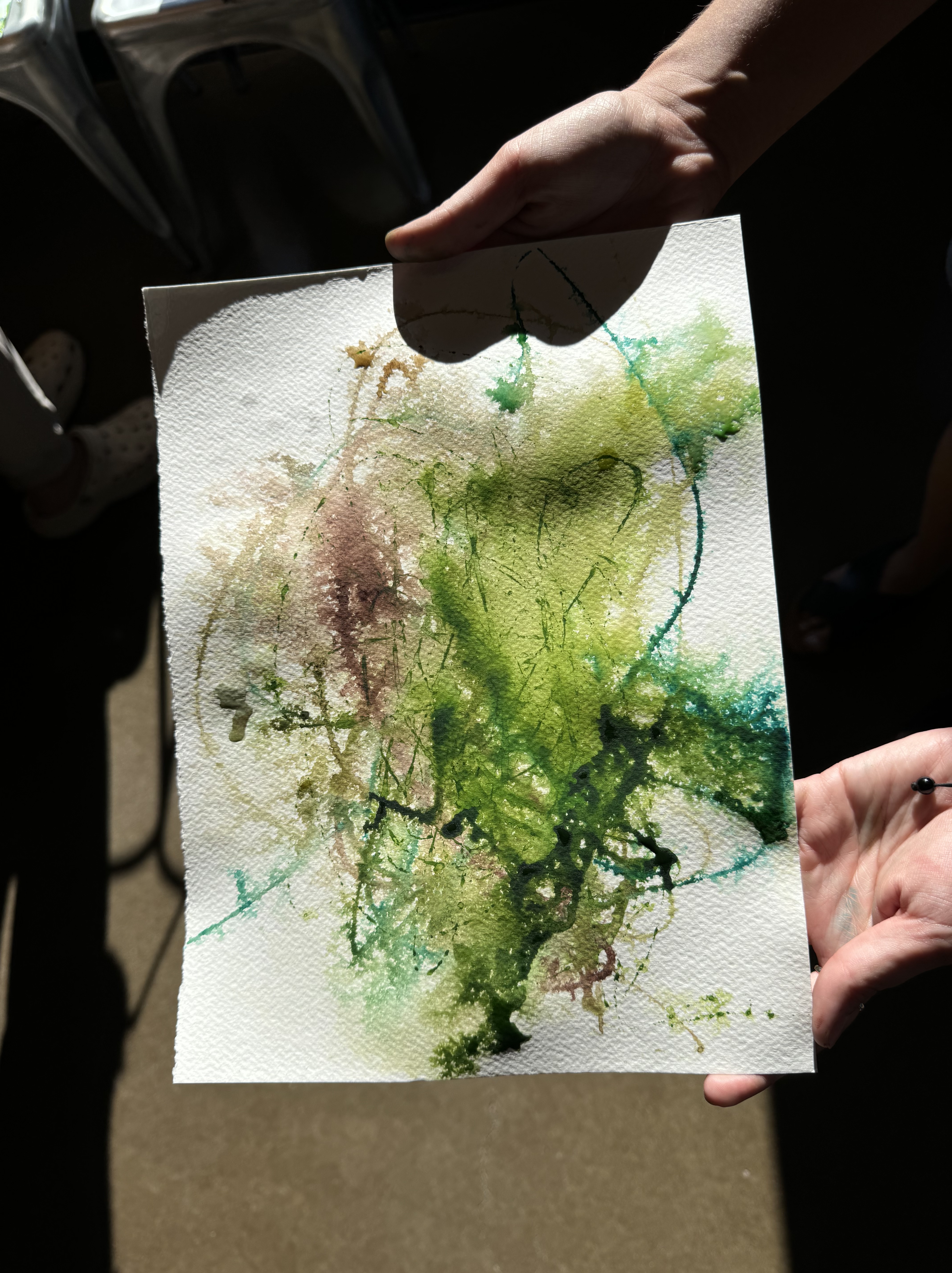
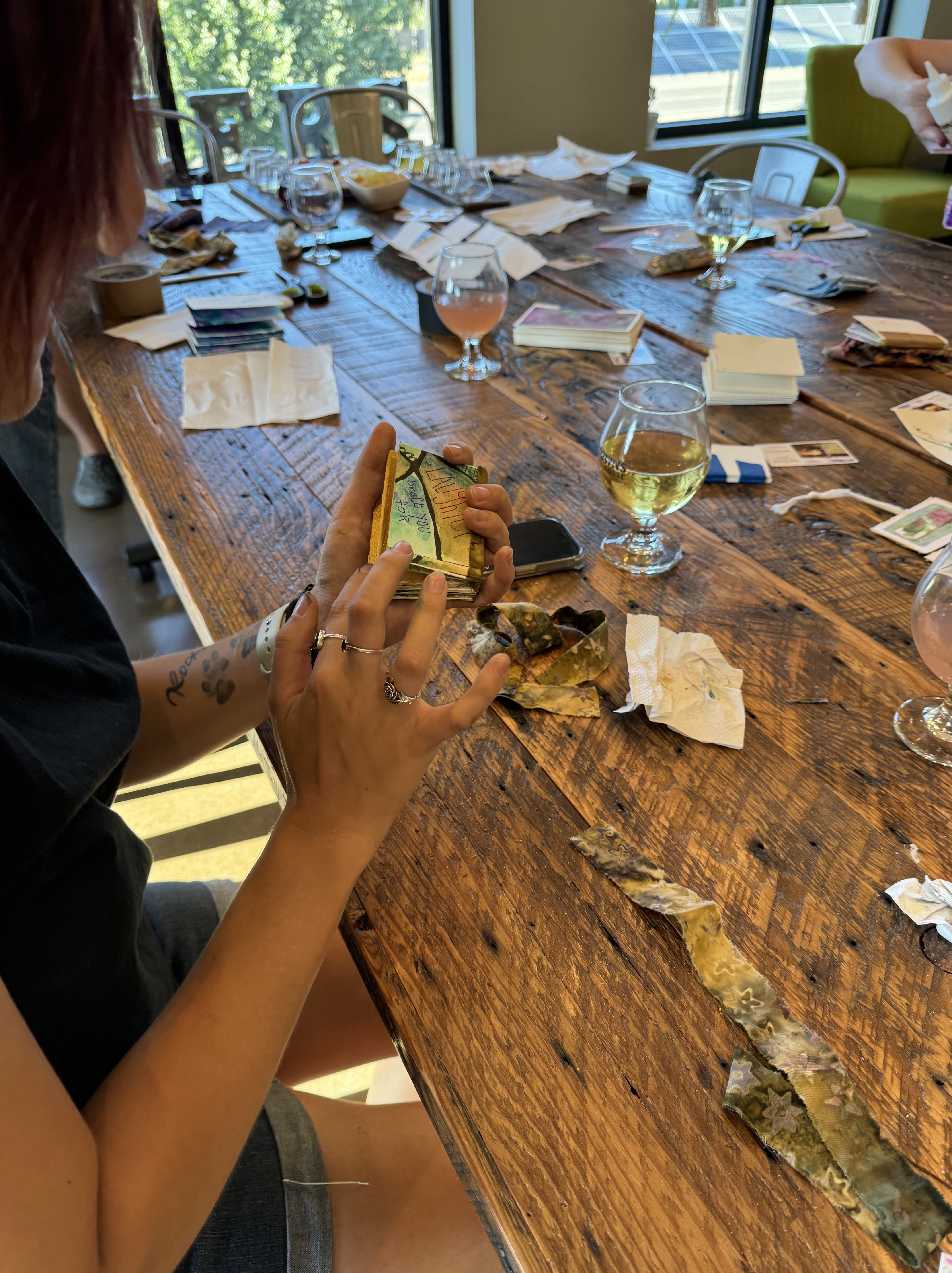
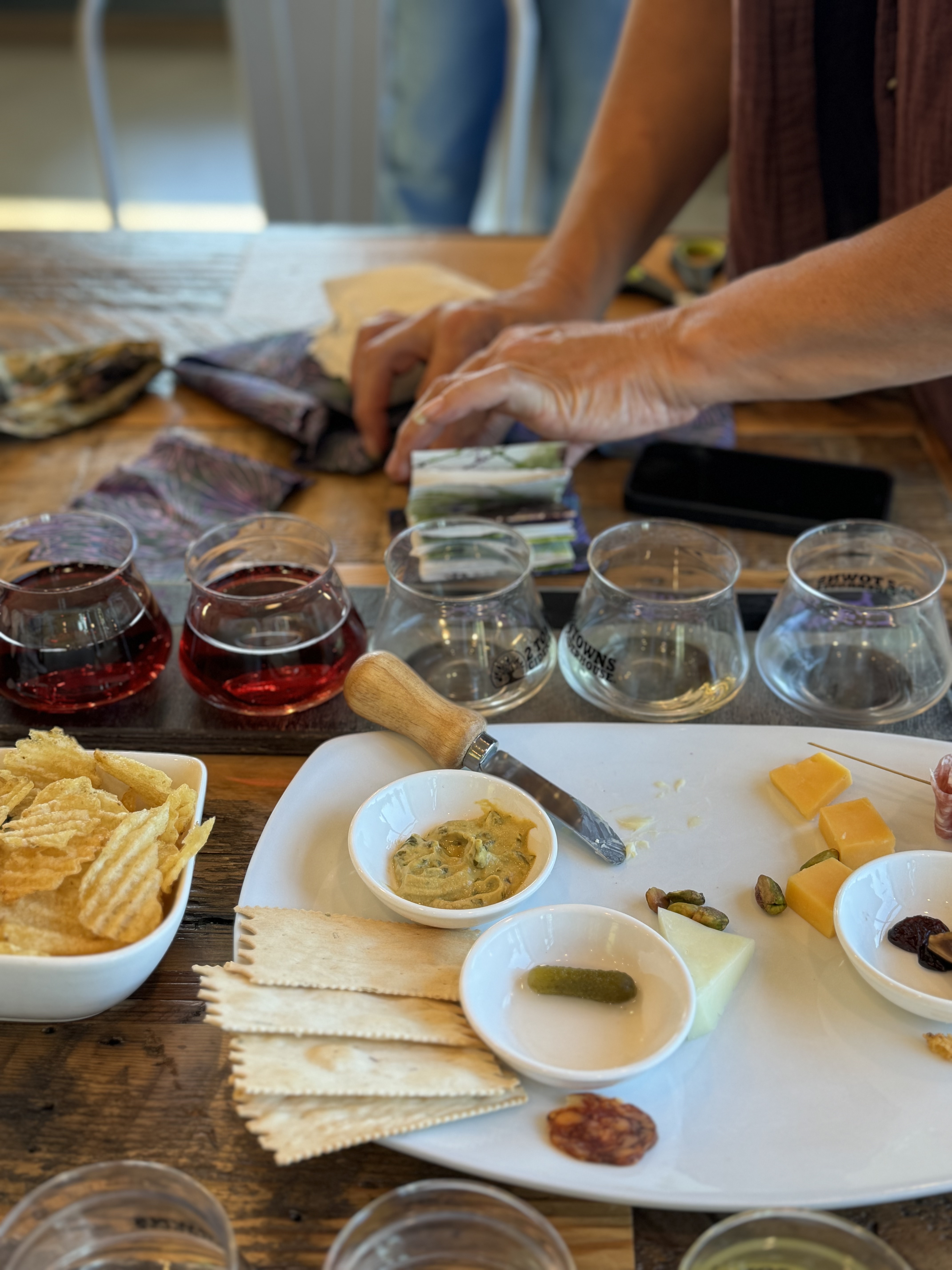
Do you know the feeling of letting go of all inhibitions? Like you trust the process of LIFE and you are happy to just wake up and go? That’s how our marbles felt at the art class I taught at 2Towns Ciderhouse in Corvallis (thank you Hannah and Matt @2Towns). We let those wee scamps run wild and our art showed this freedom.

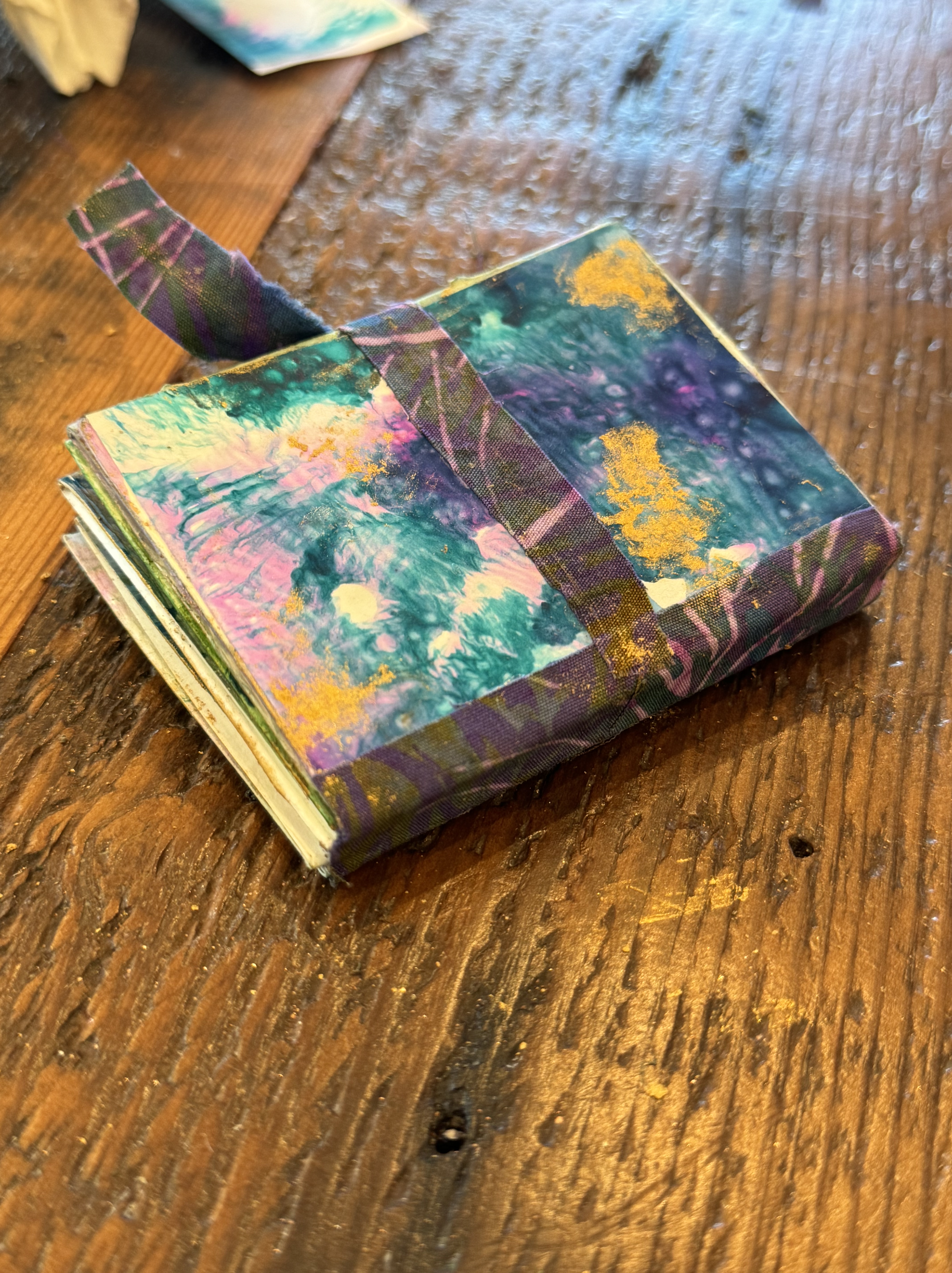
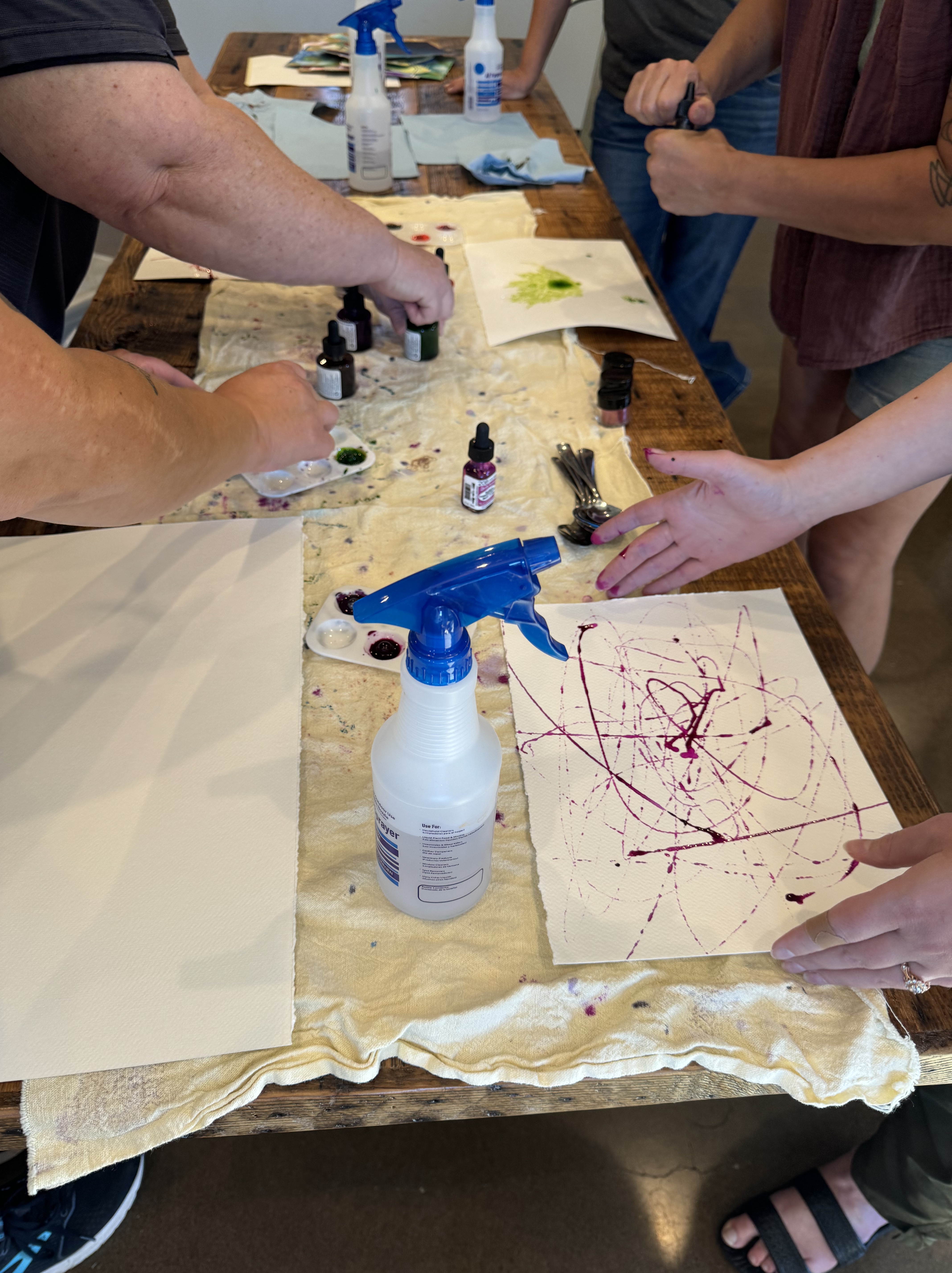
I taught the process of creating art on a large piece of watercolor paper using marbles rolled in intense watercolors, then set free by spraying the lines with water to let them ‘bloom’. When the art was dry, we each created a book by folding and making three cuts (then folding into the book form).

This process is probably my favorite activity of the entire summer. There’s something to it that feels wild and a little reckless; a little ‘outside of the box’. It’s exhilarating and definitely carefree–feelings I’d love to carry with me into the rest of my week/month/year.

Supplies Used:

Heavy watercolor paper (we used 9 x 16″ pieces, any size will do but it’s important to know the folded book will be roughly 1/4 the size of the original piece)

Glass marbles, Bone Folder, Scissors, Spray Bottle for water

Dr. PH Martin watercolors, calligraphy ink

PVA Glue, Cloth Tape, Packaging Tape, Fabric Strips

Iridescent Watercolor Powder, Craftsmart Premium Wax Finish Gold/Silver

Heat Gun to speed drying

Coming Opportunities:

Neurographic Art class at Albany Public Library on August 6 at 5:30pm.

Book a private art party!

Commission a pet portrait!

HERITAGE JOURNALS: STORIES COLLECTED BY 6TH GRADE STUDENTS OF JAQUI EICHER, 2002

Written by: Wayne Chambers

“These history talk about Dever School District were given at the 100th year celebration on November 5, 1954 at Dever School. The 8 Edward A. Chambers children including your great-great grandfather Elmer and my father Elbert attended Dever School. My sister Marilyn, brother David and I went 8 years to grade school at Dever.

“The Dever community has changed over the years, resulting in too few students for a grade school. The school building was sold in 1983. I hope this history is of interest to you.”

‘The Beginning of School District No. 20, Linn County

My talk given tonight concerns the years 1854 to 1880, the beginning of School District 20, Linn County. Our toastmistress, Mrs. Harnisch, has already mentioned that Syracuse Precinct had earlier schools, one of which was attended by Allie, McClain, and aunt of Mrs. Elizabeth Truax in 1848. It was located on Fenn Butte, afterwards called Zimmerman’s Hill, where Mr. and Mrs. Parker now live. Mrs. Truax has established this as correct, as there is a spring above the house from which Johnny Fenn, the teacher, carried a bucket of water for his school in the Fenn house. There was also a brickyard close by — a pile of brick is still there. In 1865 the minutes mention this brickyard location. This was the first school in Linn County.

There was a District 22 organized by law in November 1854, from which date we celebrate this Centennial. That schoolhouse was situated on the Charlie Cox farm, once part of the donation land claim of an old pioneer, John Weis, who lived where Mr. and Mrs. Drager now live. This school house was a log house with homemade seats and desks. Quills were used as pens and their ink was homemade. The equipment was a stove with pipe, a bucket, wash pan, dipper and dictionary.

The first directors elected were James F. Jones, John T. Crooks and John B. Miller; the clerk was Benjamin F. Redman who was the first teacher. He was also a justice of the peace. Redman lived in a house east of Ardle Edwards’ old house and was clerk and teacher until 1861.

Much honor is due these early pioneers for their perseverance and ability. We are justly proud of them. The first funds received were $52 in April, 1855. Mr. Redman taught in 1855 three months for $33.33 and received part pay of 58. At that time 3 months a year was the time taught. 

When this district was organized, the pioneers built their own school house by subscription, 17.5 square feet, located very nearly in the center of that district. The pioneers built this log school house in one month’s time. 

In 1858 the voters made a union of District 20 with District 22 and thereafter the entire district was called District 20. By this, we see there was a District number 20 already existing. The Weis school house was then sold to Mr. Weis for the sum of $100, with the teacher taking $65 of his money in trade. Perhaps Mr. Weis ad a store at his place. The remainder of the $100 was paid by James F. Jones. District 22 is now near Scio.

From 1858 to 1869 there was a school house on the Allphin claim near the Allphin cemetery which was on the hill behind Mr. Mervin Case’s house. This was a small school house, too small for the number of pupils attending. At different times it was voted upon to divide the district but the motions were lost as were also motions to raise school money by taxation. This old Allphin school house was sold later to Wm. Allphin for $16 when the new Allphin school house was built.

In 1859 the voters began to talk of a new school house and selected a place as near the center of the district as the nature of the ground would permit but it was not until 1868 that the district accepted a site which Wm. Allphin came forward and proposed to give: a site of 2 acres near Fenn’s Butte on the south side of Allphin’s land claim, near the old brickyard. Dayton Simison was appointed to circulate a subscription list to procure money to build the school house, which he did, and raised $558.  In 1869 the new school house was built. It was 36 feet long, 24 feet wide and 12 feet to the eaves. This was the second school house to be called the Allphin School House. In 1879 it was voted to move this Allphin School House  and the move was made in 1885 to the S.T. Jones Place where Mr. and Mrs. Craft live, which is now the E.A. Chambers’ farm. It was then known as the Syracuse School House, and referred to as the Jones School House. This building burned in the summer of 1911. 

To go back to the pioneers of these years to whom we owe so much, we will mention some of the directors of District 20. They were Samuel T. Jones, John McCoy, Absolam Addington, J.J. Davis, John Meeker, Hiram Farlow, James Butcher, Thomas Allphin, John Weis, Elias Johnson, Christopher Farlow, Henry Johnson, John Wilson (for whom Wilson Lake is named), Wm. Hale and David Lewis. Many of these names we recognized by having heard them mentioned by our parents; also some descendants are living in the districts of Dever and Conner. I will mention these descendants now: Mrs. Myrtle Jones Graham and Charles Jones, descendants of S. T. Jones; Mrs. Zelma Davis Harnisch and Mrs. Davis Harnisch, descendants of J.J. Davix; Stacey Meeker Neeley, descendant of John Meeker; Elizabeth Cardwell Truax and Gerald Truax, descendants of E.C. McClain; Rebecca Crooks Hoefer, descendant of John T. Crooks; Dale Wills Harnisch, descendant of Dayton Simison. 

The clerks who served between 1854 to 1880 are also recognized as outstanding men. Their minutes in the record book clearly show their ability. These clerks we honor this night of November 5, 1954 are: Benjamin F. Redman, who served 7 years; E.C. McClain, 1 year; J.J. Davis, 2 years; Horace Farwell, 4 years; Dayton Simison, 7 years. Samuel Crooks, 4 years (elected in 1876). 

Now to honor our teachers. I will mention just a few of the most important: Benjamin F. Redman, the first teacher who taught 4 years; Lydia Miller, 1/2 year; W.L. Coon of Peoria, 3 months; L. Flynn, later an Albany banker, 3 months; J.D. Pruitt of French Prairie near Salem, 3 months; John S. Fenn, 3 months in 1869, 1872, 1873 and 2 terms in 1874; Peter A. Moses, 3 months in 1879; and T. Handord, 3 months in 1880. 

I know this District 200 was a typical frontier district, having their trials, such as lack of money, no roads, great distances to travel, which was done by horseback, and no conveniences. But they had their joys too. They had singing lessons, political rallies and church services. 

We do not know many exciting events of this period but we are told of two murders, two suicides and a big flood — the water being higher that at any time since, measuring 36 feet in Albany in 1861. I thank you for your kind attention. (Rebecca Crooks Hoefer)
 

HERITAGE JOURNALS: STORIES COLLECTED BY 6TH GRADE STUDENTS OF JAQUI EICHER, 2002

Written by: Doris Davis Harnisch

“My grandparents James and Rose Davis were past owners of a donation land claim. Other places were part of this. Walt and I bought part of the Harnisch Farm and built a house in 1948 about a block from Conner School. WE have one or two ancestors buried in the old cemetery on the Bond Farm.

“My earliest memory of Conner School was when I was in the 3rd grade. We had a horse and buggy for transportation for about 2 years. I remember my sister and I sitting on a box in front of my parents who were on the seat. How nice our old used car was when we got it.

“When we finished the 8th grade we did a county test at school to get our diploma. Conner School was one room for all grades. Later the old building was used for a gym. A two-room school was built. Our daughter Janice attended school there for 3 years. It was then that Conner District consolidated with Jefferson. The old building burnt down. The old building was finally sold and used as homes for families. The first years of our marriage we didn’t have electricity. We farmed with horses and finally bought a tractor. We raised a small acreage of sugar beets for seed. We cut them early in the morning so seed wouldn’t shatter. We had help picking up cut ones, laying them back before the mower came around again. Another crop was flax. That didn’t last long. We hired it pulled and had help around the field cutting out any weeds. It was in bundles.

“What a change in farming now! During the war years we raised lots of cannery crops: corn, squash, table beet, dill and mint for oil, sugar beet seed. WE hired help to get out weeds by hand weeding. We did not use any sprays in those days.

“One day we were working in our carrots when Walt called out, “Hit the dirt!” What a sight to see us all flat on the ground. We looked up and saw a large swarm of bees passing over. We had lots of laughs over this.

“I spent many days in the field with the help. We appreciated the good help of the Pisheck family.”

HERITAGE JOURNALS: STORIES COLLECTED BY 6TH GRADE STUDENTS OF JAQUI EICHER, 2002

Written for: Danielle Johnson

“There used to be several small community schools in the Jefferson area that were attended by neighborhood children. Most were one or two room school houses with a bell tower. These were gradually closed down in the 1940s and ’50s, but were attended by several of your relatives.

“Not, however, by your great grandfather, Varion Goin, who attended school in Jefferson. He rode his pony to elementary school, stabling it nearby during the day. By the time he was in high school, cars were being seen in the area. Varion’s father Alfred, bought one of the first cars in the neighborhood, but he didn’t like to drive it. So by the time Varion was 15 years old, he was driving the car to school.

“Varion had some health problems that caused him to not attend for a couple of years during high school. He returned and graduated in 1925, I think, where he liked to say he was second in his class. There were only two of them, which was a small graduating class, even for the time.

“Varion’s first three children: Veva, Bonnie, and Vernon, went to elementary at the Looney Butte School which was converted to a house. You probably know which building it is.

“Your grandfather Ace attended a small school south of Salem. If I remember right, it was part of the Salem District, but he lived on the boundary and was able to choose. He went to high school in Jefferson. You’d better ask him to correct my mistakes.

“Jim McManus was raised in Talbot. Local children went to their first three grades (no kindergarten in those days) at Talbot School, a one room school located where the Talbot Fire Station is now. After three years they transferred to a Sydney school for grades 4 through 6. It was located where the Kuzma family now lives. After 6th grade, they rode the bus to Jefferson for the rest of their schooling. By 7th grade, of course, girls and boys were pretty interested in each other (ok, mostly the girls were interested), so the ‘new’ students from Talbot were highly anticipated. They would be known to Jefferson kids and known of by others. There was much checking out of the opposite sex, and of the competition.

“My siblings went to Jefferson Grade School, which is where I expected to go. But it turned out my class was too large for one room, too small for two, so they bused 13 of us to the Conner School every day. Conner took local Dever-Conner students in grades 1-3 but the year I was there, there were only one third grader and three or four second graders. Most of my Jefferson classmates spent a year at the Conner School in first, second or third grade. The school was closed after my third grade.”

HERITAGE JOURNALS: STORIES COLLECTED BY 6TH GRADE STUDENTS OF JAQUI EICHER, 2002

Written by: Ace Johnson

“Back in the early 1960s when I went to Jefferson High School, it was common for boys to walk home from ball practice and hitch a ride with most anyone in the community to make the walk shorter.

“Art Brandt drove a manure truck. He hauled and delivered cow manure to and from local dairies around the area. Art’s truck was decorated with cow manure and you could smell it coming well before you could see it. Art was always generous to stop to pick up the boys and give them a ride. It was 6 miles from school to my house, so I never turned the ride down. The only catch was: Art’s dog always rode in the cab with him, so we had to ride in the back on the manure!”

HERITAGE JOURNALS: STORIES COLLECTED BY 6TH GRADE STUDENTS OF JAQUI EICHER, 2002

Written by: Jerry Cox Nicholson, great-great-great grand daughter of Jesse and Ruby Bond Looney

“Jesse Looney was born near Knoxville, Tennessee and spent his youth and early manhood in the South. He was a first cousin of Andrew Johnson, President of the United States.

“Jesse Looney inherited land and many slaves as his heritage. Slavery was one of the local conditions under which he was reared, but early in life he espoused the idea of human freedom and decided to leave the land of his birth and its tradition of human slavery. He sought a place where he could rear his family under better influences. Jesse, with his wife and six children, joined a wagon train made up of many families. With Dr. Marcus Whitman as their captain and guide, they headed for the Oregon Country. They started on May 22, 1843 from Independence, Missouri and arrived in October of that year in what is now called Jefferson, Oregon.

“Jesse Looney showed his good business judgement in fitting out his family wagons. There were three. One was built like a boat, with a tight bottom, so as to ford the streams without getting the contents wet. One was called ‘fiddle’ because of its peculiar construction. In these wagons they had packed everything they could think of that they would need in the new country.

“Jesse and his wife Ruby Bond Looney chose for their donation claim a beautiful location about twelve miles south of Salem, known later as ‘Looney Butte’. The Looney cemetery is only 1/4 mile from this home and Jesse Looney (1802-1869) and his wife Ruby Bond Looney (1808-1900) are both buried there.

“Jesse Looney packed the wagons for their new home in Oregon Country. A jar of apple seeds was a dream for their new land. Jesse developed one of the largest orchards in the new country. When the apple trees all came to bearing, folks came all the way from California to get apples.

“The old Jefferson Institute which was located near where the present elementary school now stands was in operation from 1857-1899. The first enrollment was 89 pupils. Courses were taught from the elementary level up to the equivalent of two years of college.”

HERITAGE JOURNALS: STORIES COLLECTED BY 6TH GRADE STUDENTS OF JAQUI EICHER, 2002

Written by: Weltha Jo Goin Johnson

“My Dad’s family, the Goins, came to Oregon in the late 1850s by covered wagon. They first settled east of Jefferson near Green’s Bridge. In about 1898 my grand dad, Alfred Goin, bought the property north of Jefferson that my husband and I live on now. My dad was born on the farm in 1903 and died there in 1993. My children, Kari and Blair, and their families, including Danielle, live on this same property. That’s five generations to have lived on this property. The farm used to go from Danielle’s house all the way to the Jefferson Middle School, but most was sold.

“My dad went to school at Jefferson. So did I, my children and now my grand daughters. My dad walked 3 miles to school and home. Sometimes he rode a horse or drove a buggy on the dirt or mud road, but it was too much trouble to take the horse to livery stable downtown Jefferson in the morning and pick it up after school, plus the horse was ‘barn sour’ and really didn’t want to be taken to school. So my dad just walked or jogged. Our neighbor says he was the original ‘jogger’ way back in 1916.


HERITAGE JOURNALS: STORIES COLLECTED BY 6TH GRADE STUDENTS OF JAQUI EICHER, 2002

Written by Nadine (Croft) Larabee

“My name is Nadine (Croft) Larabee and our family moved to Oregon in March, 1947, first living in the Grizzel place. My aunt and uncle (the Cole family) lived in Charles’ big house and we in the little green one. With 7 kids, it was just a little crowded!

“My older brother Marion and I registered for school with the District Clerk Ruby Pesheck at her house. Little did I know that a few years later I would be part of that family. Marion drove our big Studebaker President to Jefferson each day, along with Betty and Bonnie Brannen who had just moved here from Iowa. They lived in the Dever area but were assigned to Jefferson High School, same as we were.

“My younger two brothers and sister attended Conner School; Don graduating from 8th grade in June 1947. Summer time meant lots of work, but we were glad for the opportunity–hoeing mint for Noah shelby, working 10 hours a day. At 50 cents an hour, that was $5 a day. Big money to us. We soon got a raise to 75 cents an hour and felt quite rich (after a week)! Bean picking at Charlie Grizzel’s occupied the latter part of summer. Our move to the ‘Davis Cabins’ that fall changed our school to Albany High, the younger ones still at Conner. A big flood came late fall, with neighbors riding around in boats. I remember wading out to the outhouse at various times (no inside plumbing). Our next move was to the Harnisch house around the corner–a little more room, but with 7 kids, still crowded. We experienced the blessings of electricity here for the first time, and indoor plumbing a little later. Our fun times included summer softball games, riding on Harnisch’s flatbet truck down to the floating bridge for a swim after a long day of work, neighborhood kids just getting together (we walked everywhere). When we were lucky, we got in a car and went to Albany for a milkshake at Linn Creamery, sometimes (when we had the money) to In and Out or Cleo’s for a hamburger.

“Winters of 1947, ’48 and ’49 were the coldest I can remember, maybe into 1950 also. But there again we had our fun times: skating on frozen ponds, where surface water had collected from earlier heavy rains, then frozen solid. We managed to ‘skate’ without skates and it was fun. During snow times, my brothers Marion and Dan, along with Dave Harnisch rigged up snow skis from barrel stoves (how, I don’t know). We used the hill behind the Case’s for a good downhill run. Youth group times at the church were fun with Wyman and Mildred Bohl, our first full time pastors at Dever Conner Community Church. One sunday night we wanted to get out early from our meeting to go see the fireworks in Albany. It was kind of difficult to persuade Wyman to close early, but finally he did let us go.

“Before the freeway was built, we could walk across what is now Dever Conner Road, over to Bender’s. Sometimes clear into Jefferson, as the Greyhound bus stopped at the Jefferson Terminal Cabins on its way into Albany. We could also catch it at the intersection of 99E and the Bluff Road for a day of shopping and fun in Albany.

“We sometimes went swimming in the Santiam by the Bluff — Pat Bender, F. Kuvaas, Conners, Wanda Cole and I, along with others. We almost drowned one time when 3 of us girls all got into one innertube and it tipped us over. Later a man did drown in that same place, so that put a stop to our visits.

“Early in 1951 our family moved to the Elbert Chambers place (same place Syracuse School was). My younger brothers then attended Dever School. Marion had graduated from Albany High School by then (1948) and joined the Army. I also graduated in 1949 and lived in Albany where I worked. My youngest sister was born in 1951 — our only Oregonian. We as a family really enjoyed our early Dever-Conner experience and all the original ‘home-made’ fun of those days.

HERITAGE JOURNALS: STORIES COLLECTED BY 6TH GRADE STUDENTS OF JAQUI EICHER, 2002


Written by: Irene Reeves

“My two sons were the fourth generation on their father’s side to attend school in Jefferson — each generation in a different building. When my older son started school in the first grade in September of 1938 the present elementary school was brand new and housed all 12 grades. He graduated from there in 1950.

“The present middle school was built and housed the high school in 1950. Later 7th and 8th graders were housed there as well. I believe the class of 1953 was the first to graduate from there.

“In the early 1970s the present high school was built to meet the needs of an increasing enrollment. During these years the Parrish and Conner Districts consolidated with Jefferson.

“Many of the Jefferson graduates have gone on to college and found lucrative careers in either education or business. Jefferson has some excellent teachers and the success of these students has been a credit to them.

“Jefferson has had much success in athletics as well, as proven by the trophy case. Be proud of your school and do your part to help make it a good school. ”


Wind Work

To be is too much work.

I crave the wild and wistful wind;

Some days my edginess creeps

in so far — there’s nothing

for it but to go out and let

the wind do its work:

soul building

grace restoring

dust clearing.

The stronger the wind, the longer

I linger. I lean on its breath.

Then, when the world again is

still and the creatures return

to industry, I feel myself moving

through and through the trees;

around and down the river,

into open meadow green and

I am as free and wild again

as the zephyrous wind.